Executive Summary
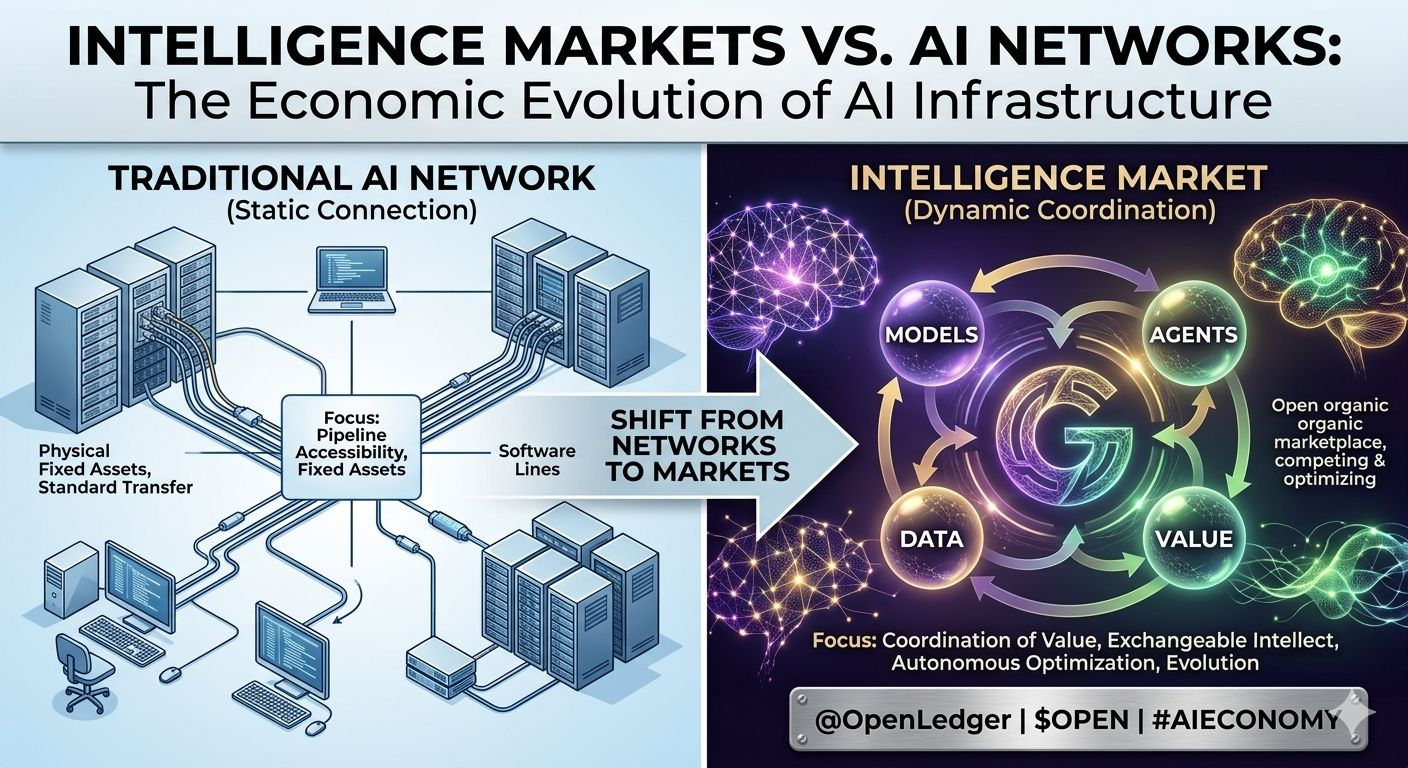
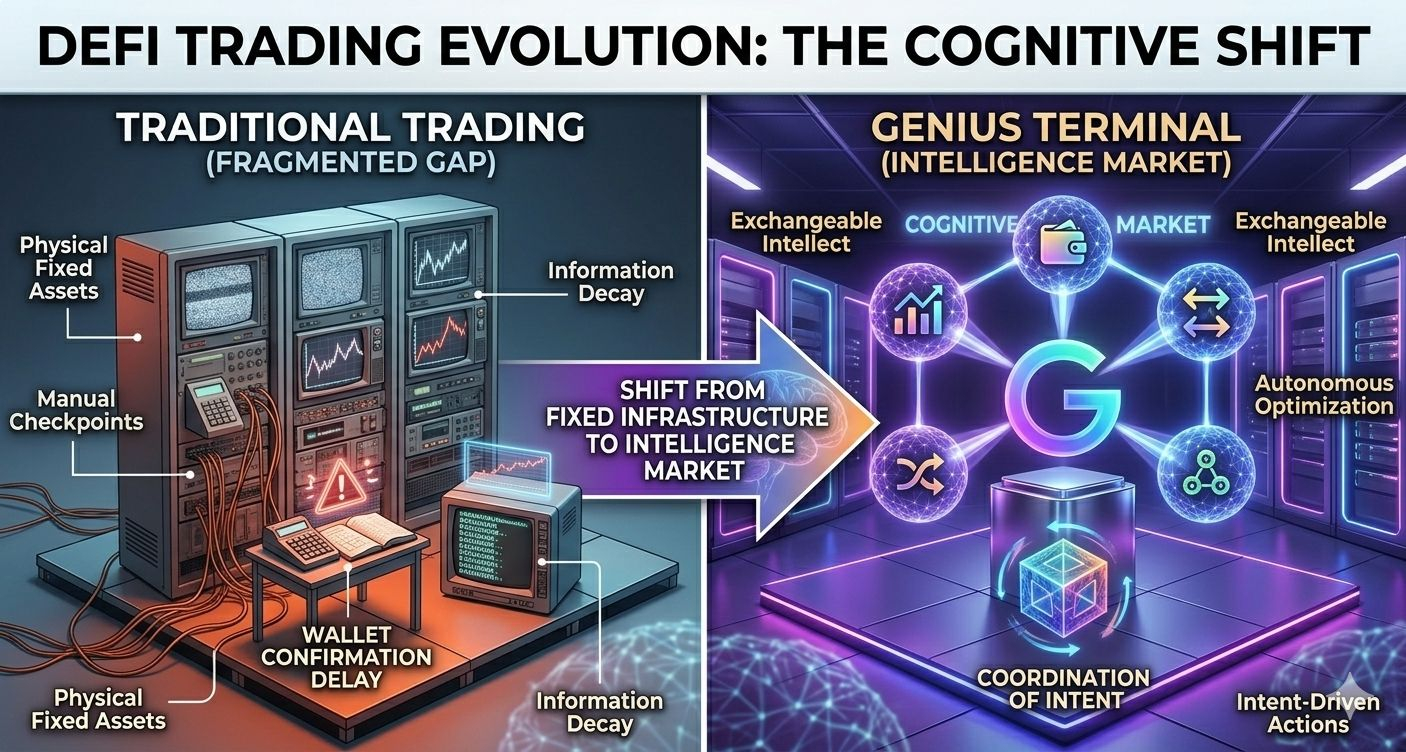
The integration of Artificial Intelligence into decentralized environments requires a paradigm shift in how we define market structures. While traditional digital markets focus on the exchange of static assets (such as data or tokens), emerging frameworks like OpenLedger ($OPEN ) are shifting the focus toward the monetization and exchange of intelligence itself. By transitioning from a standard connectivity network to an active economic environment, OpenLedger allows models, data pipelines, and autonomous agents to interact as dynamic economic components.
The Paradigm Shift: Networks vs. Markets
Most Web3 and AI infrastructure projects focus on building networks. However, networks and markets serve fundamentally different structural purposes:
Networks Connect Participants: They act as pipelines, focusing on accessibility, bandwidth, and standard data transfers.
Markets Coordinate Value: They create rules of engagement, pricing discovery mechanisms, and incentives for optimization.
Behavioral Dynamics of Tokenized Intelligence
When machine learning components enter a coordinated market structure, their behavior undergoes a fundamental transformation:
1. Fluid Value Definition
Unlike traditional assets with fixed utility, the value of an AI agent or model changes based on context, real-time data inputs, and situational demand. Value becomes adaptive rather than static.
2. Autonomous Optimization
Once AI models and agents act as economic participants, they are incentivized to compete. They don't just execute automation; they actively optimize their output, compete for network attention, and trade resources with other agents to maximize economic return.
3. Continuous Evolution
Because the participants in this market (the algorithms and data sets) learn and evolve through interaction, the market itself becomes a living system. It resists the rigid assumptions of traditional financial markets.
While @OpenLedger may ultimately serve as robust base-layer infrastructure for AI, its early focus on creating an environment for economic coordination sets it apart. By focusing on the interplay between data, models, and agents under an economic lens, it is laying the groundwork for a future where intelligence is natively traded, optimized, and valued on-chain.