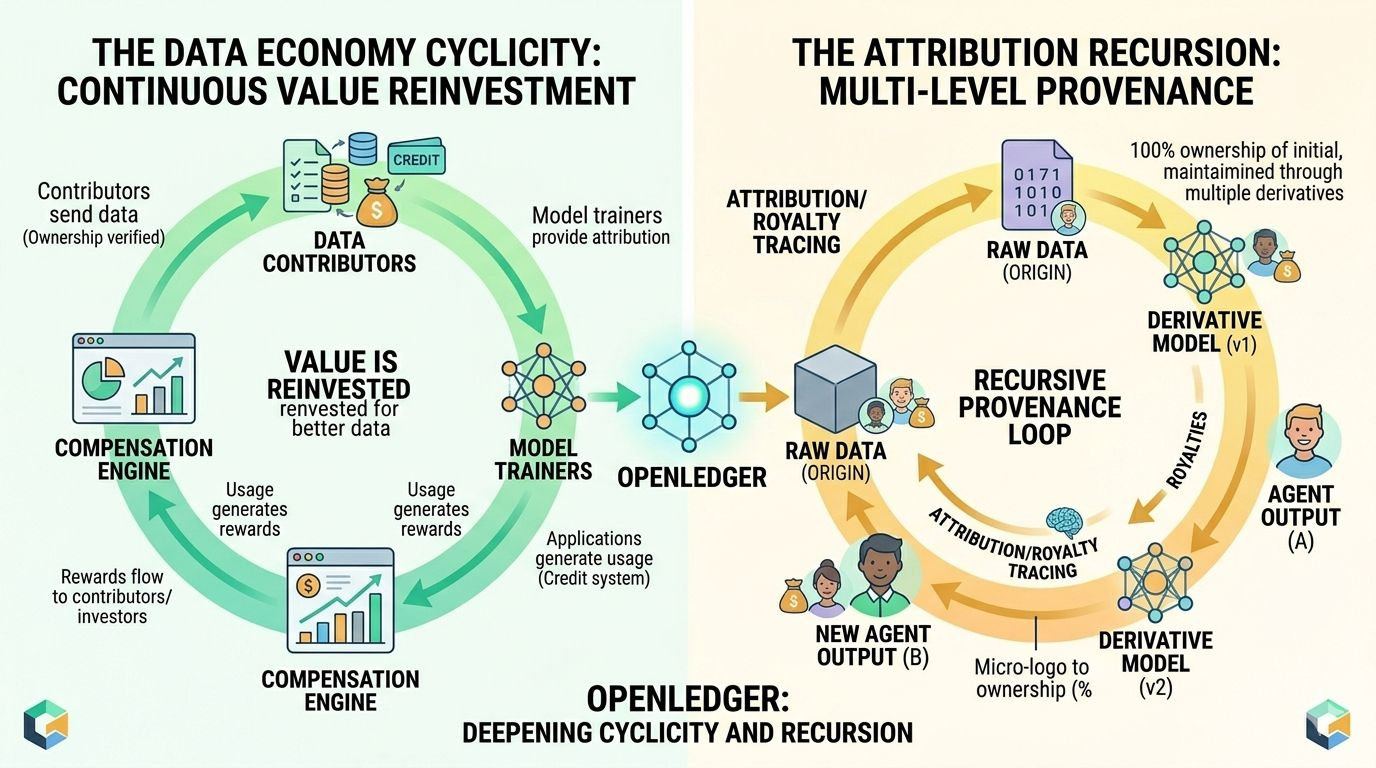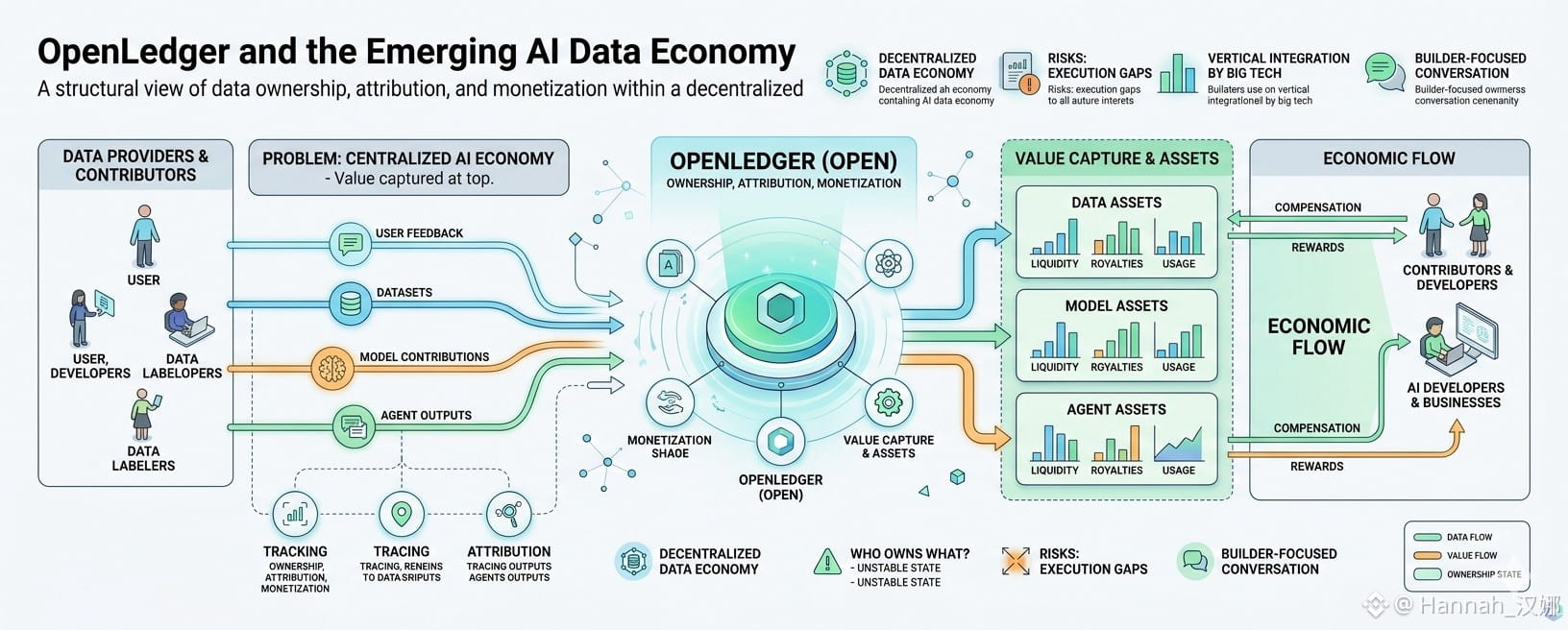

OpenLedger ($OPEN ) has been one of those projects I kept in the background for a long time without really giving it serious attention. Not because it was invisible, but because the AI-crypto narrative has become so crowded that most new entries start sounding the same after a while. Everything is “decentralized AI,” “AI agents,” “data economy,” and so on. At some point you naturally stop reacting to the words and start waiting for something that actually feels structurally different.
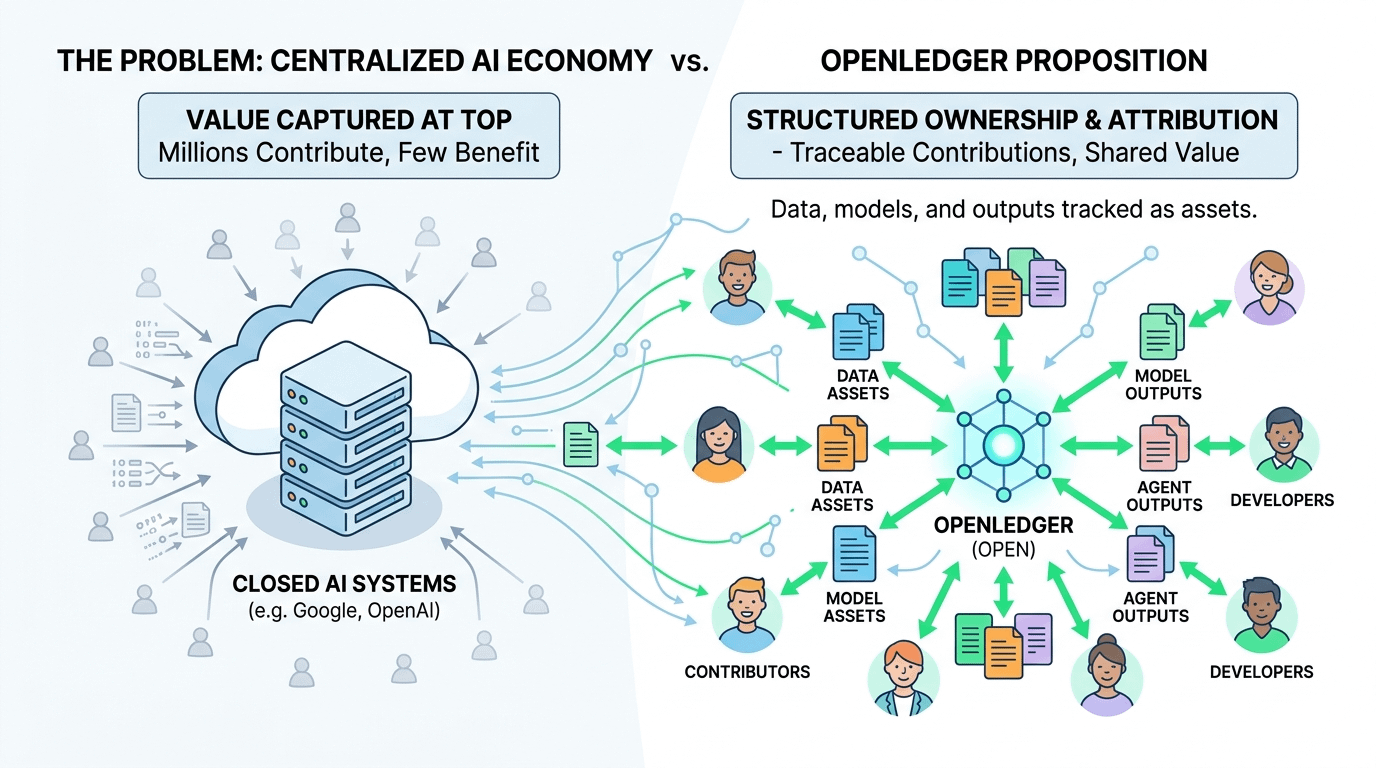
What made me revisit OpenLedger wasn’t hype or price action. It was the way the conversation around it slowly shifted from surface-level speculation toward more infrastructure-based discussion. That usually doesn’t happen with projects that are purely narrative-driven. It tends to happen when people start trying to map a project into how a real system could function, even if it’s still early.
After going deeper into it, the first thing that stood out was that OpenLedger isn’t trying to compete with AI companies in the way most crypto projects attempt. It’s not trying to build a better model than OpenAI or Google, which is already an unrealistic framing most projects fall into. Instead, it’s positioning itself around the economic layer of AI specifically data, models, and agent outputs as assets that can be tracked, attributed, and potentially monetized in a structured way.
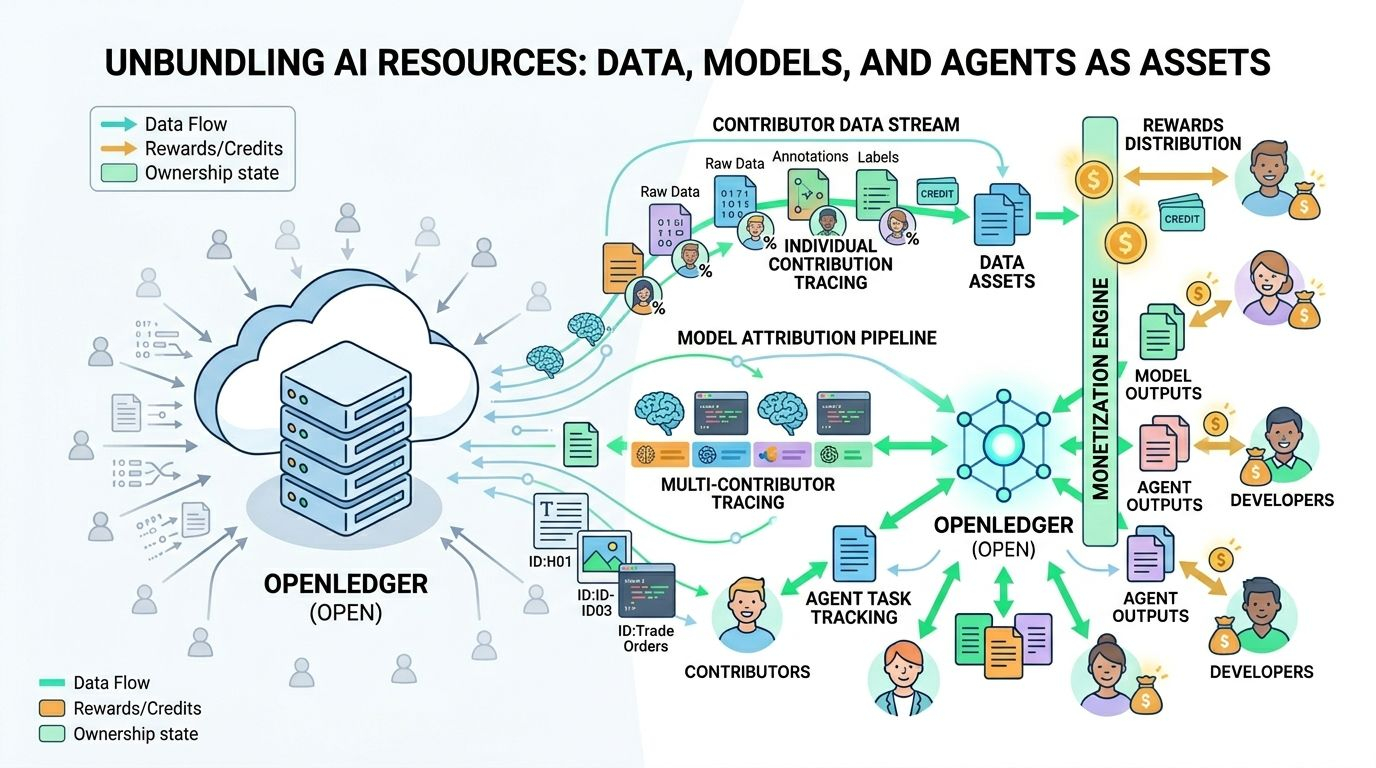
If you strip away the crypto packaging, the underlying problem it’s pointing at is actually very real. Today’s AI economy is extremely centralized. A small number of companies control the infrastructure, the data pipelines, and the distribution of value. Even though millions of users and developers indirectly contribute to model improvement through data generation, labeling, usage, feedback loops almost all of the economic benefit is captured at the top. That imbalance is not new, but AI has amplified it significantly.
OpenLedger’s thesis is essentially built around trying to introduce ownership and attribution into that flow. The idea is that data and model contributions shouldn’t disappear into closed systems without traceability or compensation. Whether blockchain is the correct mechanism to solve that is still debatable, but the problem itself is not fictional.
From a research perspective, what makes this interesting is not the token or short-term trading narrative, but the attempt to define a marketplace around AI resources. If AI systems continue expanding into business automation, content generation, decision-making, and even financial systems, then data and model access start to resemble economic primitives rather than just technical inputs. At that point, the question of “who owns what” becomes unavoidable.
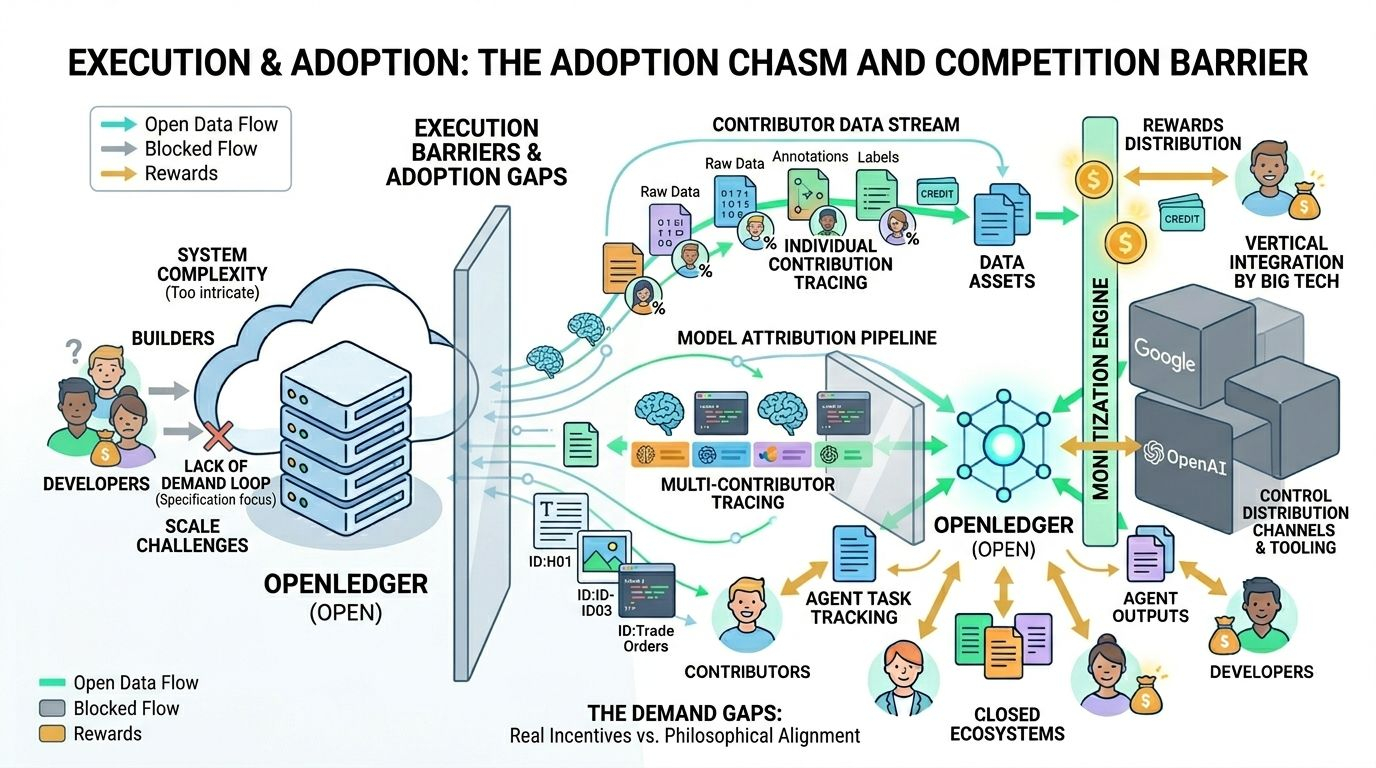
Where I remain cautious is execution. In theory, a decentralized AI economy sounds logical. In practice, it’s extremely difficult to implement in a way that is both scalable and actually adopted by real developers. Most projects in this category fail not because the idea is wrong, but because the system design is too complex or lacks a real demand loop outside of speculation.
Another issue is that AI itself is moving too fast and too vertically integrated. Large companies are not only building models but also controlling distribution channels, developer ecosystems, and increasingly the tooling around AI workflows. For a decentralized layer to succeed in that environment, it would need very strong adoption incentives, not just philosophical alignment.
That said, OpenLedger still feels different from many of the AI tokens that appeared during earlier hype cycles. The reason is subtle but important: the conversation around it is less about “AI magic” and more about economic structure. When a project shifts into that territory, it usually attracts a different type of attention more builder-focused, less retail-driven, at least initially.
From a market cycle perspective, AI is still one of the strongest macro narratives in tech globally. Every major institution, startup ecosystem, and venture fund is already positioned around it in some form. Crypto naturally tries to attach itself to these macro shifts, but most attempts end up being superficial. The few that last longer tend to be the ones that connect to real bottlenecks rather than just branding alignment.
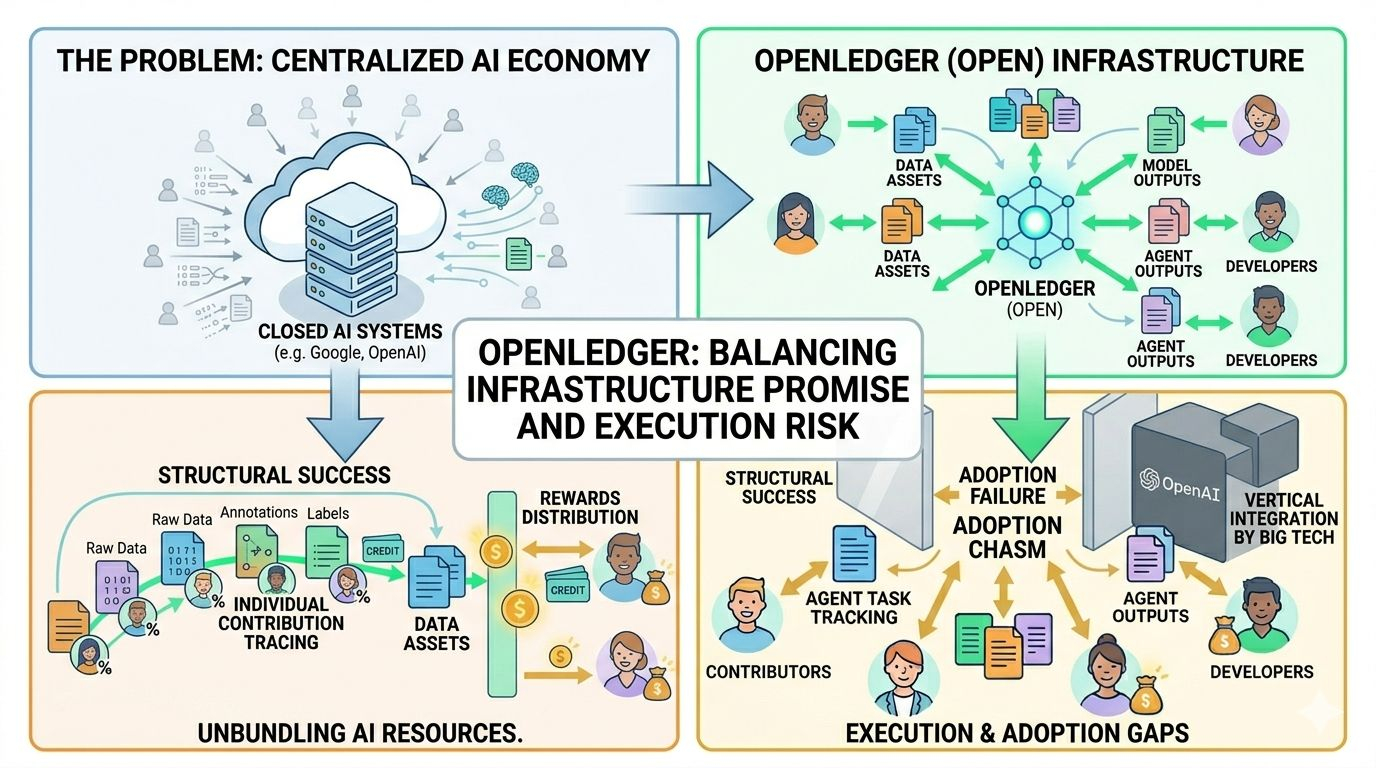
OpenLedger is trying to position itself at one of those bottlenecks: the lack of structured ownership and liquidity around AI data and model contributions. Whether that bottleneck becomes economically significant enough for a blockchain-based solution to matter is still an open question.
At the same time, it’s important to stay realistic about where this sits in the cycle. Most of these projects are still early, and “early” in crypto often means unproven, not undervalued. There’s a big difference between a concept that makes sense and a system that actually sustains demand over time. History has shown repeatedly that narratives can look convincing long before actual usage follows if it follows at all.
Another factor worth considering is competition, not just from other crypto projects, but from centralized AI platforms themselves. If major AI companies eventually introduce their own internal marketplaces for data, models, or agent tooling, then the need for an external decentralized layer becomes much harder to justify. That’s a scenario many people in crypto narratives tend to underweight.
Despite all of this, I understand why OpenLedger is being discussed more frequently. It sits at the intersection of two dominant global trends AI expansion and crypto-based ownership models. Even if most projects in that overlap fail, the category itself is too large to ignore entirely. Markets tend to explore these intersections repeatedly until something actually sticks.
My overall view after looking into it more deeply is fairly balanced. The idea is intellectually coherent, and the problem it targets is real. But the gap between concept and execution in this space is historically wide. OpenLedger could either evolve into something structurally meaningful within the AI data economy, or it could end up being another early attempt that didn’t find a sustainable product-market fit.
At this stage, I don’t see it as something to blindly follow or dismiss. It sits in that middle category where the narrative is interesting enough to watch closely, but the outcome is still completely dependent on execution over the next few development cycles.