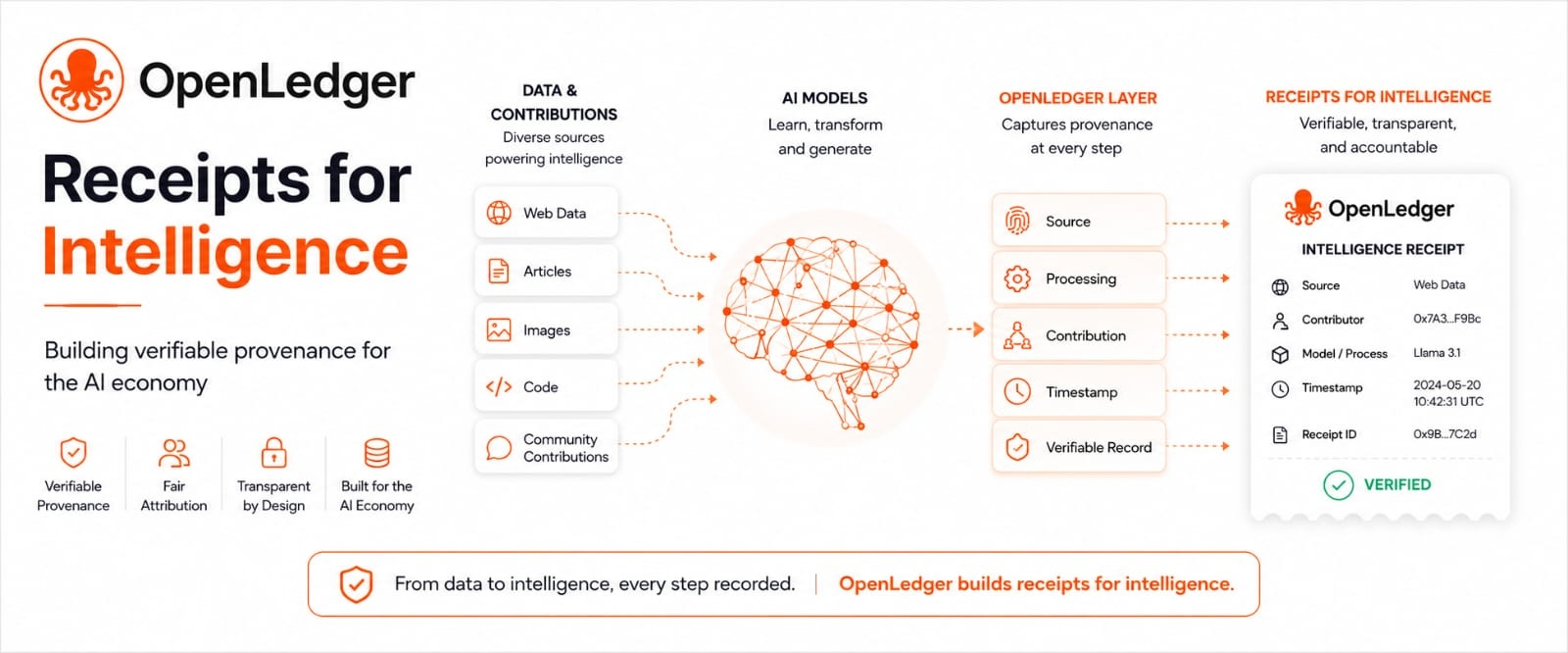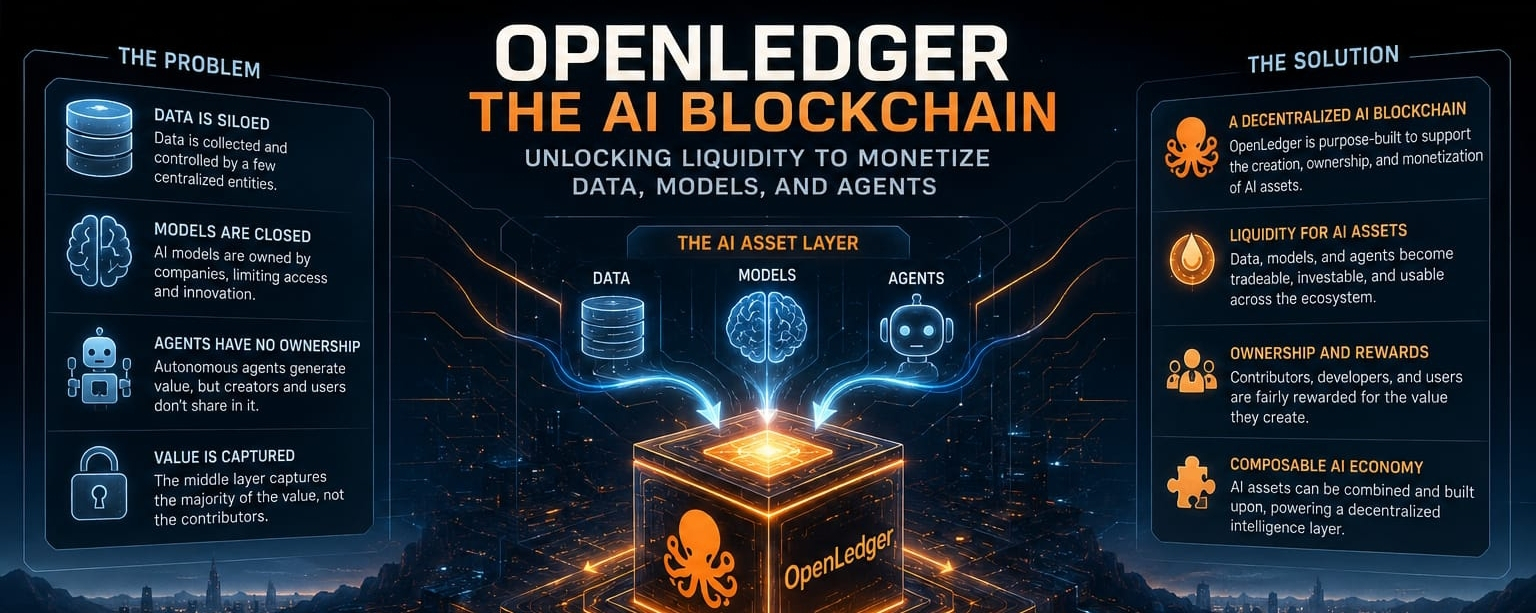
I’m watching OpenLedger the way I watch most AI-crypto projects now — quietly, without rushing to decide what it is too early. The idea sounds important the moment you hear it. An AI blockchain where data, models, and agents can be monetized instead of sitting inside closed systems. On paper, it feels like the kind of thing this market has been moving toward for years.
But I’ve been around long enough to notice how easily crypto turns big ideas into immediate certainty.
Every cycle finds a new language for optimism. Before it was DeFi. Then metaverse infrastructure. Then modular systems. Now it’s AI. The pattern never changes as much as people think it does. The words evolve, the urgency stays the same. Suddenly everyone talks like the future already arrived, even while most of the products are still trying to figure out what real usage actually looks like.
That’s where my attention stays with OpenLedger.
Not on the headlines or the announcements, but on the space between the vision and the behavior around it.
Because monetizing data sounds powerful until you ask who consistently wants to buy it. Decentralized AI sounds important until you ask whether developers will actually leave faster, simpler centralized tools to use it. Liquidity sounds impressive until you realize liquidity alone doesn’t create lasting demand. Crypto has a habit of treating markets as proof of usefulness when sometimes they are only proof of attention.
I think that’s what makes projects like this difficult to judge honestly right now. The AI narrative is so strong that almost anything connected to it automatically receives momentum. Some of that momentum is deserved. Some of it is just people trying not to miss another cycle. The market rarely separates those two things in real time.
Still, I understand why OpenLedger exists. More people are becoming uncomfortable with how concentrated AI development is becoming. A handful of companies control most of the compute, the models, the distribution, and increasingly the data itself. So naturally, crypto tries to build an alternative layer around openness and ownership. That part makes sense to me.
What I’m less sure about is whether the market actually wants decentralization badly enough to tolerate slower execution, messy infrastructure, and the friction that usually comes with early blockchain systems. People say they want open ecosystems, but most users eventually choose convenience. They always have.
And maybe OpenLedger solves some of that over time. Maybe the infrastructure improves quietly while everyone else is distracted chasing newer narratives. That happens sometimes too. The projects that survive are usually the ones that stop sounding exciting and start becoming useful.
For now, though, I mostly see a project standing between two realities. One is the future people imagine for AI and ownership. The other is the current market, where speculation still moves faster than adoption.
I’m not convinced either side has fully won yet.