
The AI revolution is moving faster than anyone expected. Every week, new tools, smarter models, and more powerful AI systems are entering the market. But behind all this innovation, one important question is becoming impossible to ignore: who truly owns the value created by artificial intelligence?
Today most of the AI industry is controlled by a small number of centralized companies. These platforms collect massive amounts of user data, train advanced AI models, and generate billions in value, while the people contributing data, ideas, and computational power rarely receive fair rewards. This imbalance is exactly where OpenLedger is trying to make a difference.
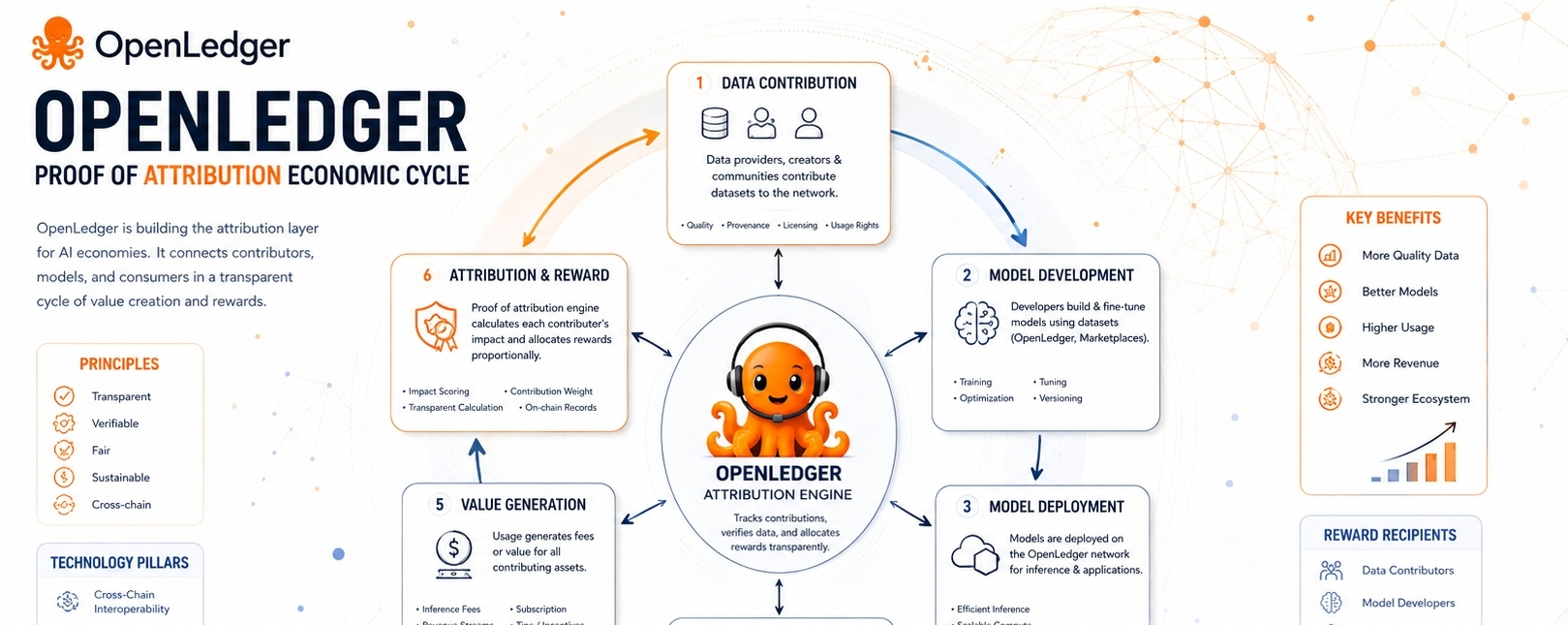
OpenLedger is not just another blockchain project chasing hype. It is building a decentralized AI economy designed around ownership, transparency, contribution, and fair rewards. Its mission is simple yet extremely ambitious: unlock liquidity for data, models, and AI agents while allowing contributors to monetize the value they create.
As AI becomes one of the most valuable industries in the world, platforms that can connect blockchain technology with AI infrastructure may become the foundation of the next digital economy. OpenLedger is positioning itself directly at the center of this transformation.
One of the biggest strengths of OpenLedger is its focus on real utility. In today’s internet economy, data has become one of the most valuable assets on earth. AI models depend on high-quality data to improve, adapt, and evolve. Yet most contributors never benefit from the profits generated by their own information and participation. OpenLedger introduces a system where contributions can be verified on-chain, tracked transparently, and rewarded fairly.
This creates a completely different model compared to traditional AI platforms. Instead of value flowing only to centralized companies, OpenLedger aims to distribute value across the entire ecosystem. Developers can build AI models, contributors can provide datasets, and intelligent agents can operate within a decentralized environment where activity and impact are measurable.
Another reason OpenLedger is attracting attention is because of its long-term vision. Many crypto projects focus heavily on short term market excitement, but OpenLedger is targeting infrastructure the type of foundation that entire ecosystems can eventually build on. The project is creating an environment where AI applications, data economies, and autonomous agents can interact in a more open and scalable way.
Transparency also plays a major role in the OpenLedger ecosystem. Through blockchain technology, transactions, contributions, and reward systems can remain visible and verifiable. This reduces manipulation, improves trust, and ensures contributors are recognized for the value they bring into the network. In a future where AI systems become increasingly powerful, transparency may become one of the most important features any ecosystem can offer.
The rise of AI agents could become another major catalyst for OpenLedger’s growth. Autonomous AI systems are expected to perform tasks, automate workflows, and create digital services across multiple industries. OpenLedger is preparing for this future by creating an ecosystem where these agents can generate measurable economic activity while remaining connected to a transparent and decentralized reward structure.
Makes this especially interesting is the timing. The global AI market is expanding rapidly, and investors are searching for projects with real-world relevance instead of empty promises. OpenLedger’s approach combines two of the strongest technological narratives in the world today: Artificial Intelligence and Blockchain. That combination alone is enough to attract serious attention, but the project’s focus on monetization, ownership, and liquidity gives it even stronger long term potential.
Community discussions around OpenLedger continue growing because many people see it as more than just another token. Supporters believe the project could become part of the infrastructure layer powering the future AI economy. If decentralized AI becomes a major trend over the next few years, projects that solve ownership and reward distribution problems may gain significant importance.
Another important factor is sustainability. OpenLedger is not built around temporary hype cycles. Instead, the ecosystem encourages continuous participation and contribution. This creates a stronger foundation for long-term adoption because value creation is directly connected to ecosystem growth. Contributors are not just users they become stakeholders in the future of the network.
The future internet economy may not belong to companies that simply collect the most data. Instead, it could belong to ecosystems that reward participation fairly, protect ownership rights, and create open access to innovation. OpenLedger is attempting to build exactly that type of future.
Of course the blockchain and AI industries remain highly competitive, and success will depend on execution, adoption, and continuous development. But OpenLedger already stands out because it is addressing real problems connected to AI ownership, transparency, and monetization. These are challenges that will only become more important as AI technology continues to evolve globally.
OpenLedger represents a shift in thinking. It moves away from closed AI ecosystems controlled by a few large entities and toward a more decentralized structure where contributors, developers, and communities all have the opportunity to benefit from the value they help create.
AI truly becomes a multi trillion dollar industry in the coming years, then projects building the infrastructure for open and decentralized AI economies could become some of the most important players in the entire digital market. OpenLedger is clearly aiming to be one of them.
The next generation of wealth creation may not come only from owning cryptocurrencies or investing in technology companies. It may come from participating directly in ecosystems where data, intelligence, and digital contribution all carry measurable value. OpenLedger is building a platform designed for exactly that future.
And if the project continues moving in this direction, OpenLedger could eventually become far more than just another Web3 platform. It could become one of the foundational layers of the decentralized AI economy itself.