
 Habibies! Do you know? I keep noticing that people talk about AI as if intelligence simply appeared out of nowhere.
A prompt goes in.
An answer comes out.
The system feels autonomous, efficient, and strangely self-contained.
But the deeper you look into AI infrastructure, the harder it becomes to ignore the invisible human layer underneath it.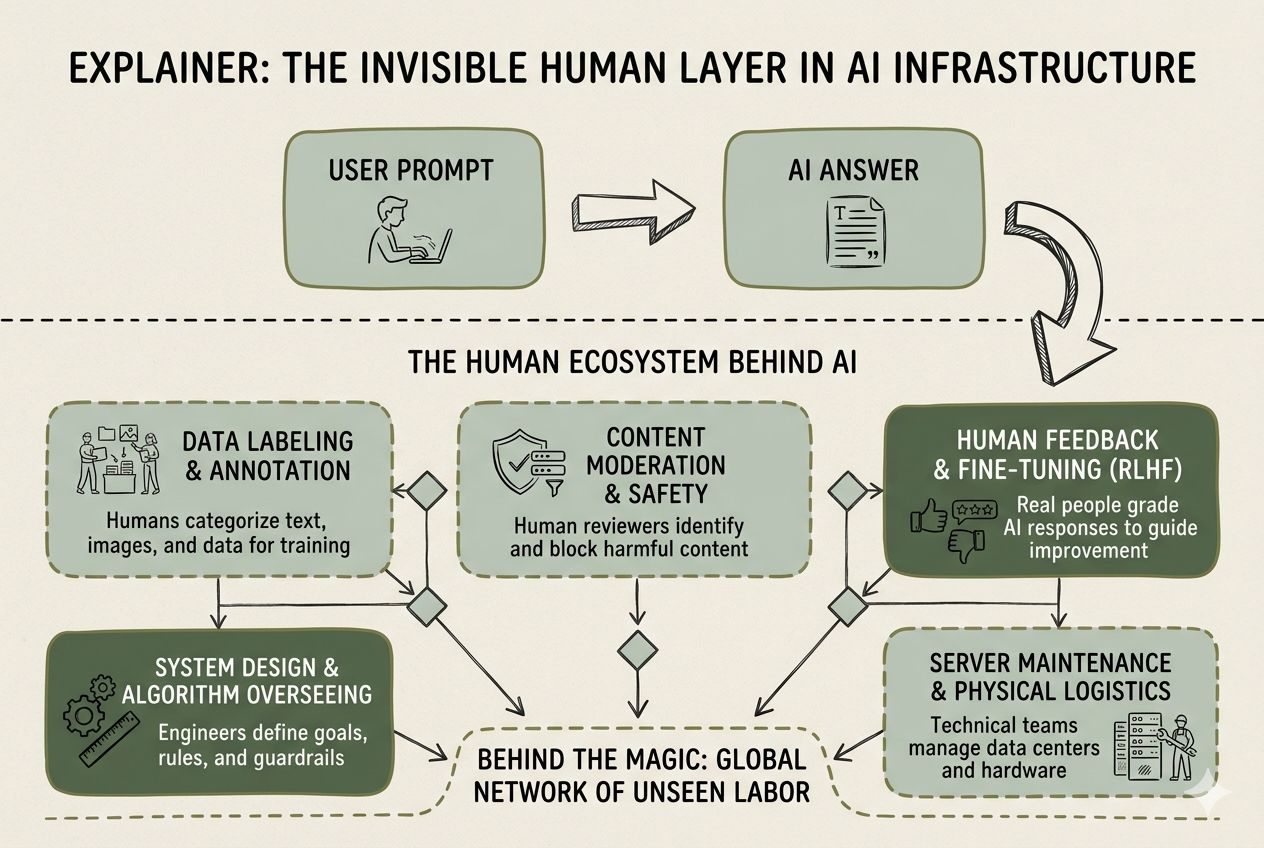
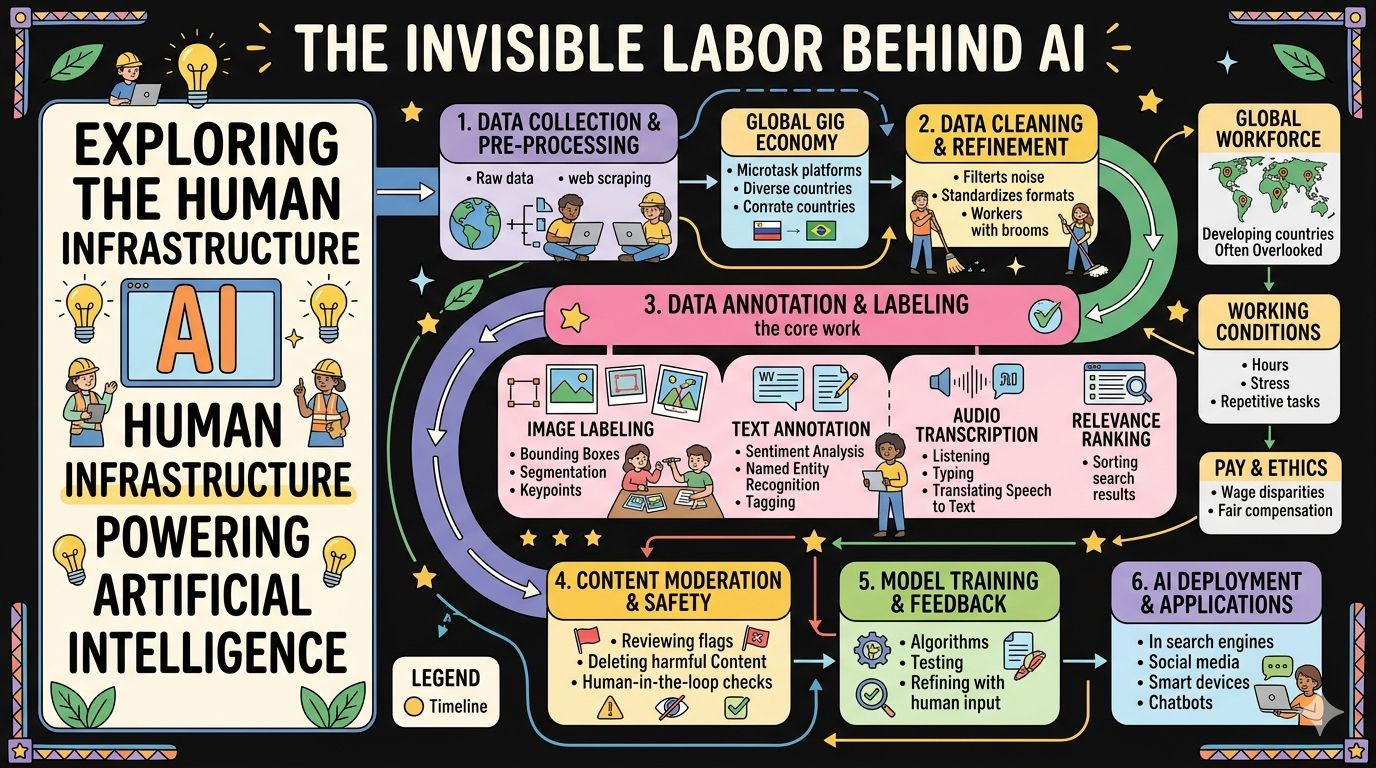
Every capable AI model is built on enormous amounts of human contribution.
Writers publishing information online.
Researchers organizing knowledge.
Developers building open-source tools.
Annotators labeling datasets.
Evaluators correcting outputs.
Communities generating conversations, feedback, and interactions across the internet every single day.
Modern AI systems did not emerge in isolation.
They emerged from the collective output of millions of people whose work became training infrastructure for intelligence models.
That may be one of the most important economic realities inside the AI industry today.
Because while AI appears autonomous on the surface, much of its underlying intelligence is inherited from human contribution that often remains invisible after models scale.
The internet trained AI for free.
And the more I think about that, the more interesting the economic implications become.
Most contributors never knew their data would eventually help train large-scale intelligence systems. Articles, forum discussions, public repositories, tutorials, documentation, images, and conversations quietly became part of the foundational infrastructure behind modern AI capabilities.
Yet once those systems generate value, the relationship between contributors and outcomes becomes increasingly difficult to trace.
Contribution disappears.
The model remains visible.
That creates a structural imbalance.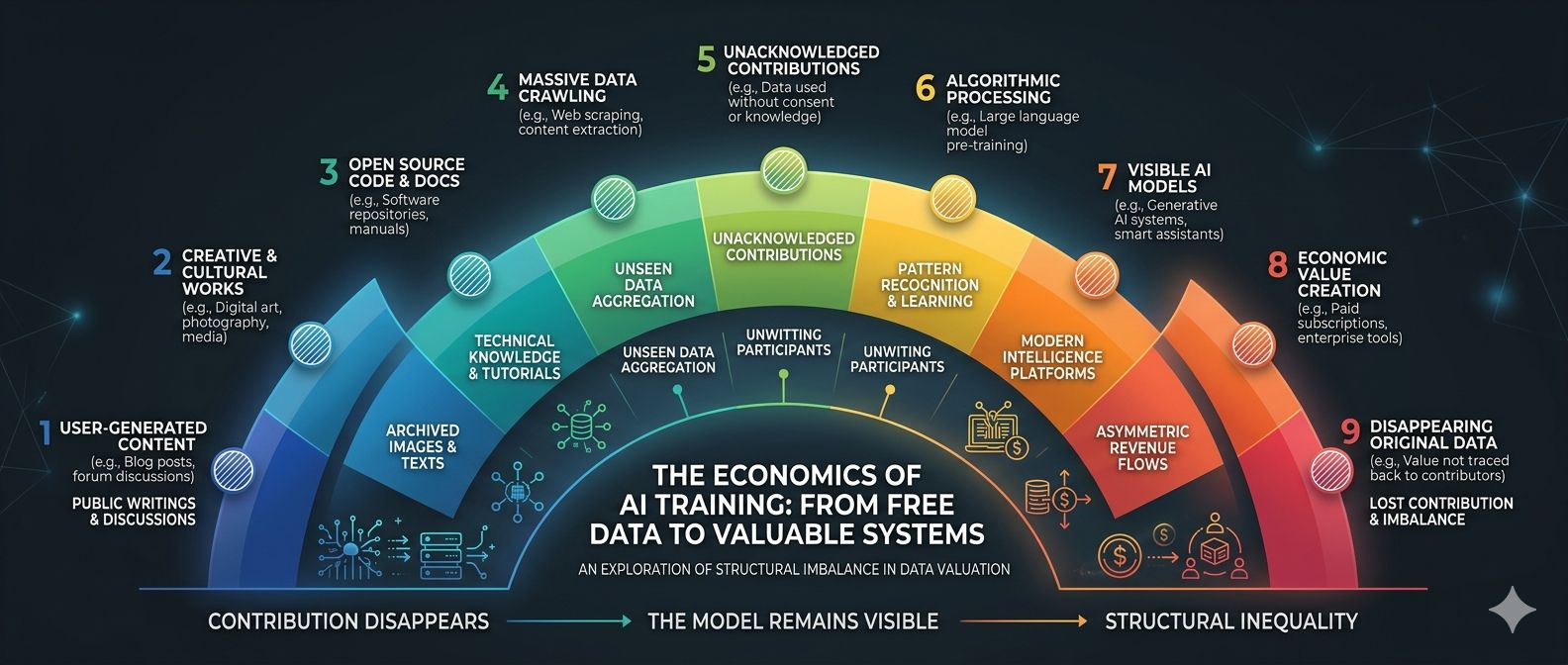
The issue is not simply that AI uses public information. The larger issue is that participation itself becomes economically disconnected from the value created afterward. Contributors generate intelligence inputs while platforms and model layers capture most of the downstream economic activity.
That is why attribution feels increasingly important.
Not only as a technical feature.
But as economic infrastructure.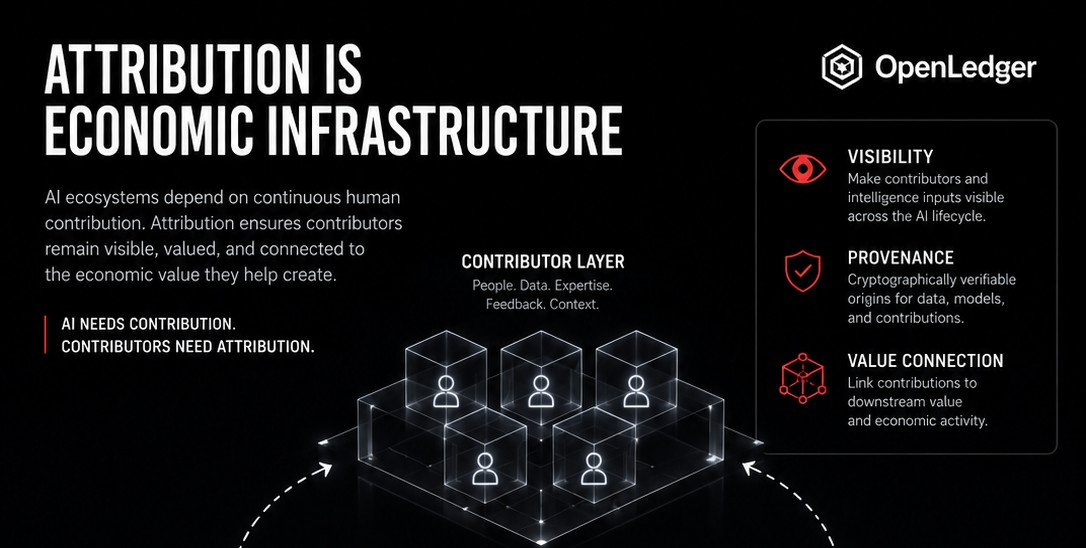
The OpenLedger whitepaper repeatedly focuses on attribution, provenance, and contributor visibility through systems like Proof of Attribution and Datanets. The reason becomes clearer once you recognize that future AI ecosystems may depend heavily on maintaining sustainable participation loops.
Because intelligence systems require continuous contribution.
Specialized datasets.
Domain expertise.
Human feedback.
Contextual knowledge.
Without contributors, AI ecosystems stop evolving.
But without attribution, contributors slowly become invisible inside the systems they helped create.
That invisibility creates more than a fairness problem.
It creates a coordination problem.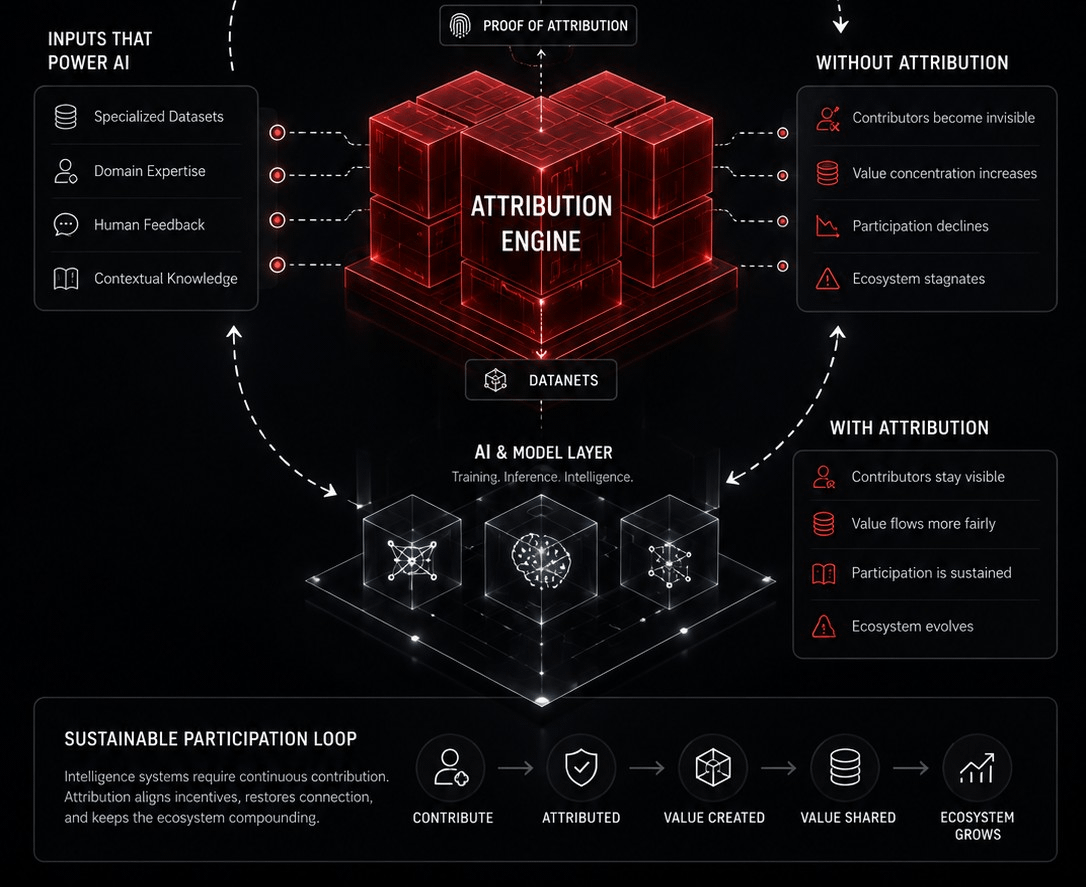
Over time, ecosystems built entirely around extraction tend to weaken trust between participants and platforms. Contributors become less connected to outcomes. Value concentrates upward. And participation starts feeling less collaborative and more transactional.
The interesting part is that AI may now be forcing the internet to confront this imbalance directly.
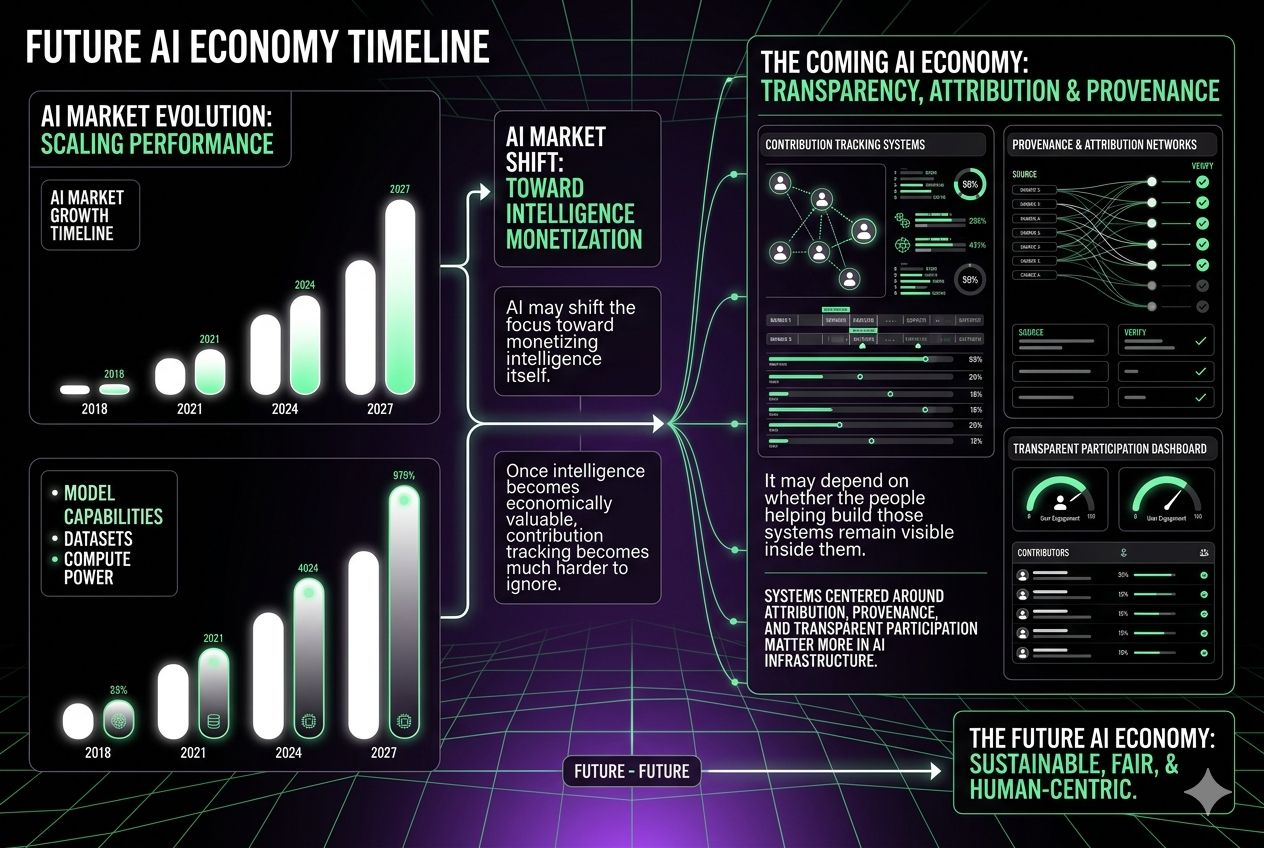
For years, the digital economy revolved around monetizing attention.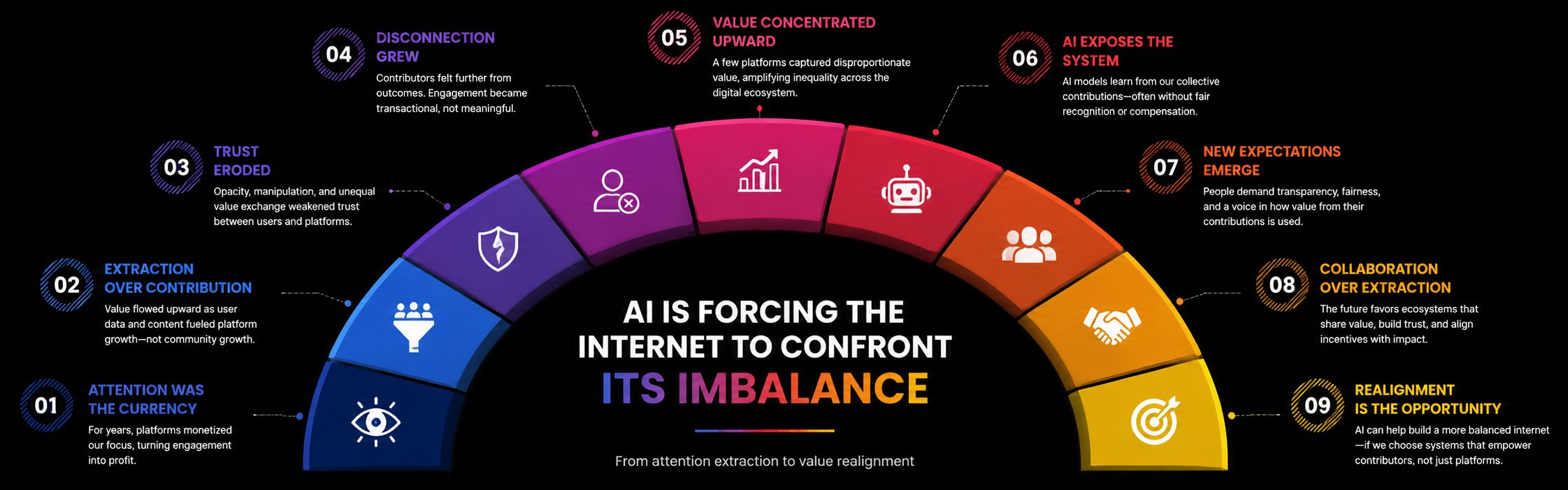
AI may shift the focus toward monetizing intelligence itself.
And once intelligence becomes economically valuable, contribution tracking becomes much harder to ignore.
That may explain why systems centered around attribution, provenance, and transparent participation are starting to matter more across AI infrastructure discussions.
Because the future AI economy may not only depend on how intelligent models become.
It may depend on whether the people helping build those systems remain visible inside them.