I’ll be honest — I used to scroll past most “AI + blockchain” projects pretty quickly. In crypto, once a trend gets hot, every project starts using the same buzzwords: AI, agents, data ownership, and decentralized intelligence. After a while, everything starts sounding like the same marketing narrative.
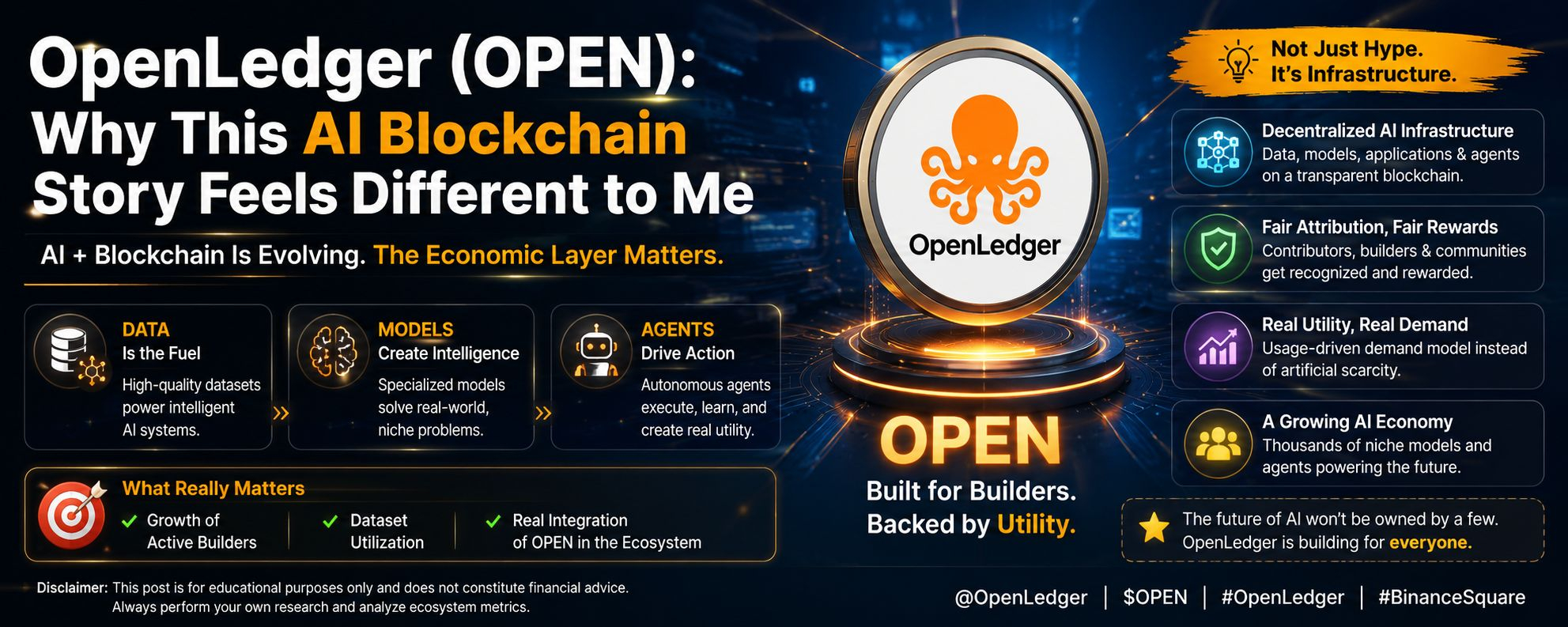
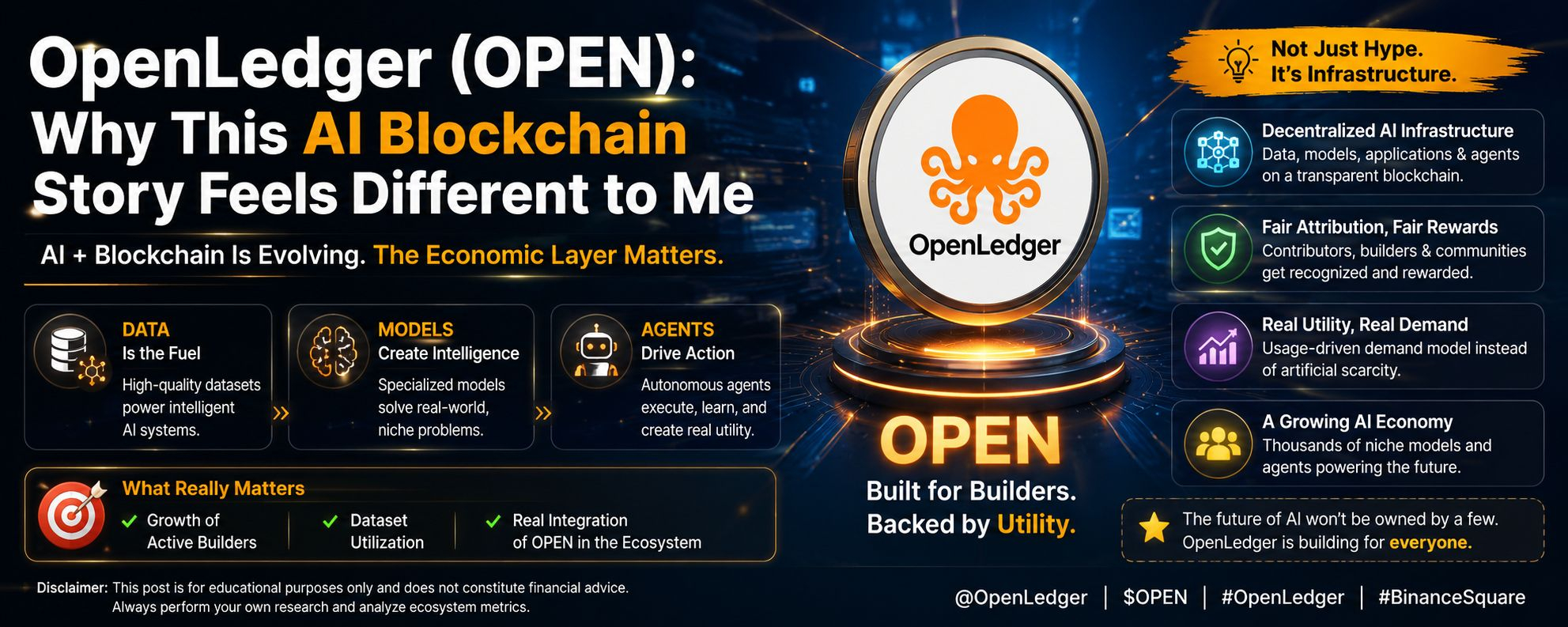
But OpenLedger made me pause. Not just because it is connected to AI, but because it focuses heavily on the economic layer behind it: data, models, applications, and agents.
The Hidden Machine Behind the Front End
Most people see AI from the front side — you type a prompt, you get a clean answer. But behind that simple experience is a complex infrastructure. To make AI useful at scale, every layer needs real infrastructure, coordination, and economic incentives.
- Data Provision: Sourcing and cleaning high-quality datasets via frameworks like Datanet.
- Model Computation: Powering specialized inferences for specific tasks.
- Agent Execution: Operating autonomous workflows, which naturally demand underlying network utility and structural mechanisms for access, coordination, and accountability.
When you look at it from this angle, the token model shifts away from pure speculation. Instead of relying only on artificial scarcity or hype, the ecosystem connects the token more closely to actual utility and activity volume.
The Shift Toward Niche, Specialized AI
The future of AI will not just belong to one or two giant, centralized models. We are likely moving toward an economy of thousands of smaller, specialized models built for niche use cases: crypto research, gaming analytics, on-chain risk signals, DAO governance, and more.
If a decentralized community builds a valuable dataset for tracking exploit patterns or market anomalies, they need a fair way to track and share in that value over time. This is where blockchain infrastructure becomes genuinely useful — not because every tool needs a token, but because public ledgers are strong at recording provenance, managing permissions, and supporting open value distribution.
Staying Grounded: The Execution Challenges
However, we must look at this objectively. The AI x Web3 sector is highly crowded, and moving from a strong narrative to global adoption is an uphill battle.
The viability of any agent-driven economy relies on long-term sustainability. If ecosystem participants, builders, and data contributors cannot consistently find economic value, the loop becomes weaker. Furthermore, data quality control remains difficult; bad data can degrade models, fake contributions can pollute systems, and creating sustainable liquidity around on-chain AI assets is a complex challenge.
Final Verdict
The true health of OpenLedger will not be told by short-term price charts or marketing campaigns. Moving forward, the metrics that actually matter are ecosystem signals:
1. The consistent growth rate of active builders and developers on the network.
2. The structural utilization of datasets within the economy.
3. Whether OPEN is being integrated naturally into real network operations.
If organic infrastructure demand grows stronger over time, the model becomes more meaningful. Until then, the best approach is to stay objective, track real usage, and always do your own research.
OpenLedger is interesting to me because it is not only talking about AI as a trend. It is trying to address the deeper economic question behind AI: how data, models, agents, builders, and contributors can become part of a more open and traceable digital economy.
That is what makes this story worth watching.
Disclaimer: This post is for educational purposes only and does not constitute financial advice. Always perform your own due diligence and analyze core ecosystem metrics.
@OpenLedger $OPEN #OpenLedger #BinanceSquare #openledger