
While sipping coffee in a quiet Islamabad cafe, watching street traffic blur past the window, I caught myself questioning how much of our daily digital lives is quietly shaped by invisible systems of control. That ordinary moment lingered as I opened CreatorPad for the OpenLedger task, navigating the Datanet upload interface where I had to tag and verify a small dataset for a specialized model. It was there, wrestling with the contribution verification screen and watching the on-chain attribution queue lag slightly under load, that the realization hit me hard.
The uncomfortable truth is that OpenLedger exposes how crypto’s sacred faith in pure decentralization as a cure-all for AI’s problems might be more idealistic than practical. What we celebrate as permissionless contribution often masks the friction of aligning incentives in real time. During that task, the moment of manually confirming data provenance on the ledger made it clear: while the platform promises fluid liquidity for models and agents, the actual flow depends on careful human oversight and community vetting that feels closer to curated collaboration than wild openness.
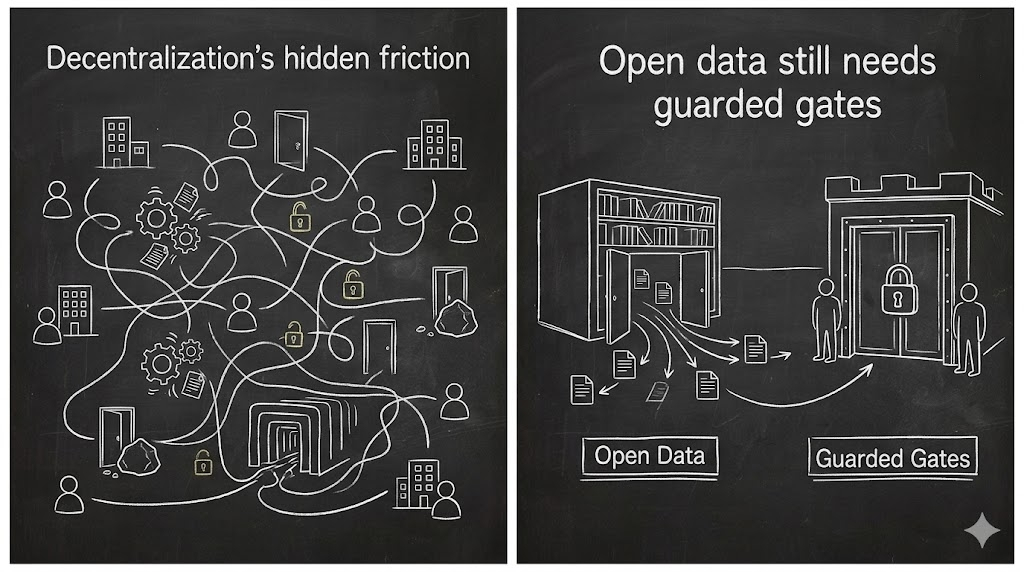
This isn’t unique to OpenLedger, but it serves as a sharp example. Across Web3, we’ve long assumed that token rewards and transparent ledgers would flood systems with high-quality input, dismantling the gatekeepers of big tech. Yet expanding beyond that single task, it becomes evident that quality data and reliable models still cluster around motivated, knowledgeable participants who invest time in verification steps—much like traditional open-source projects where a core few carry the weight. The blockchain layer adds trust through visibility, but it doesn’t eliminate the social and technical bottlenecks of coordination. In AI especially, where noise in datasets can cascade into flawed outputs, this creates a tension: too loose, and the system degrades; too structured, and it starts resembling the centralized entities crypto claims to replace.
OpenLedger highlights this dynamic without fully resolving it. Its focus on community-owned Datanets and composable agents shows promise in turning data into liquid assets, but the task revealed how contribution isn’t purely democratic—deeper engagement demands technical comfort and patience with ledger delays that casual users might abandon. It challenges the narrative that Web3 inherently levels the field faster than legacy systems. Instead, it suggests a hybrid reality where decentralization provides the accounting backbone, yet progress still leans on human discernment and selective participation.
What stays with me is the quiet doubt: if even purpose-built platforms like this reveal the limits of distributed trust in high-stakes domains like AI, are we building toward genuine reshaping of the landscape, or simply relocating old power structures under new, more auditable names?