I didn't take it seriously at first. That's almost a survival instinct now. AI blockchain. Liquidity for data models, agents. I've watched enough cycles to know how easily the space stitches together whatever narratives are trending and calls it inevitability.
And yet.
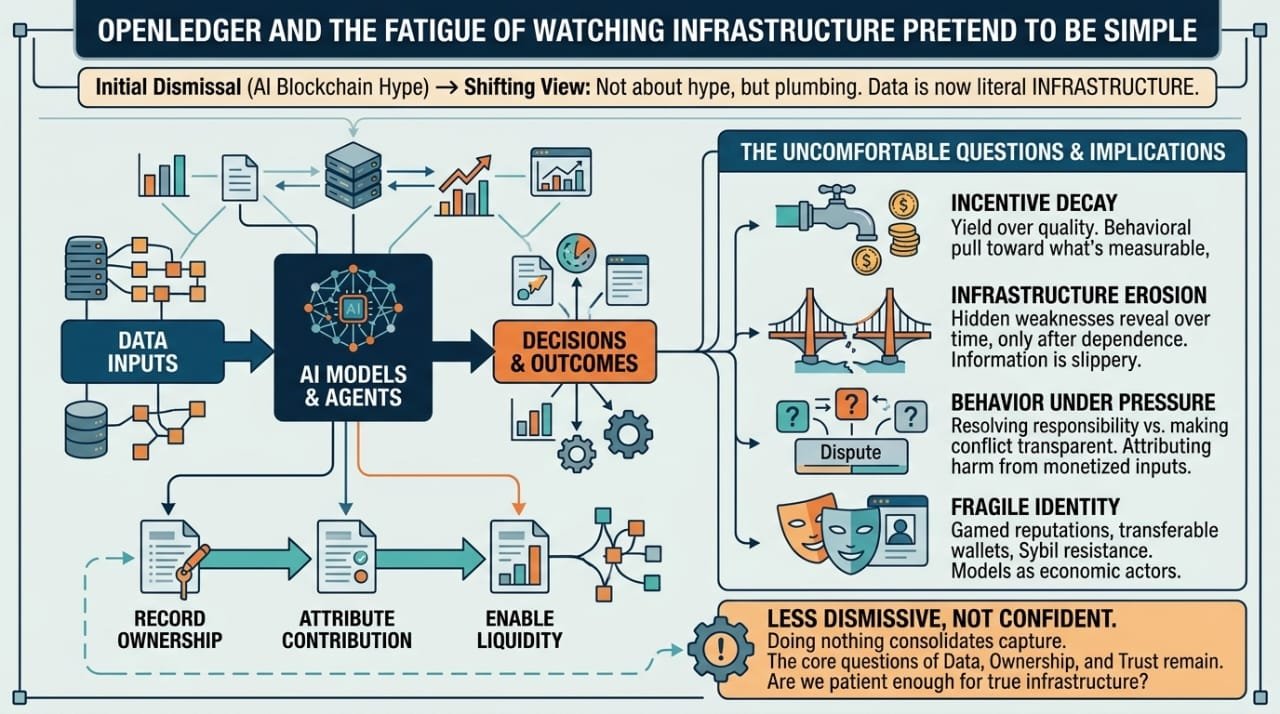
The thing about OpenLedger is that it isn’t really about AI hype at least not in the way people frame it. It's about plumbing. About who owns the messy, unglamorous inputs that feed these systems we're increasingly relying on.
That’s less exciting. And more uncomfortable.
I keep coming back to the idea that data has quietly become infrastructure. Not in a metaphorical sense. In a very literal one. Models are trained on it. Agents act because of it. Decisions are made downstream of it. And yet the ownership layer is still hazy. Attribution is partial. Consent is often retroactive, if it exists at all.
OpenLedger seems to say let's not leave that layer informal. Let's record it. Let's make it tradable. Let's make it accountable.
At first I rolled my eyes. Monetize everything. That's the crypto reflex. But the more I sit with it the more I realize the alternative is worse. If value is being extracted from data and models and there's no shared ledger of participation the capture consolidates by default.
Still monetization changes behavior.
That's where things start to feel uncomfortable.
Because the moment you unlock liquidity around data contributions you create incentives to produce data for the sake of yield. Not necessarily for quality. Not necessarily for truth. We've seen this dynamic in DeFi. We've seen it in content platforms. Incentives pull behavior toward what’s measurable and rewarded.
And information is slippery.
A dataset can look fine in isolation and degrade in combination. A model can appear aligned until it's pushed into edge cases. Agents can act responsibly until a market shift nudges them toward opportunistic behavior. Infrastructure rarely fails in obvious ways. It erodes at the margins.
Maybe that's too harsh. But I've watched enough governance systems drift over time to know that early alignment doesn’t guarantee durability. Incentives decay. Participants rotate. The operational burden concentrates in fewer hands.
I keep asking myself how OpenLedger behaves under pressure. Not during launch. Not during enthusiasm. During conflict.
What happens when contributors dispute attribution? When someone claims their data was misrepresented? When a model trained on monetized inputs causes harm? A ledger can show who contributed what. But does it resolve responsibility? Or just make the dispute more transparent?
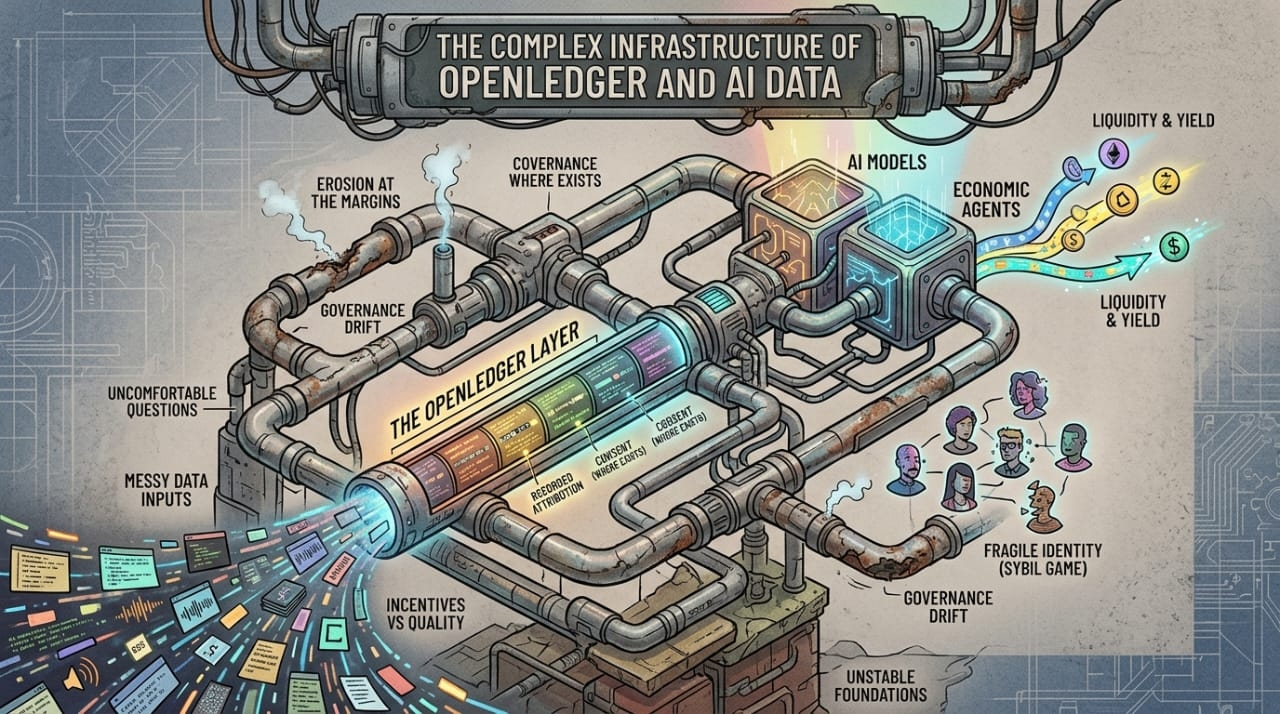
There's also identity. Agents acting economically. Models earning. Data providers staking claims. It sounds elegant until you remember how fragile digital identity already is. Wallets are transferable. Reputations can be gamed. Sybil resistance is an ongoing cat and mouse game.
And yet doing nothing feels naïve. AI systems are becoming economic actors whether we formalize it or not. Ignoring ownership doesn't eliminate it. It just hides it behind corporate walls.
I didn't take it seriously at first because it sounded like another abstraction layered on top of unstable foundations. Now I’m less dismissive, but not exactly confident. Infrastructure has a way of revealing its weaknesses only after everyone depends on it.
Maybe OpenLedger is early to something necessary. Or maybe it's another experiment that will teach us where the real fault lines are.
Either way the uncomfortable questions about data ownership and trust aren't going away. And I'm not sure we've built the kind of patience infrastructure actually requires.