
OPENLEDGER IS ChASING SOMETHING MORE VALUABLE !
A few weeks ago I found myself going down one of those familiar crypto rabbit holes.
The kind that starts with one narrative and somehow ends somewhere completely different.
At the time, most of the attention was rotating back into AI. Not the loud AI tokens that dominate timelines every cycle, but the infrastructure layer underneath them. The market feels different now than it did a year ago. Liquidity is still selective. People aren't throwing capital at every shiny new ticker anymore. Even during risk-on periods, there is a noticeable demand for projects that solve actual problems rather than simply attaching themselves to a trending theme.
Somewhere in the middle of researching decentralized AI networks, I came across OpenLedger.
At first, I assumed I already knew the story.
AI. Blockchain. Token. Marketplace.
Crypto has trained us to expect a certain pattern.
But the more I looked, the more I realized OpenLedger wasn't really focused on AI models themselves. It was focused on something that sits underneath almost every successful AI product today yet rarely gets discussed as its own asset class.
Data.
Not just data, actually.
The ownership of data.
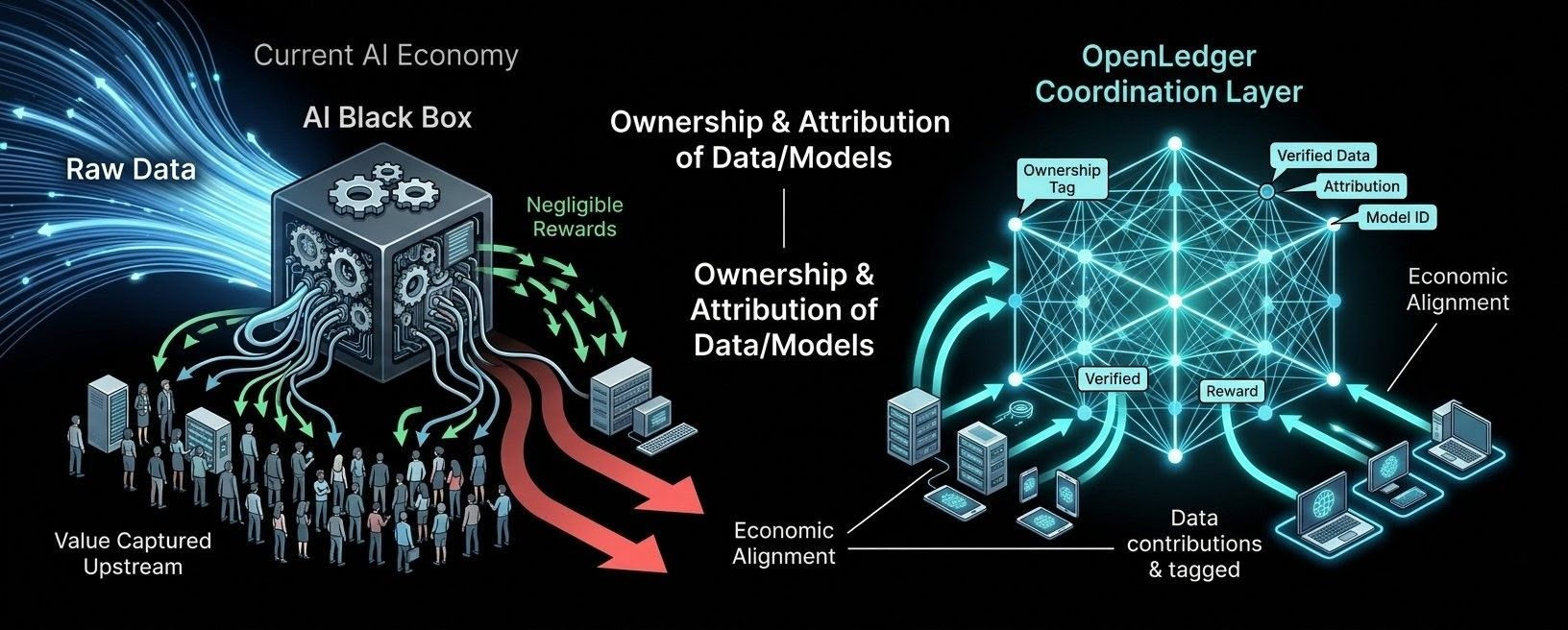
The attribution of data.
The ability to capture economic value from contributing data, models, and agents into an AI ecosystem.
That distinction feels increasingly important.
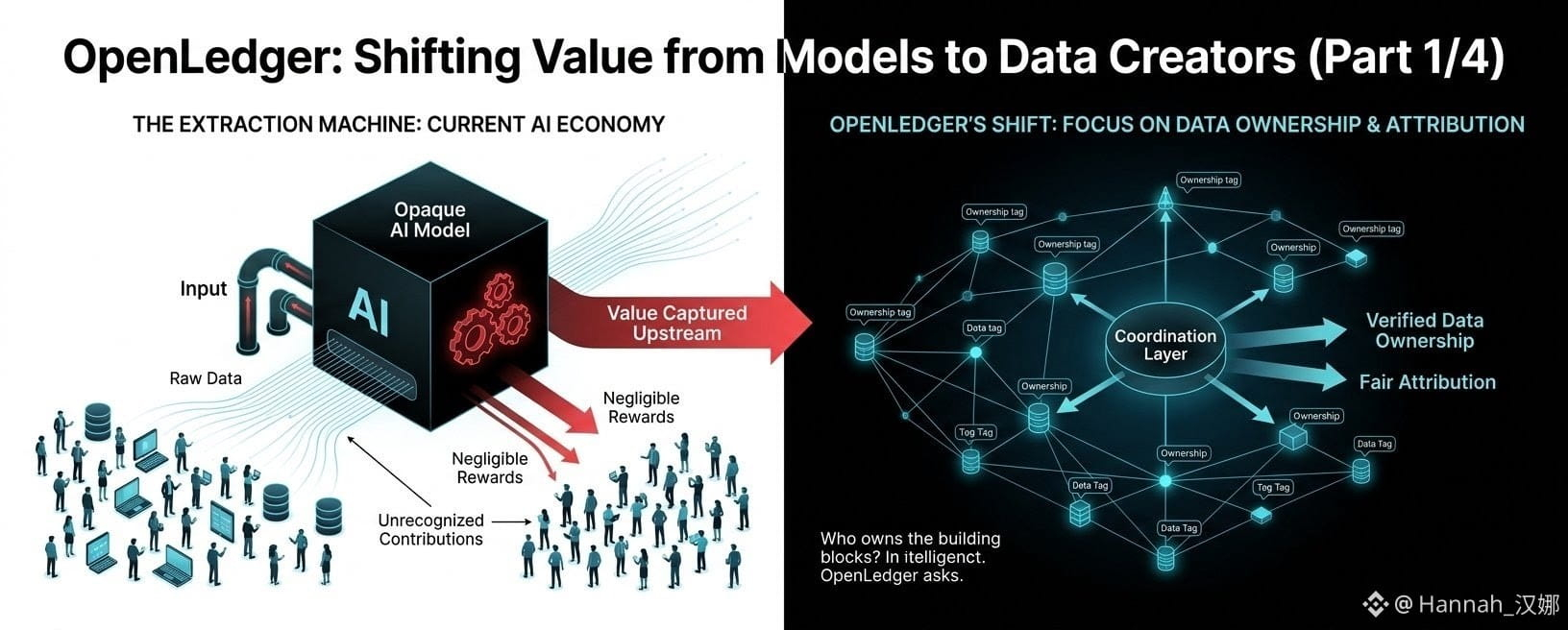
Right now, the AI economy resembles an extraction machine. Vast amounts of information flow into increasingly powerful models, yet the people and organizations supplying that information often capture very little of the value being created downstream.
Most discussions around AI focus on who builds the best model.
OpenLedger seems more interested in asking who deserves compensation for helping make that model valuable in the first place.
That's a different conversation.
And honestly, it might be a more important one.
The project is attempting to create a blockchain-based infrastructure where contributors can bring data, AI models, and autonomous agents into a shared ecosystem and receive rewards based on their participation and usefulness.
The idea sounds complicated until you strip away the jargon.
Imagine thousands of people contributing pieces of intelligence.
Instead of that intelligence disappearing into a black box owned by a single company, the network tracks contributions and creates mechanisms for value to flow back toward contributors.
That's the basic thesis.
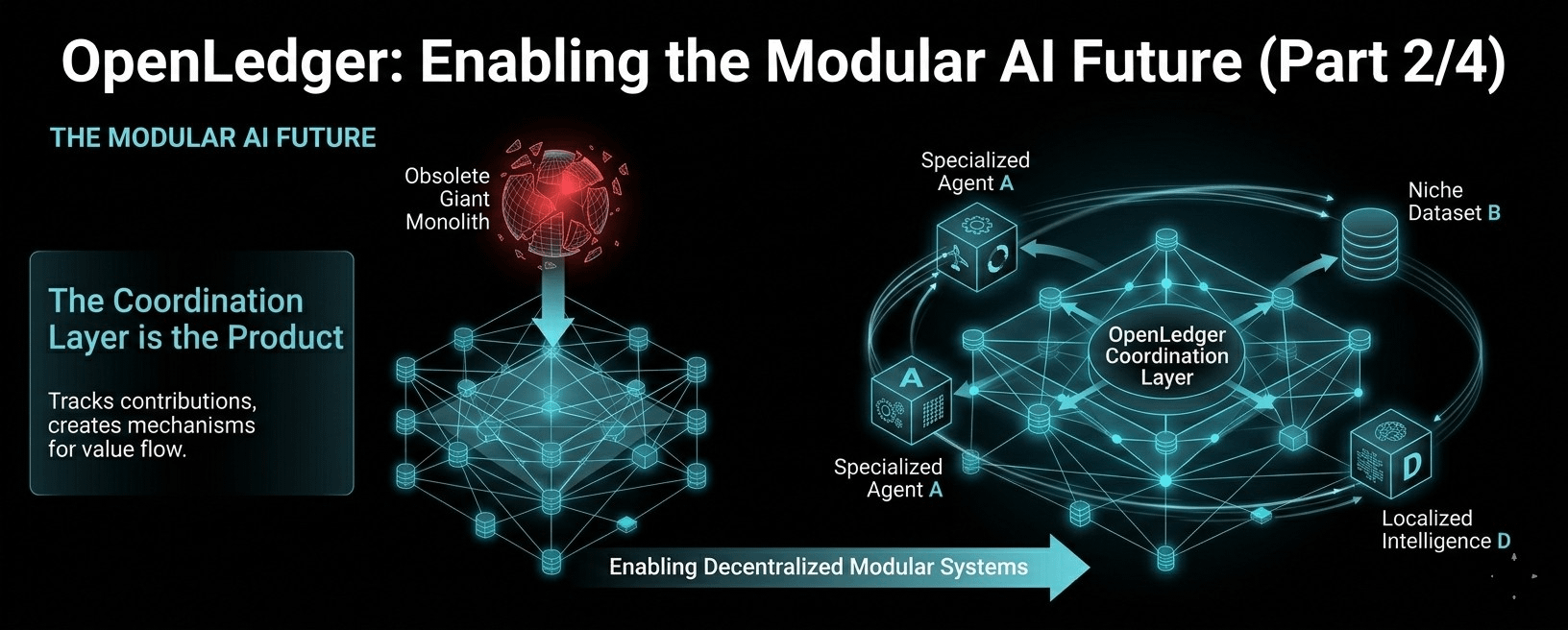
The blockchain isn't the product.
The coordination layer is the product.
That's where OpenLedger starts separating itself from a lot of AI-related crypto projects.
Many competitors are focused on compute power. Others focus on decentralized training or inference. OpenLedger appears to be targeting ownership and attribution, which feels like a less crowded but potentially more important part of the stack.
Because if AI becomes increasingly modular and I think that's exactly where things are heading then attribution becomes critical.
The future probably isn't one giant model doing everything.
It's likely thousands of specialized systems interacting with each other.
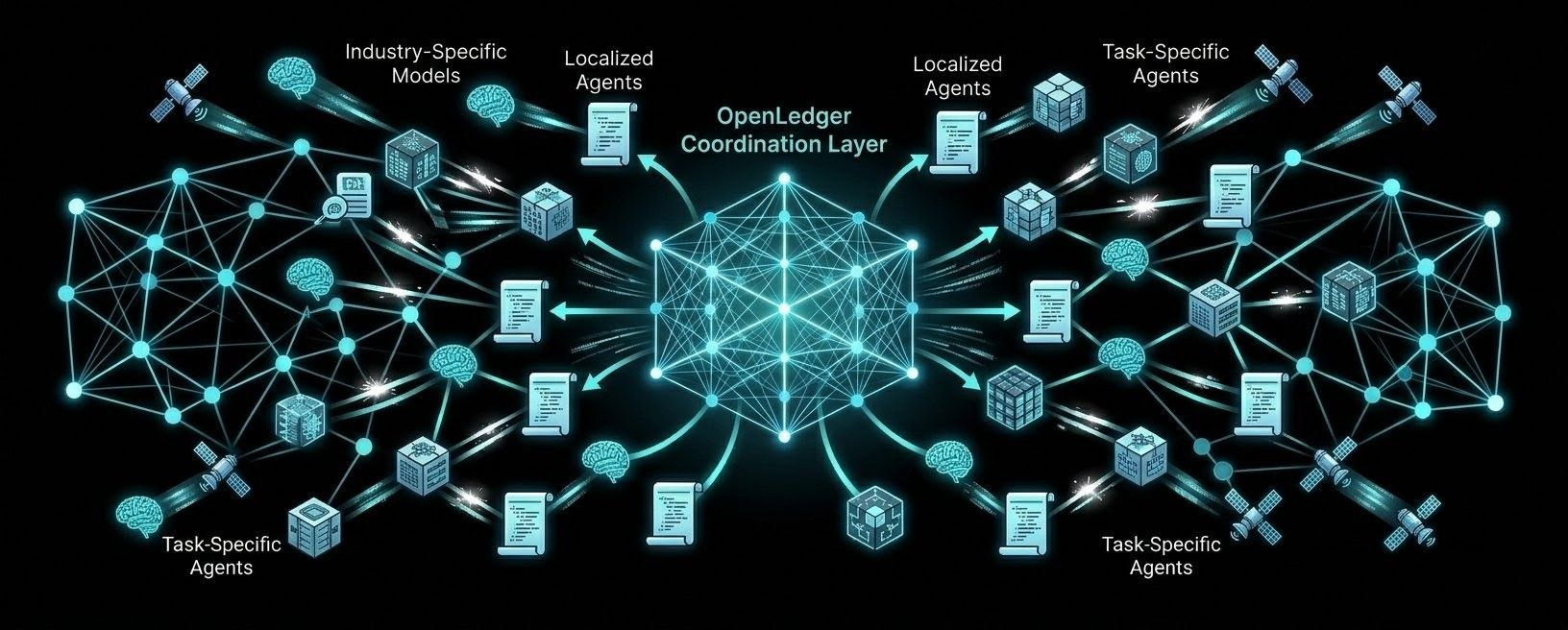
Industry-specific models.
Niche datasets.
Task-specific agents.
Localized intelligence.
In that world, understanding who contributed what becomes a foundational requirement rather than a nice feature.
That's the future OpenLedger seems to be positioning for.
Whether that future arrives is another question entirely.
One thing I appreciate is that the problem feels real regardless of token prices.
That's becoming a rare compliment in crypto.
The strongest projects are often built around problems that still exist when markets turn bearish.
Ownership in AI doesn't disappear because sentiment changes.
Attribution doesn't stop mattering because Bitcoin has a bad quarter.
The challenge is proving that blockchain is actually the best solution.
That hurdle remains significant.
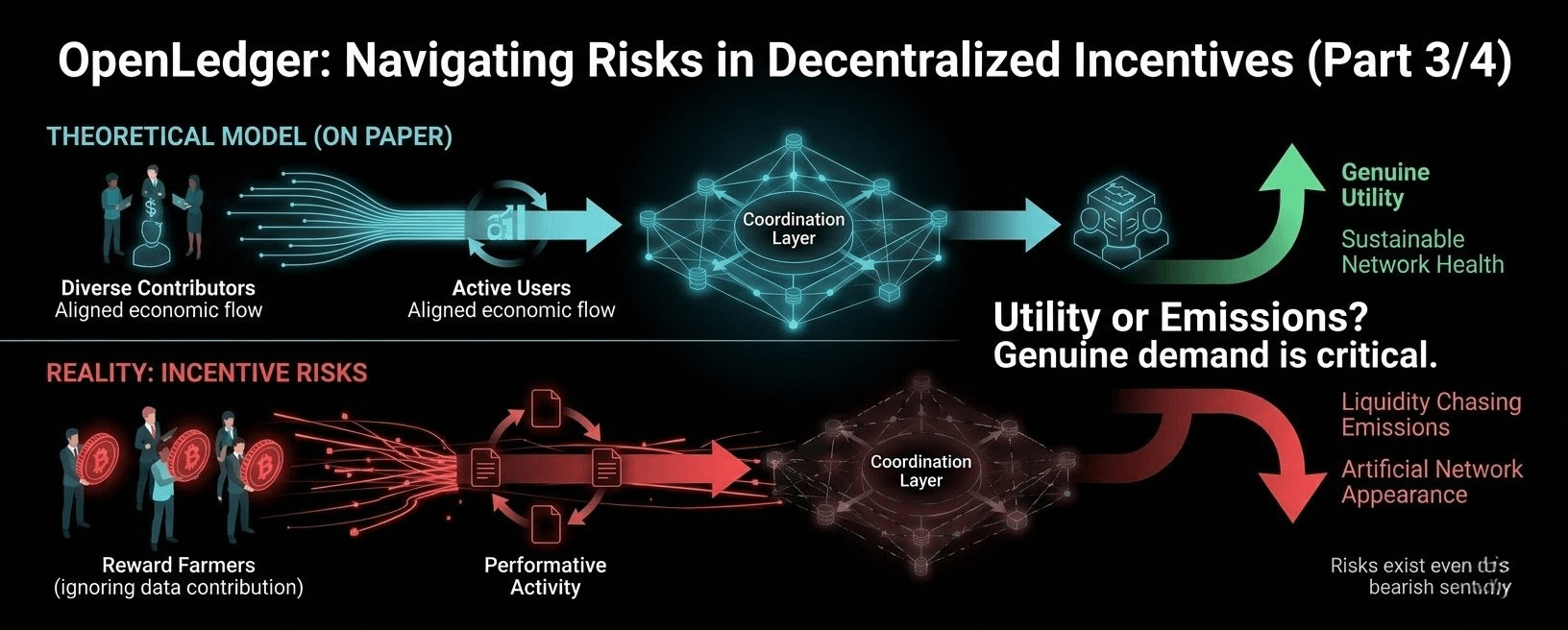
The token incentives are designed to encourage participation across the network. Contributors provide resources. Users consume resources. Value circulates through the ecosystem. In theory, everyone becomes economically aligned.
Crypto veterans know how difficult that is in practice.
Incentive systems often look elegant on paper.
Reality introduces complications.
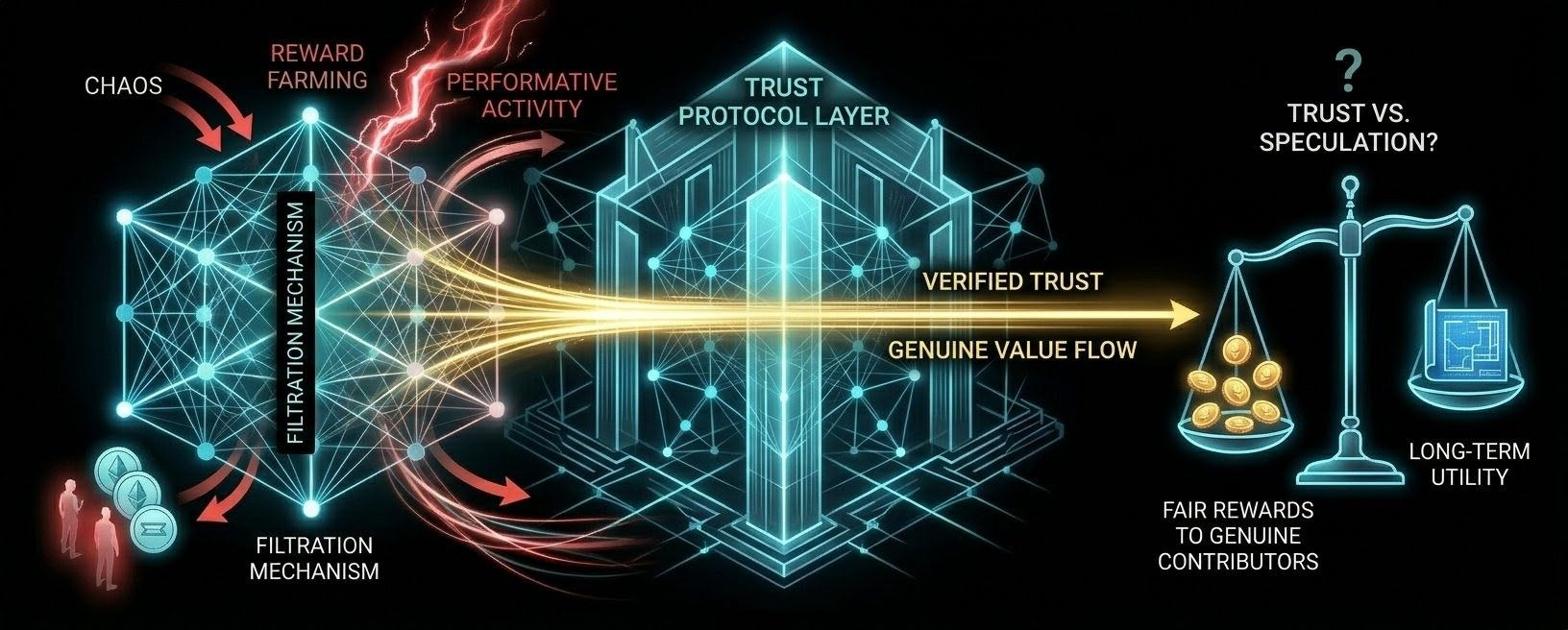
People farm rewards.
Liquidity chases emissions.
Activity becomes performative.
A network can appear healthy long before anyone discovers whether the demand underneath is genuine.
That's one of the biggest risks I see with OpenLedger.
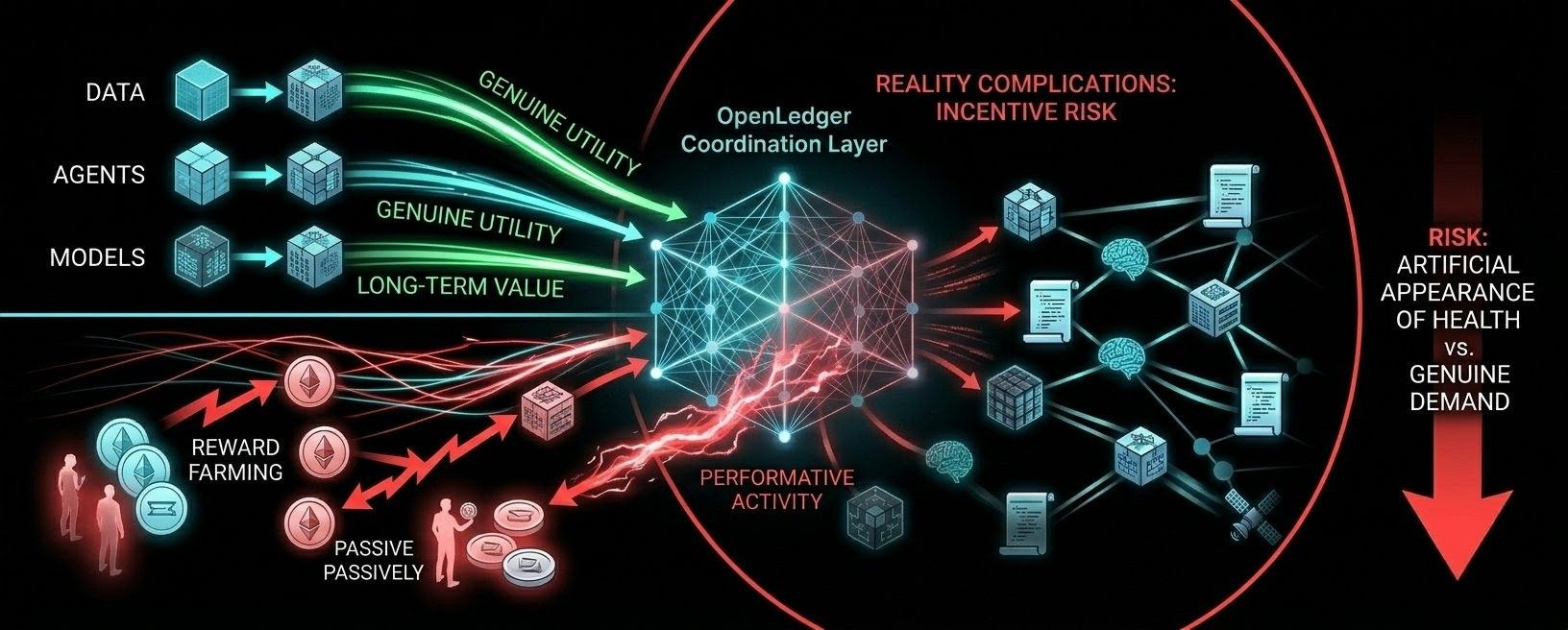
The long-term success of the model depends on whether participants are there because the network provides meaningful utility or because temporary incentives make participation attractive.
Those are very different foundations.
The adoption side is still something I watch carefully.
Partnership announcements are everywhere in crypto. Most of them don't matter.
The only partnerships worth paying attention to are the ones that create new behavior.
Do they bring new users?
Do they create new economic activity?
Do they solve a distribution problem?
Or are they simply logos placed next to each other in a presentation deck?
The same logic applies to traction.
Numbers matter less than behavior.
A smaller group of genuinely engaged contributors can be more meaningful than a large group of passive participants collecting rewards.
What interests me most about OpenLedger isn't the technology itself.
It's the timing.
Crypto and AI are both going through identity crises.
Crypto is still searching for applications that extend beyond speculation.
AI is still figuring out how value should be distributed.
OpenLedger sits directly at that intersection.
And there's a subtle risk that rarely gets mentioned.
Everyone assumes future AI systems will reward openness.
What if they don't?
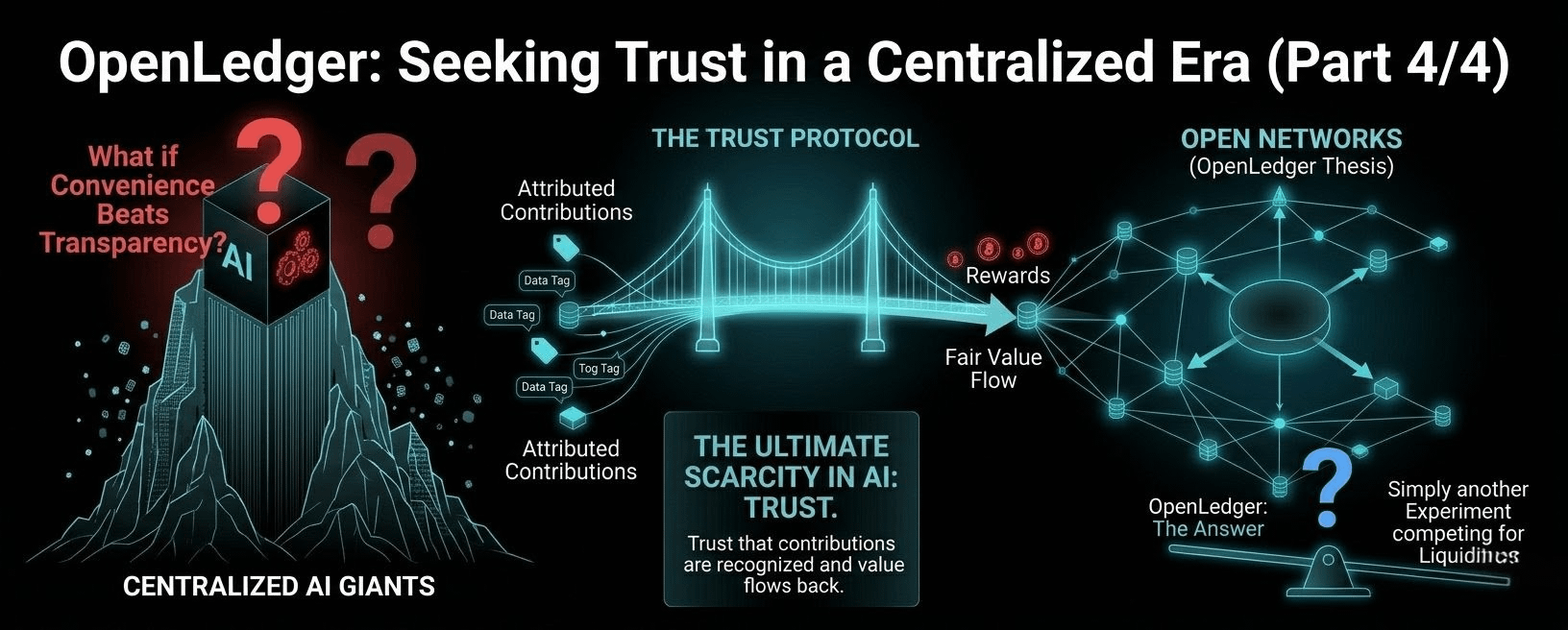
What if the most successful AI products end up becoming even more vertically integrated than today's technology giants?
What if convenience beats transparency?
What if users simply choose the best outcomes regardless of where the underlying intelligence came from?
That's the scenario every decentralized AI project has to wrestle with.
Because being philosophically correct doesn't guarantee market adoption.
Yet there's another possibility.
Maybe the real scarcity in the AI era isn't compute.
Maybe it isn't models.
Maybe it isn't even data.
Maybe it's trust.
Trust that contributions are recognized.
Trust that ownership is respected.
Trust that value flows back to the people creating it.
That's the part of the OpenLedger thesis that keeps sticking in my mind long after I close the browser tab.
Not because I'm certain it's right.
Because I'm not.
But because it asks a question that feels increasingly difficult to ignore as AI becomes more powerful and more centralized.
If intelligence becomes one of the world's most valuable assets, who actually owns the building blocks that created it and will networks like OpenLedger become the answer, or simply another well-designed experiment competing for liquidity?