
A few weeks ago I found myself going down one of those rabbit holes that crypto seems to create every few months.
Not because I was hunting for a new token or chasing the latest narrative. If anything, I've become more skeptical of narratives the longer I've been around. The market has a habit of taking a legitimate idea, wrapping it in speculation, and then running so far ahead of reality that nobody remembers what the original problem was.
Lately that problem has been AI.
Not AI agents. Not AI memes. Not AI launchpads.
Just AI itself.
The more I looked at what was happening across the sector, the more one question kept bothering me. Everyone talks about models. Everyone talks about compute. Everyone talks about who is building the smartest AI.
But almost nobody talks about where the value actually comes from.
Eventually that question led me to OpenLedger.
What caught my attention wasn't some flashy product demo or a giant partnership announcement. It was the fact that the project seems focused on something most people ignore because it's less exciting than model benchmarks.
Data.
Not just data as a buzzword. Data as an economic asset.
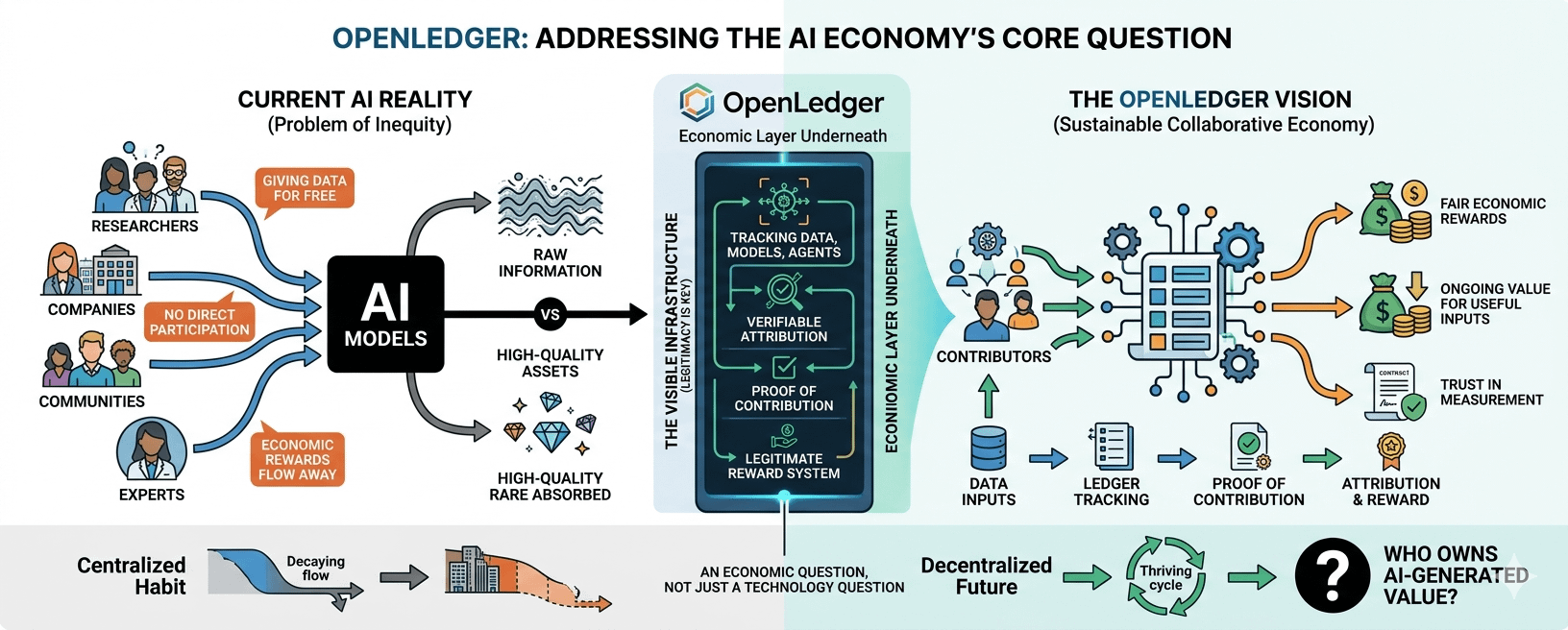
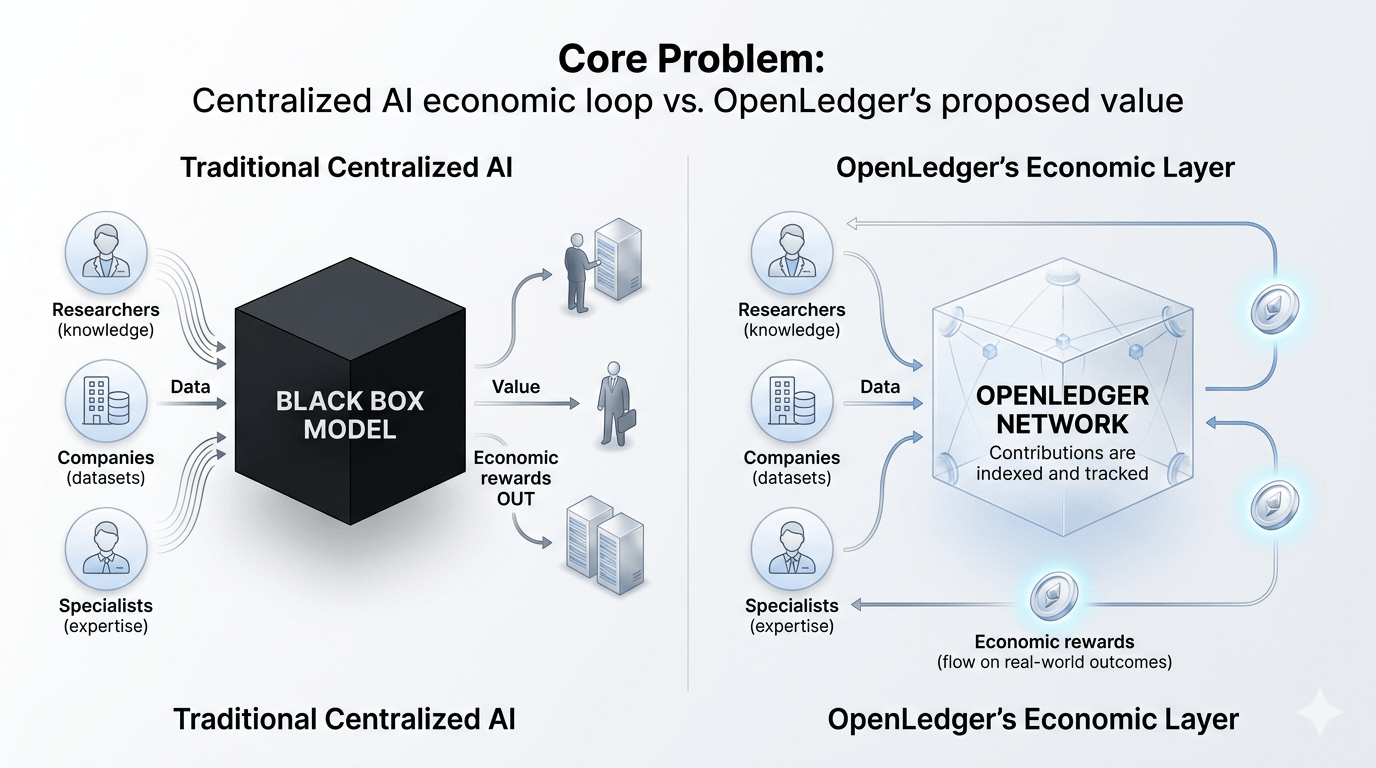
The current AI industry has a strange contradiction built into it. AI systems become valuable because they learn from information created by millions of people, yet the people contributing that information rarely participate in the value that gets created later.
A researcher contributes knowledge.
A company contributes datasets.
A specialist contributes expertise.
An entire community contributes collective intelligence.
Then a model gets built, value gets generated, and somehow the economic rewards mostly flow somewhere else.
OpenLedger is essentially built around the idea that this isn't sustainable forever.
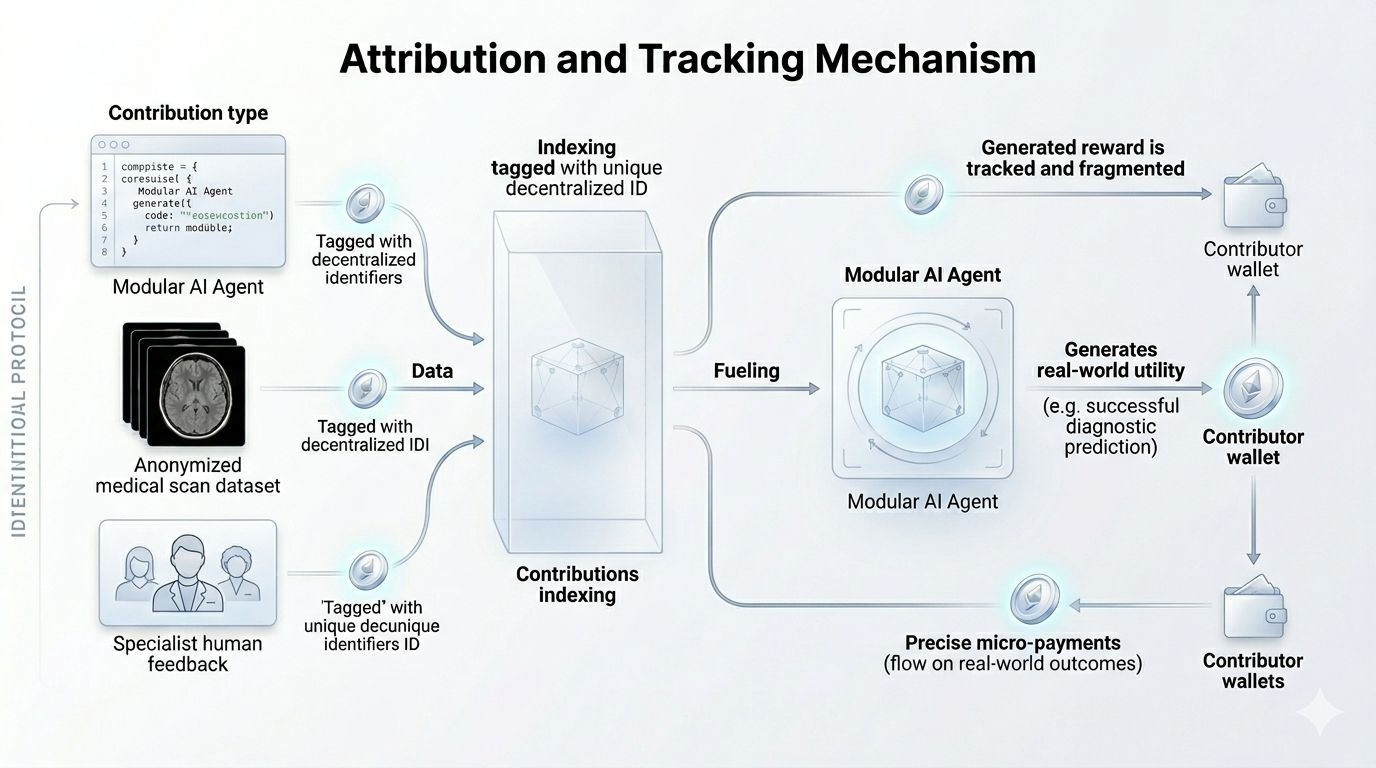
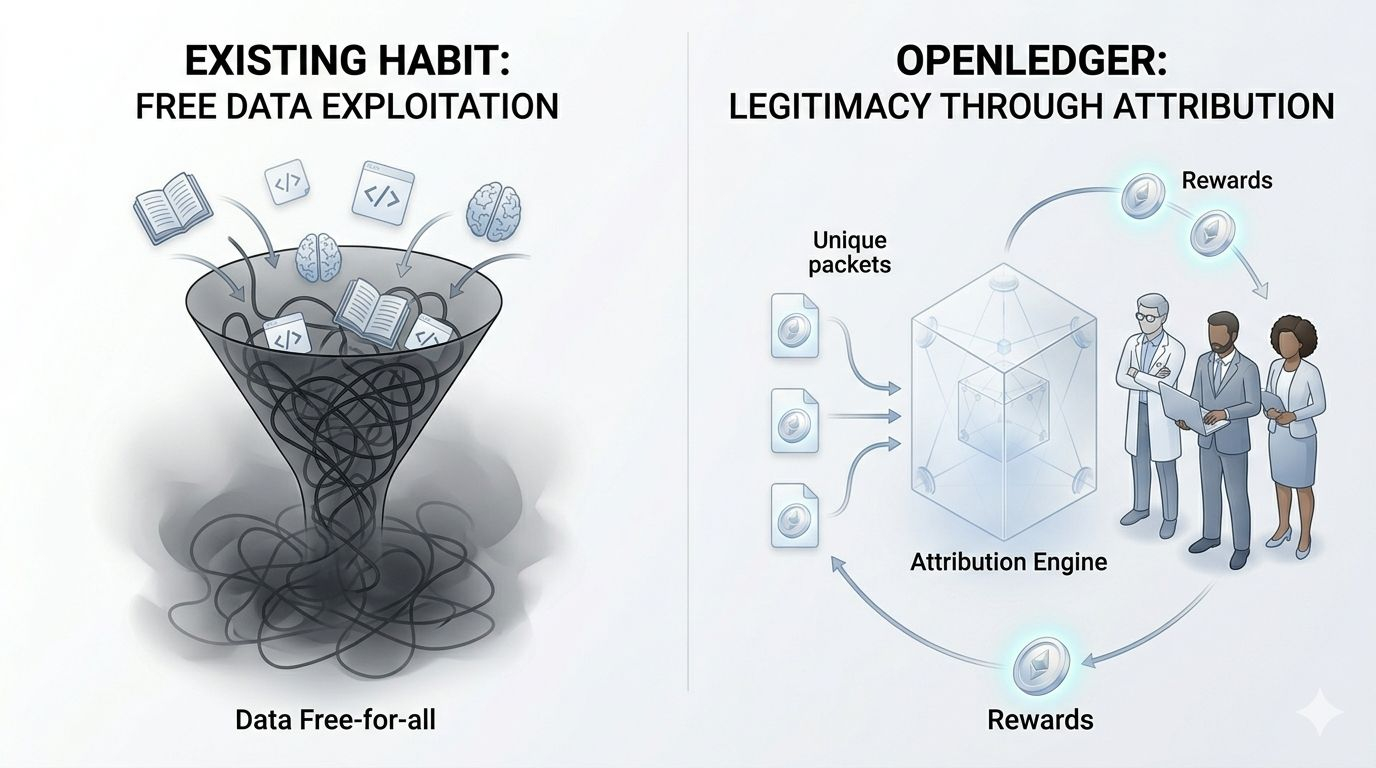
The project is trying to create a framework where data, models, and AI agents can be tracked, attributed, and rewarded. Instead of contributions disappearing into a black box, contributors can theoretically receive ongoing economic value when their inputs help produce useful outcomes.
At least that's the vision.
And honestly, it's one of the few AI-related ideas in crypto that immediately felt connected to a real-world problem.
Because if we're being honest, the industry is approaching a point where access to quality data may matter more than access to raw computation.
The internet has endless information.
Useful information is different.
High-quality financial datasets aren't easy to find.
Medical datasets aren't easy to find.
Industry-specific knowledge isn't easy to find.
Human expertise definitely isn't easy to find.
As AI becomes more sophisticated, those things become increasingly valuable.
That's why OpenLedger feels interesting to me. It isn't trying to become the next AI model. It isn't pretending it can compete directly with billion-dollar AI companies.
Instead it seems focused on the economic layer underneath everything.
Who contributed value?
How do you prove it?
How do you reward it?
Those questions sound boring until you realize they may determine who wins the next phase of AI.
One thing I notice in crypto is that people often underestimate infrastructure because infrastructure doesn't create immediate excitement.
Nobody gets emotional about accounting systems.
Nobody tweets twenty times a day about attribution frameworks.
But sometimes the less visible layers end up mattering more than the flashy applications built on top.
The internet itself worked that way.
Most people never think about the protocols underneath the websites they use every day.
The same thing could happen with AI.
Of course, having a compelling idea and building a successful network are completely different things.
This is where my skepticism starts kicking in.
OpenLedger depends heavily on incentives working exactly as intended.
That sounds simple until you remember how many crypto projects have struggled with incentive design.
If contributors don't feel properly rewarded, they leave.
If rewards attract low-quality participation, quality declines.
If attribution becomes difficult or disputed, trust disappears.
These aren't technical problems as much as human problems.
And human problems are usually harder.
There's also the adoption question.
I think a lot of AI infrastructure projects are quietly making a bet on a future that hasn't fully arrived yet.
They're betting that AI becomes increasingly open, modular, and collaborative.
They're betting that developers want decentralized alternatives.
They're betting that ownership and attribution become important enough that people actively seek solutions.
Maybe they're right.
Maybe they're early.
Sometimes those are the same thing.
When I look at OpenLedger, I don't get the impression that adoption is being manufactured through pure marketing. The narrative at least feels connected to something happening beneath the surface of the industry. There is a growing conversation around who owns AI-generated value and whether contributors deserve more direct participation.
That conversation wasn't happening much two years ago.
Now it seems unavoidable.
What I find most interesting, though, is something slightly different.
Crypto often assumes tokenization is the answer.
Tokenize an asset.
Tokenize a network.
Tokenize a behavior.
Problem solved.
But I don't think OpenLedger's success, if it succeeds, will come from tokenization itself.
It will come from legitimacy.
People have to genuinely believe the system is measuring contributions fairly.
That's a much harder challenge than launching a token.
In some ways, the project isn't really competing against other AI blockchains.
It's competing against the existing habit of giving away data for free.
And habits are incredibly difficult to change.
The market will probably continue chasing whatever narrative comes next. It always does. Liquidity rotates. Attention shifts. New sectors emerge.
But every now and then a project appears that isn't really asking a technology question.
It's asking an economic question.
OpenLedger feels like one of those projects.
Because if AI becomes one of the defining industries of the next decade, the biggest debate may not be who builds the smartest models.
It may be who deserves to own the value they create.
And right now I'm not sure the industry has an answer to that yet.
Do we eventually move toward systems that reward contribution at every layer, or does convenience keep pulling everything back toward the same centralized structures we've seen before?