


Most conversations around agentic payments focus on speed. Faster execution. Faster settlement. Faster coordination between autonomous agents. But speed without identity does not scale it fragments.
In systems where agents transact autonomously, the core risk is not latency. It is attribution. Who initiated an action? Under which permissions? With what limits? When identity is abstracted away, coordination becomes brittle. Errors propagate faster than responsibility.
Kite’s architecture starts from this constraint. Instead of optimizing raw throughput, it builds a verifiable identity layer that separates users, agents, and execution sessions. This distinction matters. It allows agents to act independently without inheriting unrestricted authority. Governance becomes programmable instead of reactive.
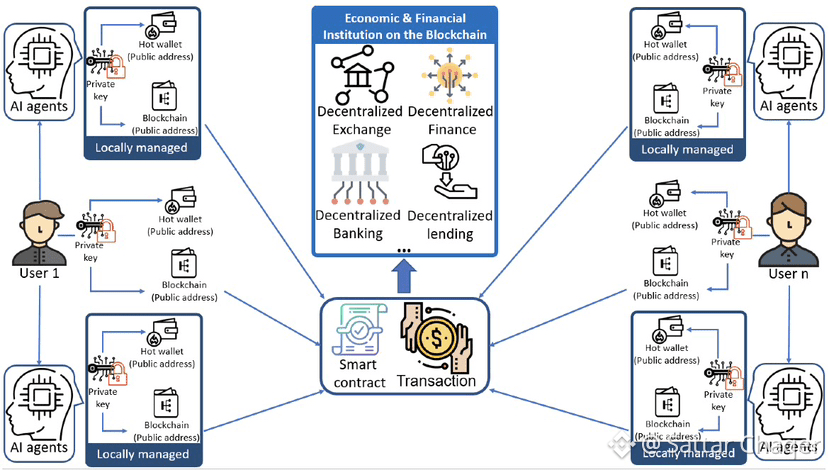
This is how agentic payments move from experimentation to infrastructure. Identity anchors behavior. Governance constrains risk. Speed becomes a byproduct, not the objective.
Agentic systems fail when every agent can do everything. Kite’s design assumes the opposite and that assumption is what allows scale.

