
Recent actions—like the U.S. seizure of a Russian oil tanker met by Russian submarine deployments—aren’t just headlines. They’re signals. Major capital holders are quietly positioning for systemic shifts, recognizing that world wars rarely begin with a sudden blast. Instead, they emerge from a quiet convergence of escalating crises, and that convergence appears to be underway.
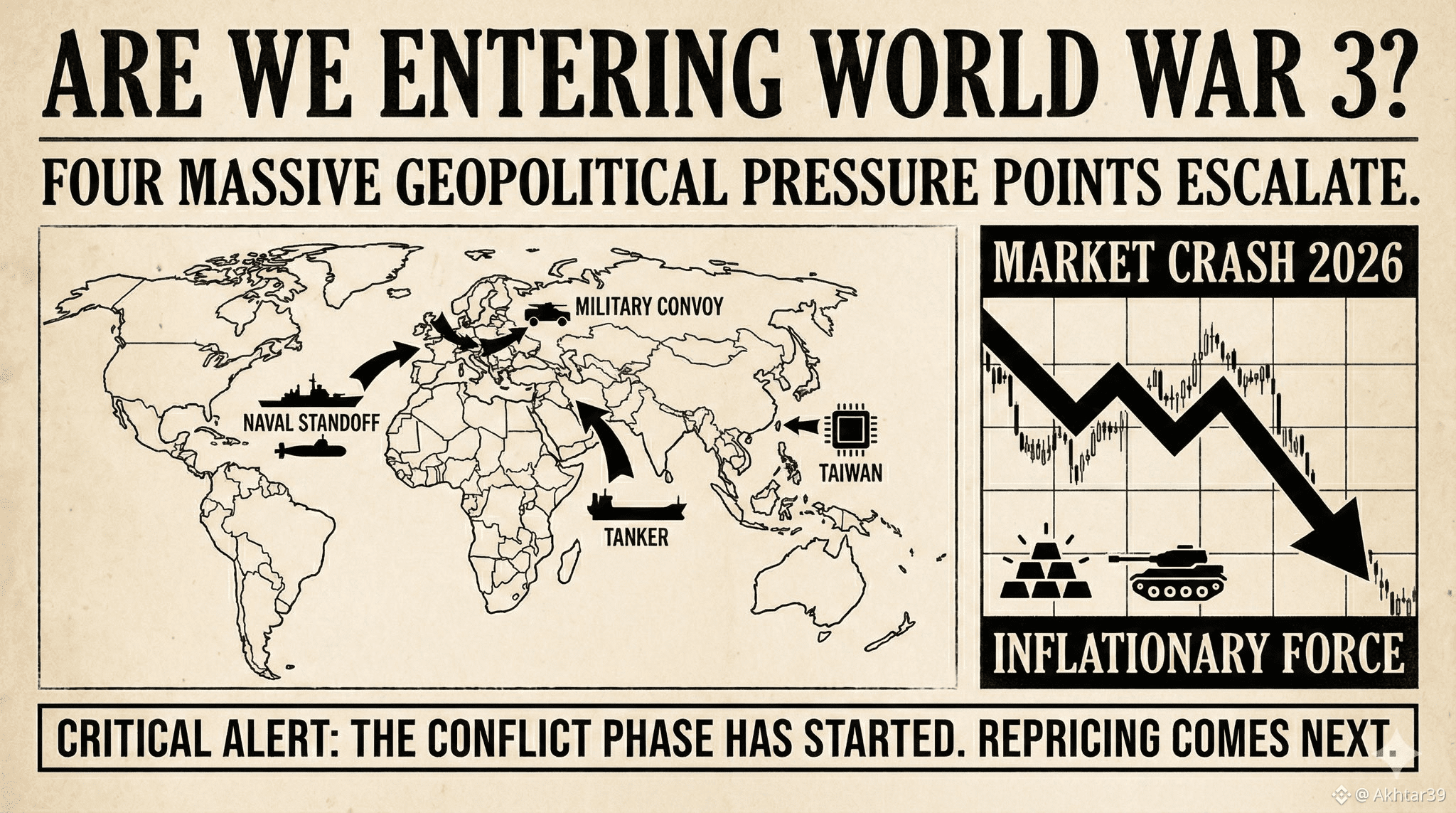

Currently, four critical geopolitical pressure points are heating up simultaneously:
1. Europe’s Rearmament Era
The decades-long peace dividend has ended. Nations are now prioritizing defense over deficits, with military budgets poised to surge—funded by borrowing that will reshape fiscal landscapes.
2. Middle Eastern Flashpoints
Critical shipping lanes and energy corridors hang in the balance. One miscalculation could sever vital flows, triggering a supply shock that echoes across global markets.
3. Asia’s Semiconductor Fault Line
Taiwan represents far more than territory—it’s the linchpin of global semiconductor production. Disruption there wouldn’t just affect geopolitics; it would freeze the technology that powers modern economies.
4. The Return of Spheres of Influence
The U.S. pivot toward Latin America underscores a broader retreat from globalization. The world is fracturing into regional blocs, where strategic influence outweighs cooperative partnership.
Why This Should Matter to Every Investor 📈
Current asset valuations seem to assume uninterrupted stability and continued disinflation. Yet history shows that conflict is among the most powerful inflationary forces:
· Government spending accelerates dramatically.
· Supply chains fragment and duplicate—efficiency is sacrificed for resilience.
· The underlying cost structure of goods and services rises, often permanently.
Notice the disconnect: bond markets are growing restless while equities remain relatively calm. That divergence often precedes a dramatic repricing.
Central banks aren’t ignoring these risks. Their record gold acquisitions signal a move away from paper debt toward assets without counterparty risk. It’s a quiet hedge against systemic instability.

The Coming Shift in Wealth Preservation 🛡️
The transition is already beginning—from financial wealth (stocks and bonds) to real wealth (commodities, defense assets, and tangible resources). Portfolios structured for the pre-2020 era may be carrying hidden, untenable risks.
The initial phase of geopolitical conflict is here. Market repricing will follow.
Observers with decades of experience note that a significant market downturn appears probable by late 2026. When decisive moves are made, they will be shared publicly—but timing will be critical for those who wish to align their strategies.
Don’t forget to like, follow, and share! 🩸 Thank you so much ❤️

