
@Walrus 🦭/acc is emerging at a critical inflection point for blockchain infrastructure: the gap between deterministic on-chain logic and unreliable, fragmented real-world data. While smart contracts are immutable and transparent, the external data they rely on is often neither. This structural weakness limits blockchain adoption across regulated finance, real-world assets (RWAs), DeFi risk markets, and enterprise use cases. Walrus directly targets this problem by redesigning how blockchains source, verify, and depend on real-world data—while aligning incentives through its native token.
1. The Core Problem: Blockchains Cannot Natively Trust Reality
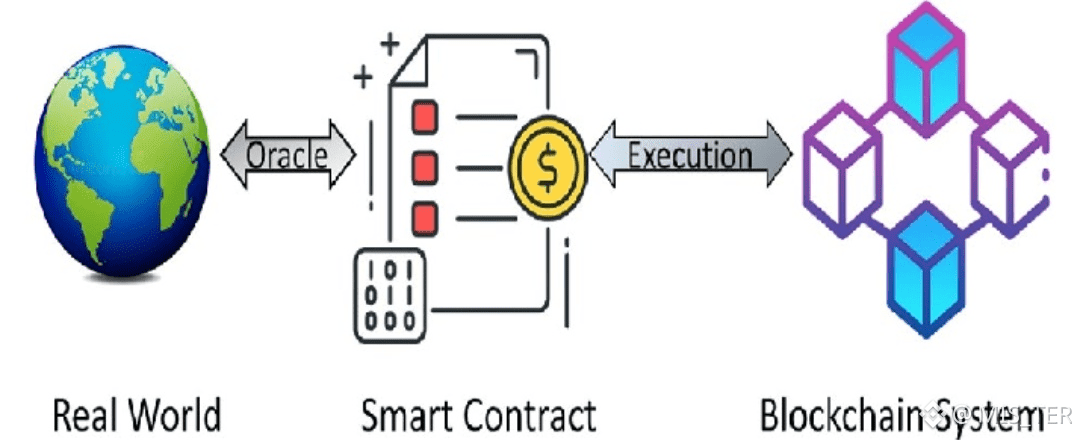
Blockchains excel at internal truth—balances, transactions, and state transitions are mathematically verifiable. However, external truth (prices, events, identities, compliance data, IoT signals) exists outside the chain and must be imported.
This creates three systemic weaknesses:
1. Single-Source Fragility
Many blockchains depend on a small number of oracle providers, creating centralized choke points.
2. Data Integrity Risk
If off-chain data is manipulated, delayed, or censored, smart contracts execute incorrectly—often irreversibly.
3. Regulatory and Financial Exposure
In RWAs, derivatives, insurance, and compliance-driven DeFi, incorrect data does not merely cause losses; it introduces legal and systemic risk.
Without dependable real-world data, blockchains remain powerful but isolated computation layers rather than full financial or economic infrastructure.
---
2. Why Traditional Oracle Models Are No Longer Sufficient
Legacy oracle designs were optimized for price feeds, not for the expanding needs of modern blockchains. As on-chain use cases mature, oracle limitations become more visible:
Static data models that do not adapt to complex events
Limited privacy guarantees
Weak accountability for incorrect data delivery
Poor alignment between data quality and economic incentives
This is especially problematic for institutional-grade DeFi and tokenized real-world assets, where data accuracy directly impacts solvency, settlement, and compliance.
Walrus is not attempting to patch this model—it is replacing it.
3. Walrus’ Core Thesis: Dependability Over Availability
Most data protocols optimize for availability (data exists). Walrus optimizes for dependability (data can be trusted under adversarial conditions).
Dependability, in Walrus’ design, means:
Data correctness is economically enforced
Data sources are cryptographically verifiable
Data delivery is resistant to manipulation and collusion
Historical data remains auditable
This shift is fundamental. In high-value smart contracts, wrong data is worse than no data. Walrus treats data as financial infrastructure, not middleware.
4. Architectural Design: How Walrus Bridges On-Chain and Off-Chain Truth
Walrus operates as a decentralized data validation and verification layer that sits between real-world data sources and smart contracts.
Key architectural pillars include:
a) Multi-Source Data Aggregation
Rather than relying on a single feed, Walrus aggregates multiple independent data sources. Discrepancies are surfaced, weighted, and resolved through protocol-level logic.
b) Cryptographic Proofs and Validation
Data is not merely transmitted; it is validated using cryptographic guarantees that ensure authenticity and tamper resistance.
c) Economic Slashing and Incentives
Data providers and validators stake the Walrus token. Incorrect or malicious data submissions trigger economic penalties, directly aligning honesty with profitability.
d) On-Chain Auditability
Historical data states remain accessible for verification, dispute resolution, and compliance—critical for regulated markets.
5. The Walrus Token: Economic Backbone of Data Integrity
The Walrus token is not a speculative add-on; it is the enforcement mechanism of the protocol.
Its functions include:
Staking: Data providers and validators must stake tokens to participate.
Slashing: Proven data faults result in token loss.
Incentivization: High-quality, consistent data delivery is rewarded.
Governance: Token holders influence protocol upgrades, parameters, and data standards.
This design ensures that data dependability is not based on reputation alone, but on economic finality.
---
6. Why Real-World Assets (RWAs) Need Walrus
RWA tokenization—real estate, commodities, bonds, invoices—depends entirely on accurate external data:
Asset valuation
Ownership verification
Regulatory status
Cash flow events
A single corrupted data feed can invalidate an entire on-chain asset structure. Walrus enables RWAs to function with institutional-grade assurance, making it suitable for asset managers, issuers, and regulated platforms.
7. DeFi Risk Management and Walrus’ Strategic Advantage
Modern DeFi is no longer just yield farming. It includes:
Structured products
Insurance markets
Credit scoring
Liquidation engines
All of these require timely, correct, and manipulation-resistant data. Walrus reduces oracle-induced black swan events by introducing layered verification and economic accountability.
This positions Walrus as a risk-reduction primitive, not merely a data provider.
8. Privacy, Compliance, and the Next Phase of Blockchain Adoption
As blockchains move into regulated environments, data must satisfy contradictory requirements:
Private, yet auditable
Permissionless, yet compliant
Transparent, yet selective
Walrus’ architecture is designed to support selective disclosure, enabling smart contracts to consume verified data without exposing raw sensitive inputs.
This capability is essential for onboarding enterprises and financial institutions.
9. Strategic Implications for the Walrus Token Ecosystem
As more protocols integrate Walrus:
Demand for staking increases
Token velocity decreases
Governance influence grows in value
The protocol becomes harder to attack economically
In effect, the Walrus token accrues value from systemic dependence, not short-term speculation.
10. Conclusion: Walrus as a Trust Layer for the Real World
Blockchains do not fail because of weak cryptography or poor consensus. They fail when reality is misrepresented. Walrus addresses the most underappreciated constraint in decentralized systems: dependable external data.
By combining cryptographic verification, economic enforcement, and decentralized validation, Walrus transforms real-world data from a vulnerability into a strength.
As blockchains expand into finance, governance, and real-world asset markets, Walrus is positioned not as an optional service—but as essential infrastructure.


