I've been following the Sui ecosystem closely for a couple of years now. Walrus keeps standing out to me as one of those projects that just makes sense. It doesn't chase endless hype. It focuses on solving real problems. As we move into 2026, privacy is becoming a much bigger conversation in crypto. DeFi has grown amazingly, but the lack of real privacy still holds it back for a lot of people. That's why I keep thinking Walrus and its WAL token could end up playing a central role in the next wave of private DeFi apps. Let me share my thoughts on this in a relaxed way. We'll cover the basics, the token utility, staking, governance, and how it all connects to privacy. Just like a normal chat.
First, a quick rundown on what Walrus actually is for anyone who hasn't dived in yet.
Walrus is a decentralized storage network built specifically for the Sui blockchain. It handles large files efficiently. Things like images, videos, AI training datasets, game assets, or any kind of big data that would clog up a regular chain if stored directly on it. The team comes from Mysten Labs roots, the same people who built Sui. So the integration feels natural and performant. You store these large chunks of data, called blobs, across a distributed set of nodes. In return, you get a simple reference on-chain that's cheap and fast.
The real game changer for me is the tight connection with Seal. Just today, on January 9, 2026, the Seal whitepaper dropped. It explains programmable privacy and access control in detail. You can encrypt data stored on Walrus using Seal. Then you set exact rules for who can decrypt it. Maybe only holders of a certain token, or specific wallets, or even after a time lock. Everything stays enforced by smart contracts. No central party holds the keys. It's fully decentralized confidentiality.
This setup opens huge doors for privacy in DeFi. Blockchains are great because everything is verifiable and open. But that also means everyone can see your balances, trades, and full history. It leads to front running, privacy leaks, and just feels uncomfortable for everyday finance. Traditional banks keep things private. DeFi should be able to do the same without losing its core strengths. Walrus combined with Seal provides the storage layer that makes private applications possible at scale.
Picture a lending platform where collateral details stay encrypted until everything settles. Or a DEX where individual trade sizes stay hidden to prevent predators from hunting stops. Or private vaults where your full positions and strategies remain visible only to you. The sensitive data lives safely on Walrus, protected by Seal. Smart contracts handle access and verification. It keeps things decentralized while adding real privacy. For someone like me who's tired of fully public ledgers, this feels like the infrastructure we've been waiting for.
Let's move to the WAL token. It's not just another coin with vague promises. It has clear, built-in uses from the start.
The main one is paying for storage. When you upload a blob to Walrus, you pay upfront in WAL for the time you want it stored. The pricing stays designed to feel stable in dollar terms. Users avoid wild swings. The fees go to node operators and stakers over time. As more projects build on it, whether AI tools, gaming platforms, social apps, or DeFi protocols that need secure data handling, the demand for storage grows. That directly drives demand for WAL.
Right now in early 2026, things look healthy. The price sits around 0.15 dollars, with a solid 13 percent jump in the last day or so across major trackers. Over a billion WAL tokens are already staked. Usage triggers partial burns on fees, which reduces supply as activity increases. It's a nice deflationary touch.
Beyond payments, WAL powers network security through staking. More on that soon.
Governance is another piece. Holders influence key decisions.
From a privacy DeFi angle, the utility really shines. Protocols can store encrypted user data, proofs, or sensitive states on Walrus and pay seamlessly with WAL. It becomes the natural fuel for private data infrastructure.
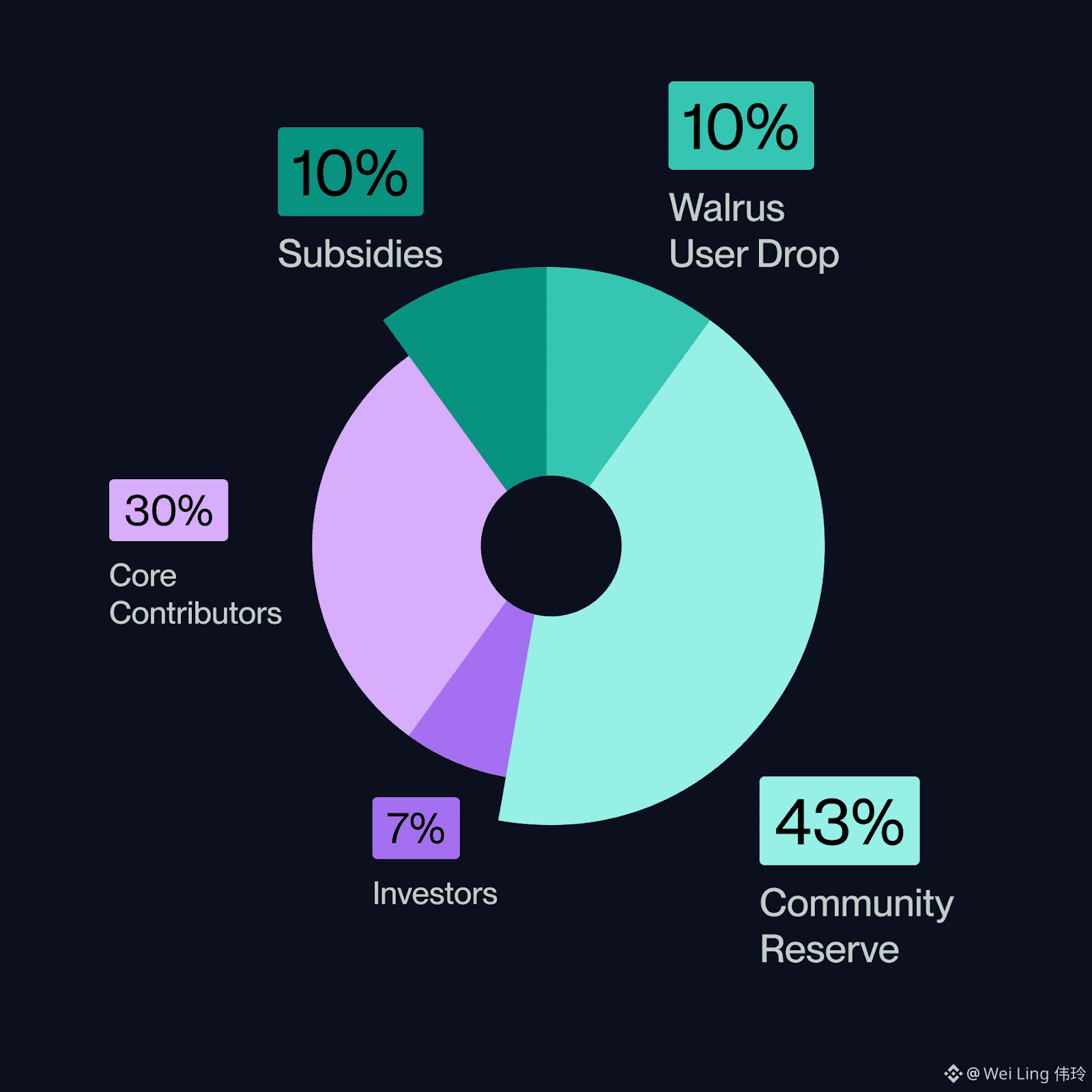
Total supply caps at 5 billion. A large portion went to the community through airdrops, incentives, and reserves. It keeps things decentralized and rewards people who contribute early.
Staking WAL feels straightforward and rewarding.
It's delegated proof of stake. You don't need to run expensive hardware yourself. Just hold WAL, choose a reliable node operator, and delegate your tokens. Nodes with more delegated stake get more data assigned. That means higher rewards. You earn a share based on how well the node performs.
Rewards come from those storage fees users pay. As the network sees more blobs and longer commitments, the reward pool grows. Early subsidies help keep things attractive while adoption builds.
There's a smart penalty for moving stake around too fast. Part of it burns, and part redistributes to longer term stakers. It encourages commitment over quick flips.
Slashing is active now too. Poor performing nodes lose some stake. It keeps everyone honest and the network reliable.
I've staked some myself. The current yields look decent, especially with over a billion tokens locked and growing usage. For privacy focused apps, having a dependable storage layer matters a lot. If nodes go offline or act badly, private data could become unavailable. Strong staking incentives help prevent that. You earn passively while supporting the security.
Governance works in a practical way.
Staked WAL gives voting power on protocol changes. Things like fee adjustments, penalty rates, or upgrade proposals. It starts weighted toward nodes since they understand operations best. But delegation lets everyday holders participate indirectly.
As the project matures, this could evolve further. The setup prioritizes the community overall. Most tokens allocated to users, builders, and ecosystem growth.
In privacy DeFi, solid governance is key. Decisions around how Seal integrates deeper or how confidentiality features expand will come from the community. Holding and staking WAL gives you a real say.
Putting it all together, here's why I see WAL as potential backbone material for privacy focused DeFi.
DeFi needs strong layers. Execution from the chain, liquidity pools, oracles, and now reliable private storage. Walrus delivers that with native confidentiality options through Seal.
Early examples are already appearing. Apps using access gated content, private datasets, or encrypted AI weights. Recent reports, including nods in a16z's latest outlook, highlight Walrus as critical infrastructure for data privacy and markets.
On Sui's fast, scalable base, it positions well as the default choice for private dApps. Think shielded swaps with settlement details hidden until final. Private credit systems storing off chain assessments securely. Identity tools holding credentials without exposing extras.
All fueled by WAL payments. Secured by staked holders. Shaped by community governance.
As AI agents and DeFi continue blending, with agents handling portfolios that include private user data, the need for this kind of storage will only grow. WAL captures the value there.
Of course, risks exist. Markets swing hard. Adoption takes time to ramp. Competition in decentralized storage is real from projects like Arweave or Filecoin. Privacy tools can attract regulatory attention. Always research thoroughly and only put in what you can afford to lose.
The fundamentals feel strong though. Real utility driving demand. Fair distribution. Deflation from burns. Deep Sui integration. Team with proven track record.
For anyone active in Sui, interested in AI data plays, or wanting better privacy in finance, Walrus deserves attention. Try uploading a test blob. Stake a small amount. Get a feel for it.
I still think we're early here. Privacy could be the feature that finally brings DeFi to mainstream comfort levels.
What do you think? Is private storage the unlock we've needed? Or does full transparency win long term? I'd love to hear other views.
Thanks for reading my thoughts. Stay safe and keep exploring.