Walrus vs Traditional Cloud Storage
Why Decentralization Wins When It Comes to Cost, Censorship Resistance, and Security
If you have stored files online before you probably used a normal cloud service like Google Drive, Dropbox, or Amazon’s storage. You upload your files, pay some fees, and trust the company to keep everything safe. That has worked for years and it works for most people. But what if there was a different way? What if your data was not controlled by a big company but instead was spread out across many computers all around the world in a way that is more secure, less censorable, and maybe even cheaper? That is the idea behind Walrus, a decentralized storage network built on the Sui blockchain.
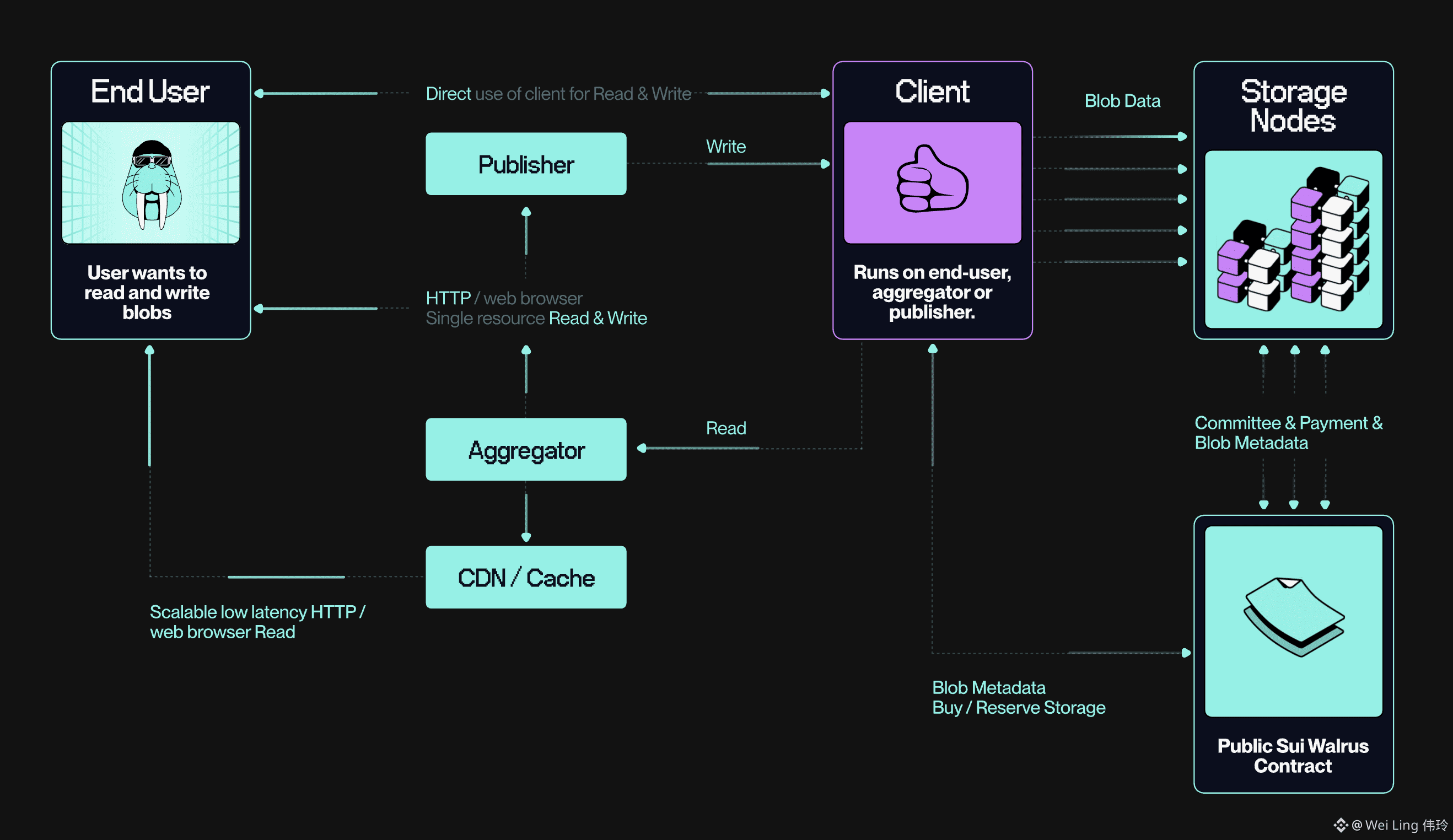
Walrus turns storage into something that does not rely on a single provider. Instead of one company owning the servers and your data, Walrus breaks files into many pieces, encodes them so they can be reconstructed even if some pieces go missing, and distributes those pieces over a decentralized network of storage nodes.
Let’s talk about what that means in real life and why many people believe decentralization like Walrus could win over traditional cloud storage in several big ways.
What Walrus Is in Everyday Words
Walrus is a network that stores data without a central boss. When you upload a file it gets split into fragments, encoded so even if parts are lost the file can still be rebuilt, and stored across many independent computers called nodes. What makes this system interesting is that it uses advanced coding which keeps the amount of space needed much lower than older decentralized storage ideas.
The network uses a native token called WAL for payments. You pay your fees in WAL, and the people who run storage nodes earn WAL in return. The same token also gives holders the ability to participate in decisions about how the system evolves.
Because Walrus builds on Sui, it can connect data directly to smart contracts. That means your stored files can become programmable assets that apps can interact with on the blockchain. A decentralized app could store images, videos, or game assets on Walrus and link them to tokens, rules, or user accounts all automatically.
How Normal Cloud Storage Works
Traditional cloud storage services are simple and familiar. You pick a provider like Google, Dropbox, or Amazon S3, upload your files, and trust that the company will keep them online. If you need more space you pay more. If you share a link, the company controls how it is delivered. If they decide to block the content for any reason you may lose access. Generally these services are reliable and fast, but there is always a central authority making all the decisions.
Most people are okay with this trade off, but if someone wants total control over their own files, or wants a system that cannot be censored by a central authority, or needs new ways to attach rules to data, traditional cloud storage has limits.
Why Walrus Can Be Cheaper
One of the big reasons people talk about decentralized storage is cost. Traditional cloud storage charges for both space and bandwidth. That can really add up, especially when you are storing large files like videos or datasets for machine learning.
Walrus uses a clever way of breaking files into smaller parts and encoding them so they can be rebuilt later. This approach needs only a modest amount of extra storage rather than making many full copies. That means the overall cost can be significantly lower than older decentralized systems and potentially also lower than centralized services, especially at scale.
Because the network is decentralized and payment goes directly to storage providers without big corporate markup, users can often store data cheaply. Programmable pricing and staking rewards that return value to the community help keep costs predictable while encouraging more people to run nodes.
Censorship Resistance and Who Controls Your Data
With traditional cloud storage a company decides what is allowed. If they get a request from a government or a policy enforcement team and there is a conflict with the company’s rules, your content could get taken down.
In a decentralized storage system like Walrus there is no single company that controls your data. Your files are spread over many independent nodes, and unless a huge portion of the network agrees to remove something it stays available. That makes censorship much harder.
This setup does not mean you can store illegal or harmful content without consequences, but it does make it much harder for any single authority to unilaterally shut down or block access to your data. For creators and developers who care about open access and content freedom, this is a powerful difference.
How Security Works Differently
Traditional cloud services rely on their own engineers and infrastructure to protect data. They manage firewalls, backups, encryption, and access controls. A hacker who breaches their systems might expose many accounts at once.
With Walrus the system spreads pieces of each file across many nodes. Even if some nodes go offline or are attacked, the data can still be rebuilt from the remaining parts. The network also uses proofs recorded on the Sui blockchain that show data is stored and retrievable without trusting a single operator.
This approach doesn’t magically make data immune to threats, but it spreads risk over a wide network rather than concentrating it in one place.
Some Unique Abilities That Traditional Cloud Can’t Match
Because Walrus is part of the blockchain ecosystem, storage itself can interact with smart contracts. That opens up new possibilities. For example a decentralized website could host all its files on Walrus and connect them directly with a user’s wallet address. An application could automatically delete or rotate files based on rules coded into smart contracts.
Developers building apps for decentralized finance, gaming, or NFTs can link stored data with other on-chain logic in ways that traditional cloud providers simply don’t support out of the box.
When Regular Cloud Storage Still Makes Sense
To be fair, traditional cloud storage is familiar, easy, and fast. You get integration with big productivity tools, automatic backups, and customer support. For everyday consumers or companies that need compliance with specific industry regulations, traditional cloud is often simpler.
Decentralized storage like Walrus is still evolving. It is particularly strong where decentralization, censorship resistance, programmable data, and lower cost matter most. But it may not yet replace cloud services for every use case.
Final Thoughts
Walrus is an interesting alternative to traditional cloud storage built for the web3 era. It breaks files into pieces, spreads them across a decentralized network, and uses its own token to coordinate payments and rewards for node operators.
In terms of cost, Walrus tries to keep fees low by using efficient storage methods and returning value to the community rather than capturing it as profit. In terms of censorship resistance, decentralization gives users more control over their data. In terms of security, spreading pieces over many nodes tends to reduce single points of failure.
Traditional cloud storage is familiar and fits many everyday needs. But decentralized systems like Walrus are showing a different path for how data can live on the internet one where users have more control, more ownership, and more flexibility about what their data can do and who controls it.
If you want to dive deeper into specific pricing scenarios or how to start storing files on Walrus today, just let me know. I can explain that next.