
I worked on the Walrus protocol, WAL token, and the CreatorPad task about Epoch Reward Formulas after their recent update that adjusted how participation weight affects final rewards. That update quietly changed my expectation. I thought this task would be about numbers, but it felt more about fairness.
I chose it because reward systems always decide who stays and who leaves. Still, I hesitated when I saw the word “formula.” I worried I would understand the words but not the meaning.
I opened the task anyway, half curious, half unsure.
Have you ever started something knowing it might feel heavier than it looks?
What I Actually Did
The first screen showed a short explanation panel with a “View Formula Breakdown” button. I didn’t press it immediately. I just read the summary line about balancing participation and performance.
Then I clicked it.
The screen changed into a layered layout with sections like “Participation Score,” “Performance Factor,” and “Epoch Adjustment.” I didn’t feel lost, but I didn’t feel confident either.
Some labels felt friendly. Others felt like they were written for someone else.
A small info icon opened a pop-up with extra lines. I closed it before finishing, then reopened it again. That small back-and-forth already told me I wasn’t fully comfortable.
Did you also keep opening and closing those pop-ups?
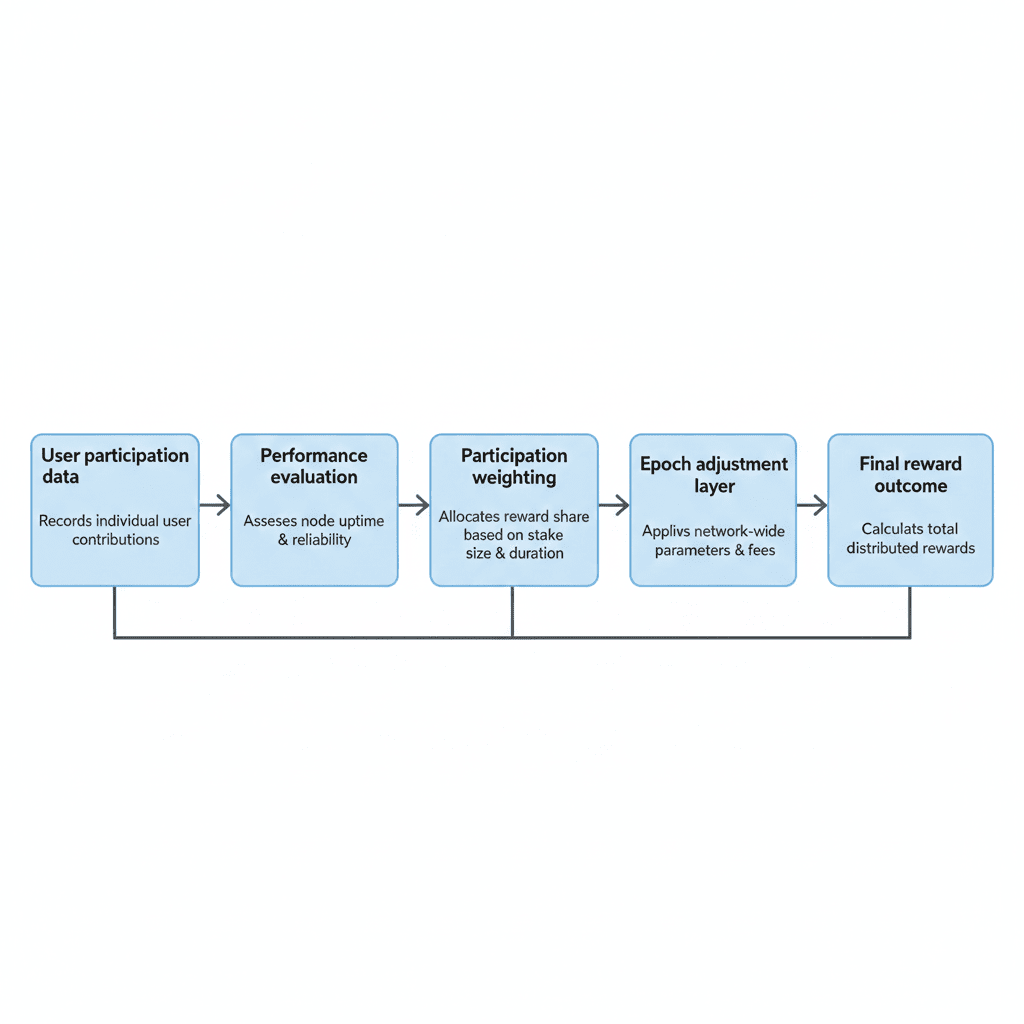
One Thing That Worked Better Than Expected
What surprised me was the comparison bar.
It showed how rewards shift when participation increases but performance stays flat. I didn’t understand the math, but I understood the direction.
That moment felt like seeing your exam result not as a number, but as a position in a list.
It helped me emotionally more than technically.
Where I Got Stuck
I got stuck on the difference between “consistent participation” and “effective participation.”
They sounded similar, but the formula treated them differently.
I paused there longer than I expected. I re-read the same two lines three times.
I think many users will stop there too.
Did that wording slow you down as well?
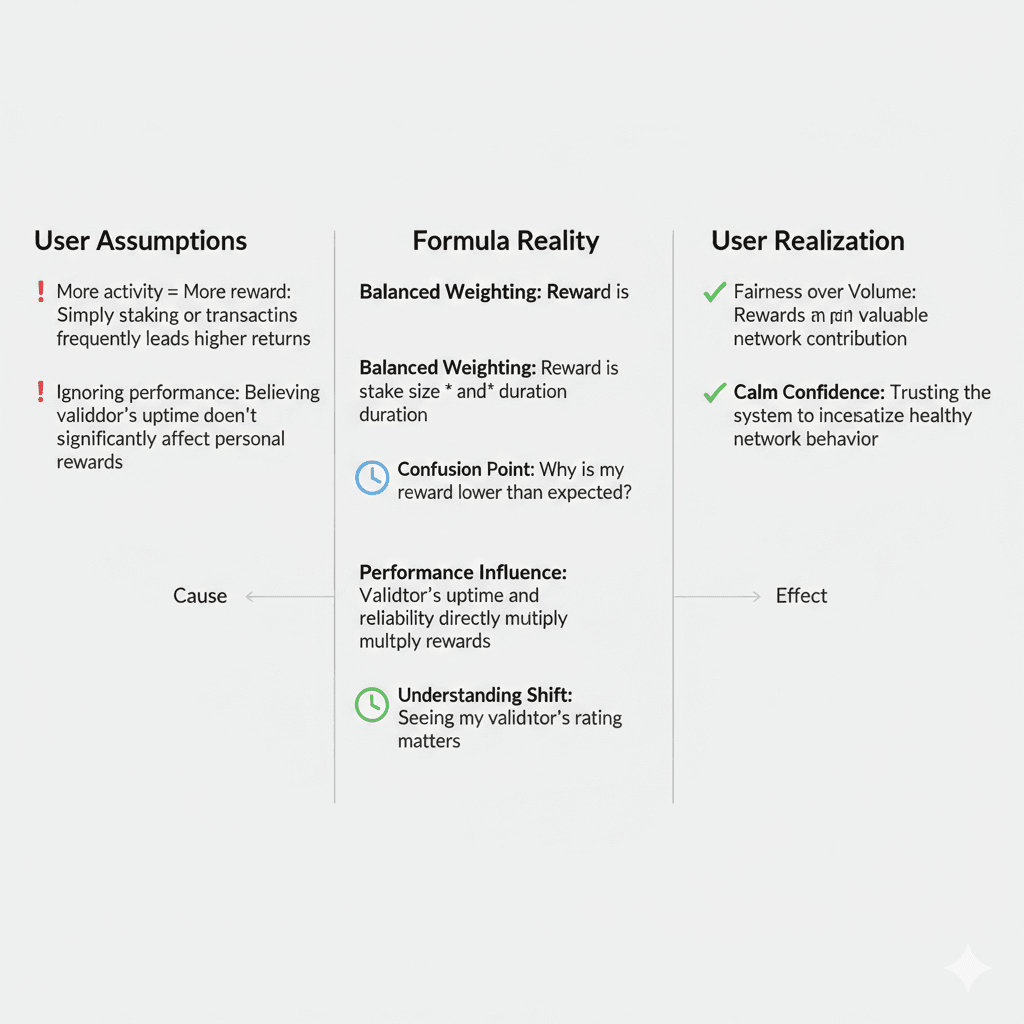
My Wrong Assumption
I assumed higher activity always means higher reward.
That was my mistake.
The task slowly showed me that activity without impact doesn’t carry the same weight. I corrected my thinking when I noticed how the formula softened extreme behaviors.
It felt like realizing that showing up every day is good, but showing up prepared matters more.
That correction stayed with me.
How This Changed My View
Before this, Walrus felt neutral to me.
After this task, it felt more thoughtful. The protocol direction now seems less about pushing users and more about balancing them.
The WAL token also felt less like a simple reward unit and more like a reflection of behavior.
CreatorPad’s task design felt quiet but intentional. It didn’t force conclusions. It let me arrive slowly.
That changed how I see reward systems in general.
Who This Is Actually For
This task is for people who like fairness more than excitement.
If you enjoy understanding why something is rewarded, you will enjoy this.
If you only care about totals and rankings, you might feel slightly frustrated.
Beginners may feel slow at first, but patient users will feel respected.
Which side do you think you are on?
One Practical Insight
My biggest lesson was that reward systems shape behavior more than they measure it.
Once I noticed that, the formula stopped feeling technical and started feeling human.
This matters beyond CreatorPad because it explains why some communities grow healthier than others.
Did you also feel the system quietly guiding behavior?
Two Small Realizations I Didn’t Expect
First, UX can be clean but still emotionally heavy. Even simple layouts can make you question yourself.
Second, timing matters more than effort. When I rushed, I misunderstood. When I slowed down, the logic connected.
It reminded me of standing in two queues at a bank. One moves fast but keeps making mistakes. The other moves slowly but never sends anyone back.
Both realizations came only after I finished.
Ending Reflection
I learned that epoch reward formulas are less about numbers and more about intention.
My honest opinion is cautiously positive. I respect the direction, even if I still don’t fully love the complexity.
And now I wonder: did this task make you trust the reward system more, or just question it differently?
@Walrus 🦭/acc #Walrus $WAL

