
Some tools try to impress you the moment you use them. Others quietly become part of your routine. Walrus belongs to the second group. It doesn’t act like a product you constantly interact with. It feels more like infrastructure-something that supports everything else without demanding attention.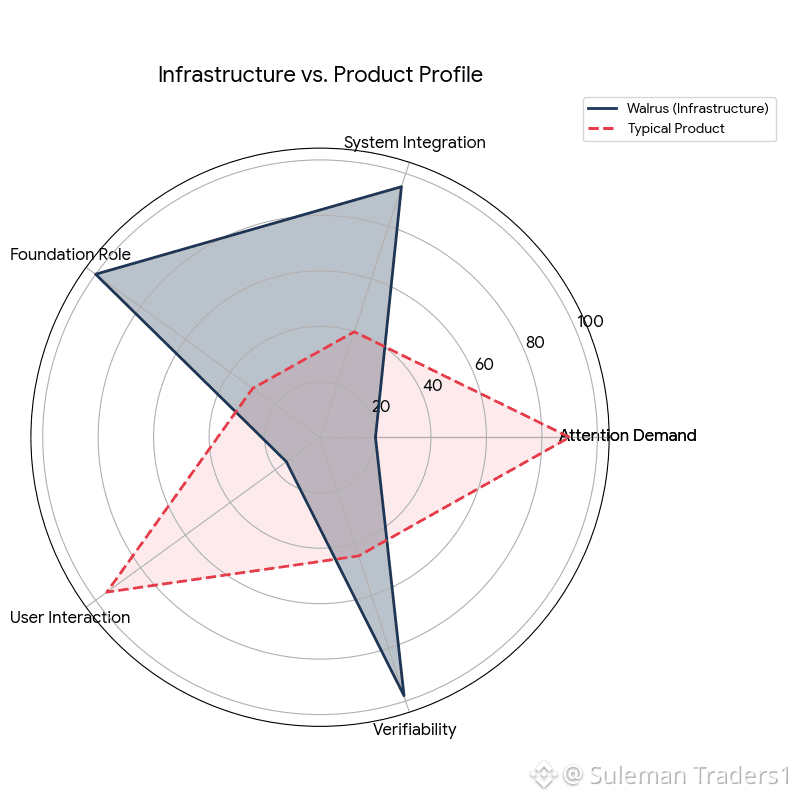
Walrus is built to store and serve data in a way that feels natural. Files stay where you put them. Access feels consistent. There’s no single point where everything depends on one system staying online. Instead, the network shares responsibility, making failures less noticeable and less damaging.
This approach matters because modern applications depend on large amounts of data. From media files to application resources, storage is no longer a small detail-it’s the foundation. Walrus treats storage as a core layer, not an afterthought.
Another important part is how Walrus works with blockchain systems like Sui. Storage space and stored data can be verified, managed, and trusted without relying on a central authority. That makes Walrus useful not just for developers, but for anyone who wants confidence that their data won’t suddenly disappear.
Over time, users stop thinking about Walrus as a tool. It just becomes “the place where things work.” That’s when you know a system has done its job. Walrus doesn’t try to stand in the spotlight-it supports everything happening above it. And that quiet role is exactly why it matters.

