
I have spent years watching different blockchains claim they are built for payments. Fast chains, cheap chains, scalable chains. Almost all of them talk about throughput and benchmarks. Very few talk about what actually matters when money is moving across borders, between businesses, or through real users who depend on stability more than hype. That is why Plasma stands out so clearly when you look at where stablecoins are really heading.
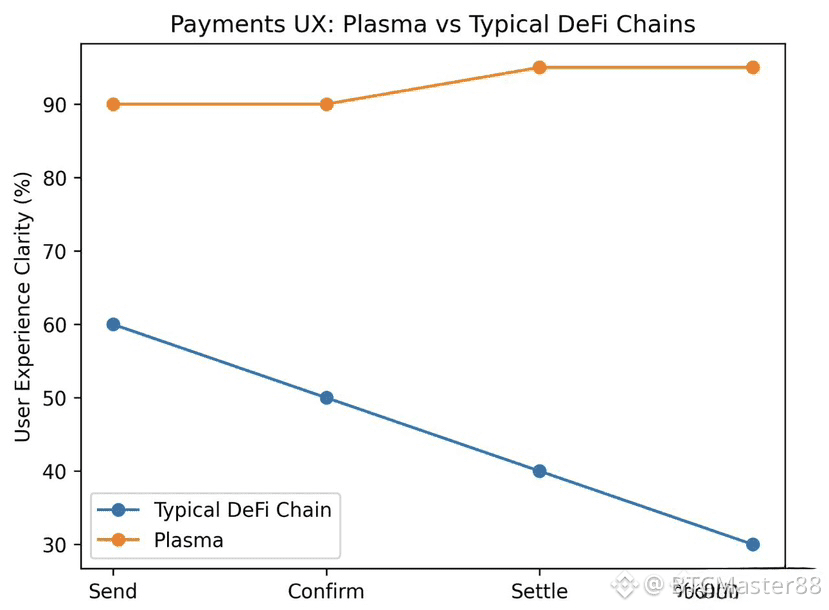
Stablecoins are no longer a niche crypto experiment. They are already doing real work. People use them to send salaries, settle invoices, move liquidity between exchanges, hedge against inflation, and pay for services in regions where banking access is limited or unreliable. In many emerging markets, stablecoins are not speculation tools. They are financial infrastructure. The problem is that most blockchains were never designed with this reality in mind.
Plasma starts from a different assumption. Instead of asking how to attract every possible use case, it asks a much more focused question. How do we build the best possible settlement layer for stablecoins. Once you understand that mindset, everything about Plasma’s design begins to make sense.
The core idea behind Plasma is simple but powerful. Stablecoins should move as smoothly as digital cash while maintaining the neutrality and security guarantees that serious financial users require. This is where many existing chains fall short. Fees fluctuate unpredictably. Finality takes too long. User experience is inconsistent. For institutions and payment providers, these issues are not minor inconveniences. They are deal breakers.
Plasma addresses this by combining full EVM compatibility through Reth with a custom consensus mechanism called PlasmaBFT. This combination allows developers to deploy familiar smart contracts while benefiting from sub second finality. That matters more than it sounds. When you are settling payments, waiting multiple seconds or minutes for confirmation introduces risk. Faster finality reduces uncertainty and makes onchain settlement feel closer to traditional payment rails while still remaining decentralized.
One of the most important design choices Plasma makes is its stablecoin first approach to gas. On most chains, users still need to hold a volatile native token just to move stablecoins. That creates friction and confusion, especially for new users or businesses. Plasma flips this model. Stablecoins themselves can be used as gas. That means someone receiving USDT can immediately use it without worrying about buying another token first. This single change removes one of the biggest barriers to real world adoption.
Gasless USDT transfers take this idea even further. In high adoption regions, even small fees can become a real obstacle to daily usage. Plasma enables transfers where users are not constantly calculating costs in volatile units. This creates a payment experience that feels predictable and intuitive. For people using stablecoins as money rather than investments, this is a meaningful improvement.
Security and neutrality are just as important as speed and usability. Plasma’s decision to anchor its security to Bitcoin reflects a long term mindset. Bitcoin remains the most battle tested and politically neutral blockchain in existence. By anchoring to Bitcoin, Plasma increases censorship resistance and strengthens trust for users who care about long term settlement guarantees. This matters deeply for institutions and payment providers who need confidence that the rails they rely on will not shift under pressure.
Another reason Plasma feels different is the type of users it is designed for. Many chains claim to serve institutions, but their design choices tell a different story. Plasma explicitly targets retail users in high adoption markets as well as institutions in payments and finance. These two groups may seem far apart, but they share common needs when it comes to stablecoins. They want reliability. They want clarity. They want systems that work consistently, not just during bull market peaks.
For developers, Plasma offers a focused environment where stablecoin based applications can be built without fighting against the underlying chain. Whether it is remittance platforms, payroll systems, onchain lending, or merchant payments, developers can design around stablecoins as the primary unit of account rather than an add on. That focus leads to better products and fewer compromises.
Timing also plays an important role. Stablecoin regulation is becoming clearer across multiple regions. Traditional finance players are experimenting with onchain settlement. Payment companies are actively searching for infrastructure that bridges compliance and decentralization. Plasma enters the market at a moment when the demand for serious stablecoin rails is no longer theoretical.
This is not about chasing narratives. It is about acknowledging reality. Stablecoins already move enormous amounts of value every day. They are quietly becoming the backbone of global digital finance. The blockchains that succeed in the next phase will be the ones that respect this role and build infrastructure accordingly.
Plasma does not try to be everything to everyone. It does not promise to host every type of application or dominate every narrative. Instead, it focuses on doing one thing extremely well. Providing fast, neutral, and user friendly settlement for stablecoins. That clarity of purpose is rare in this industry and often underestimated.
When you look at how financial infrastructure evolves, specialization always comes before scale. Payment networks succeed because they optimize for payments. Settlement layers succeed because they reduce friction and risk. Plasma fits naturally into this pattern. It feels less like an experiment and more like a missing piece that the ecosystem has been waiting for.
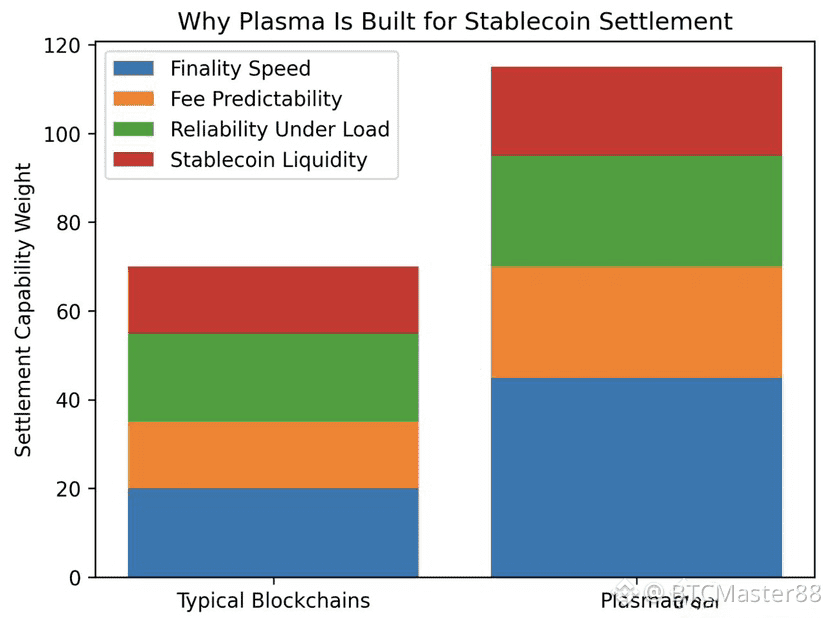
As stablecoins continue to expand into everyday finance, the question is no longer whether onchain settlement will matter. The question is which rails will be trusted to carry that value. Based on its design choices, Plasma is positioning itself as a serious answer to that question.
The future of stablecoin rails will not be loud or flashy. It will be efficient, predictable, and reliable. It will feel boring in the best possible way. And that is exactly why Plasma’s approach feels so compelling.

