
There is a simple truth about the future of Web3 that people often ignore. Smart contracts will evolve. Blockchains will get faster. Wallets will become easier. But one layer remains stubbornly unchanged in its importance. Storage. You cannot build applications without knowing your data will stay available, stay intact, and stay reachable no matter how the market behaves. And this is where Walrus steps into the picture with an approach that feels long term in a space that often thinks short term.
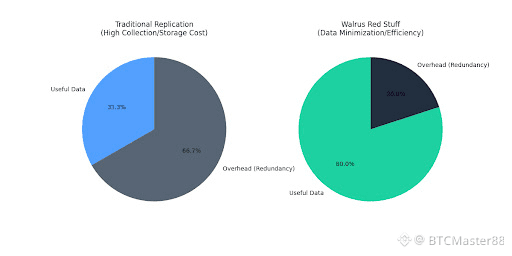
When people first hear the word decentralized storage they imagine another generic system to upload files. But Walrus is not a generic service. It is a foundational layer built for the actual demands of Web3. Data persistence is not a theory here. It is the center of the entire design. The team understands that the next wave of decentralized applications will be data intensive. AI models will rely on constant access to datasets. Games will rely on state that must be preserved for years. Social platforms will rely on user generated content that cannot disappear after a network update. This is not optional. It is core infrastructure.
The interesting part about Walrus is how quietly the project has been building. There are no empty promises about magical breakthroughs. There is instead a clear list of improvements, consistent upgrades, and a roadmap that reflects careful engineering. When you look at how the ecosystem is moving, especially across Sui, the need for dependable storage becomes obvious. Transactions may take milliseconds. But assets, identities, and histories need decades of persistence. Walrus approaches this problem by asking a question that few projects actually address. How do you maintain data forever in an environment that evolves every few months.
One of the foundations of Walrus is the idea that user data must be treated with the same seriousness as financial value. You cannot have a blockchain where coins are safe but the data around them is not. That would create a structural imbalance. Walrus fixes this imbalance by giving developers a predictable system to store and retrieve content without worrying about disappearing nodes, unpredictable fees, or inconsistent performance. This is a huge shift from earlier decentralized storage designs where the system relied heavily on market incentives that often weakened during slow periods. Walrus uses a design that is more stable, more predictable, and more aligned with how real applications behave.
Data persistence is not only about keeping files alive. It is also about ensuring that data is delivered quickly to the users who need it. Walrus focuses heavily on read performance because the majority of Web3 applications will not only store data. They will read it thousands of times. AI tools need instant access to training material. Social feeds need instant access to media. Gaming platforms need instant access to assets. Without consistent read performance an application can fail even if the storage itself is reliable. Walrus has created a system that balances both stability and speed, an approach that becomes more and more important as the number of data heavy applications increases.
A lot of developers are finally understanding that the Web3 world of 2026 is not the world of 2020. Earlier cycles were dominated by speculation, token launches, and temporary excitement. Today the ecosystem is shifting to real usage. And real usage requires real infrastructure. Walrus reflects this shift by prioritizing predictable engineering over dramatic announcements. The team keeps upgrading proof systems, improving network coordination, and refining blockstore mechanics. Every update is designed to support long term persistence. Not hype. Not short lived trends. Just solid infrastructure.
When you speak to people building the next generation of decentralized applications, one thing becomes clear. They no longer ask about hype. They ask about reliability. They want to know if their data will remain accessible when the user base grows from thousands to millions. They want to know if the system will handle complex workloads when AI becomes deeply integrated into smart contracts. They want to know if the storage will remain intact when the chain goes through upgrades. Walrus answers all these questions with an approach that feels like it belongs to the future of infrastructure rather than the past.
Data persistence also plays a huge role in trust. A blockchain can only be trusted if its state can be reproduced. If the data behind an application can disappear, the entire environment loses credibility. Walrus recognizes that trust is not built only from consensus algorithms. It is built from continuity. When a user uploads something today they expect it to remain the same a year from now. When a developer relies on stored state they expect it to behave the same across versions. Walrus provides that continuity through a tightly engineered system that replicates data intelligently across the network.
The most powerful part of Walrus is how invisible it becomes to the end user. People do not want to think about storage. They want to use applications that simply work. Walrus is built in a way that allows developers to integrate it without forcing users to learn anything new. No complicated onboarding. No strange workflows. No unpredictable pricing. Walrus keeps things simple for the developer and the user. This approach mirrors how modern cloud providers grew. People did not adopt those systems because they were experimental. They adopted them because they were stable, predictable, and easy.
If you step back and analyze the broader Web3 landscape, it becomes clear that decentralized storage is entering a phase where only the strongest systems will survive. Many early projects focused on theoretical models or experimental economics. But the new generation of AI, gaming, and social applications needs storage that behaves like real infrastructure. Walrus is positioning itself as the layer that can actually handle that load. Large scale data. High read performance. Guaranteed persistence. Predictable execution. These are the characteristics that long term builders care about.
Walrus does not try to impress with noisy marketing. It impresses by delivering quietly. And in infrastructure, quiet delivery is usually the strongest indicator of future dominance. The chain keeps moving forward. The developer community keeps growing. The performance keeps improving. And storage keeps becoming more critical to Web3. Walrus is not reacting to these trends. It is preparing for them.
The future of decentralized applications depends heavily on how storage evolves. You cannot build AI agents without persistent datasets. You cannot run creator platforms without secure user content. You cannot support large Web3 games without reliable asset delivery. You cannot expand social protocols without durable media. All these require a storage layer that guarantees data persistence in a manner that is not affected by market volatility. Walrus is one of the very few projects that treats this requirement seriously.
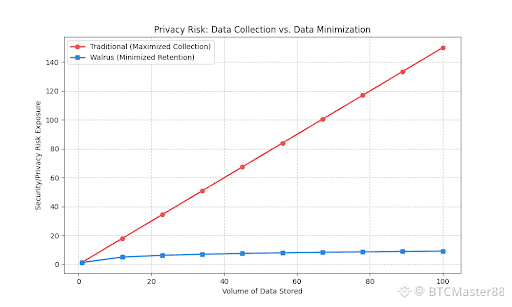
In the end, data persistence is not a feature. It is the foundation of scalability. If a project cannot guarantee persistence it cannot guarantee growth. Walrus understands this better than most. And that understanding is the reason why more developers are quietly choosing it as the storage backbone of their upcoming products.
Walrus is not just storage. It is the memory layer of Web3. And as the ecosystem matures, the projects that control the memory layer will shape the future.

