
When I look at Plasma right now, it feels like the project has quietly crossed an important line. It’s no longer in that awkward phase where people are just testing things out and moving on. Usage feels more settled, more routine. That’s usually when infrastructure starts to matter. 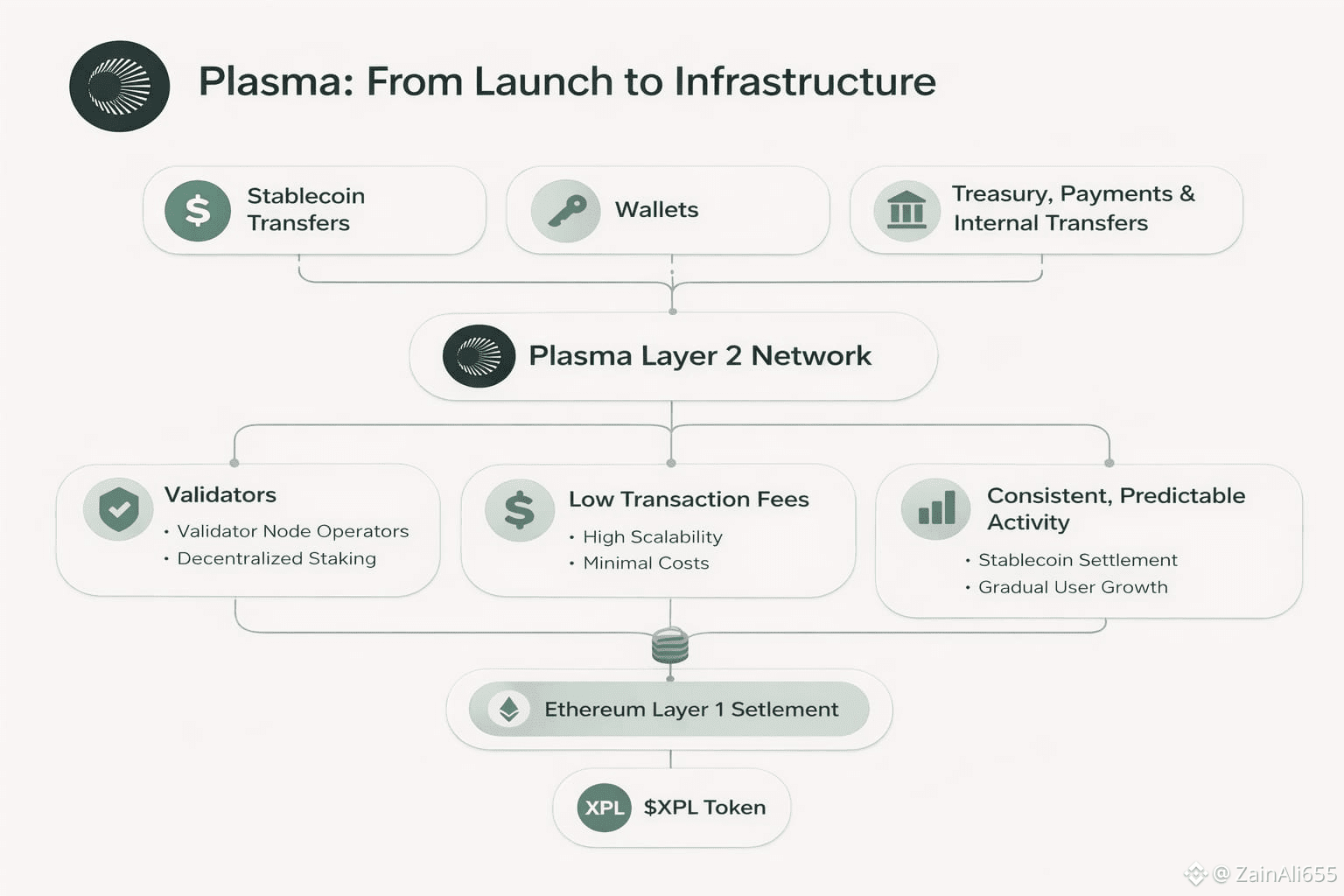 @Plasma seems to be entering that stage.Recent onchain behavior continues to show Plasma being used primarily for stablecoin transfers, and that hasn’t really changed. What has changed is how consistent that usage looks. Activity doesn’t spike wildly and then disappear. It shows up day after day in roughly the same pattern. That kind of repetition is boring to look at, but it’s exactly what you want from a payments and settlement network. Fees are another area where Plasma keeps doing what it promises. Even when transaction volume ticks up, costs stay low and predictable. There’s no surprise fee pressure when things get busier. For real-world use cases like payments, treasury movements, or internal transfers, that predictability matters more than raw throughput numbers.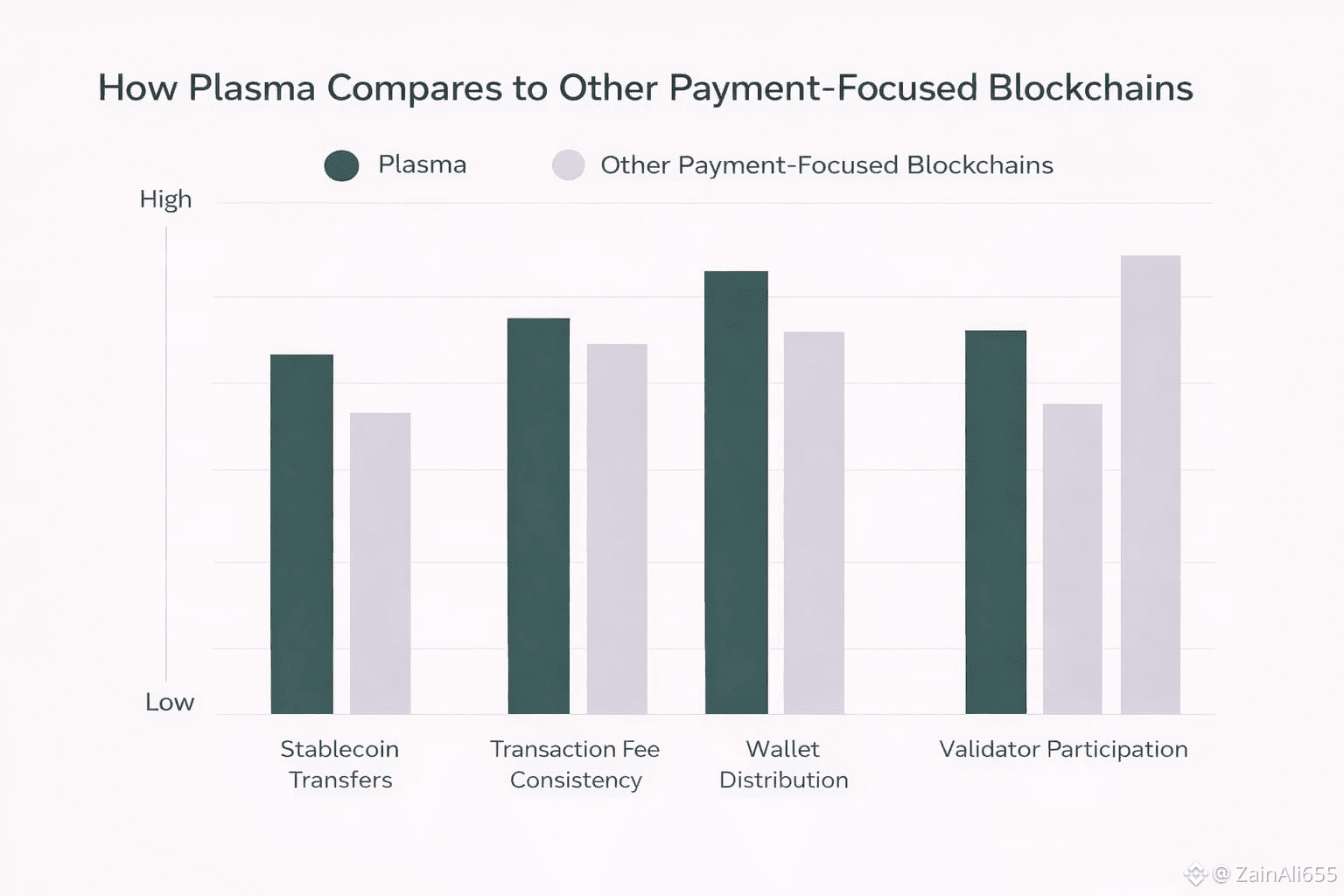
Wallet activity also looks more balanced now. Instead of a few addresses dominating most of the volume, transfers are spread across a wider group of users. That usually points to organic adoption rather than scripted activity or incentive-driven volume. It suggests people are actually choosing Plasma because it works for what they need. On the network side, validator participation continues to expand gradually. It’s a slow process, but that’s normal. What matters is that it’s moving in the right direction. It shows #Plasma is progressing beyond an early, tightly controlled setup and into a more mature operational phase. When you compare Plasma to other chains chasing the stablecoin or payments narrative, the difference is restraint. Many networks push hard for fast volume with incentives, then struggle to keep users once rewards fade. Plasma seems more comfortable letting usage grow naturally around reliability. That approach doesn’t win headlines, but it usually builds stronger foundations.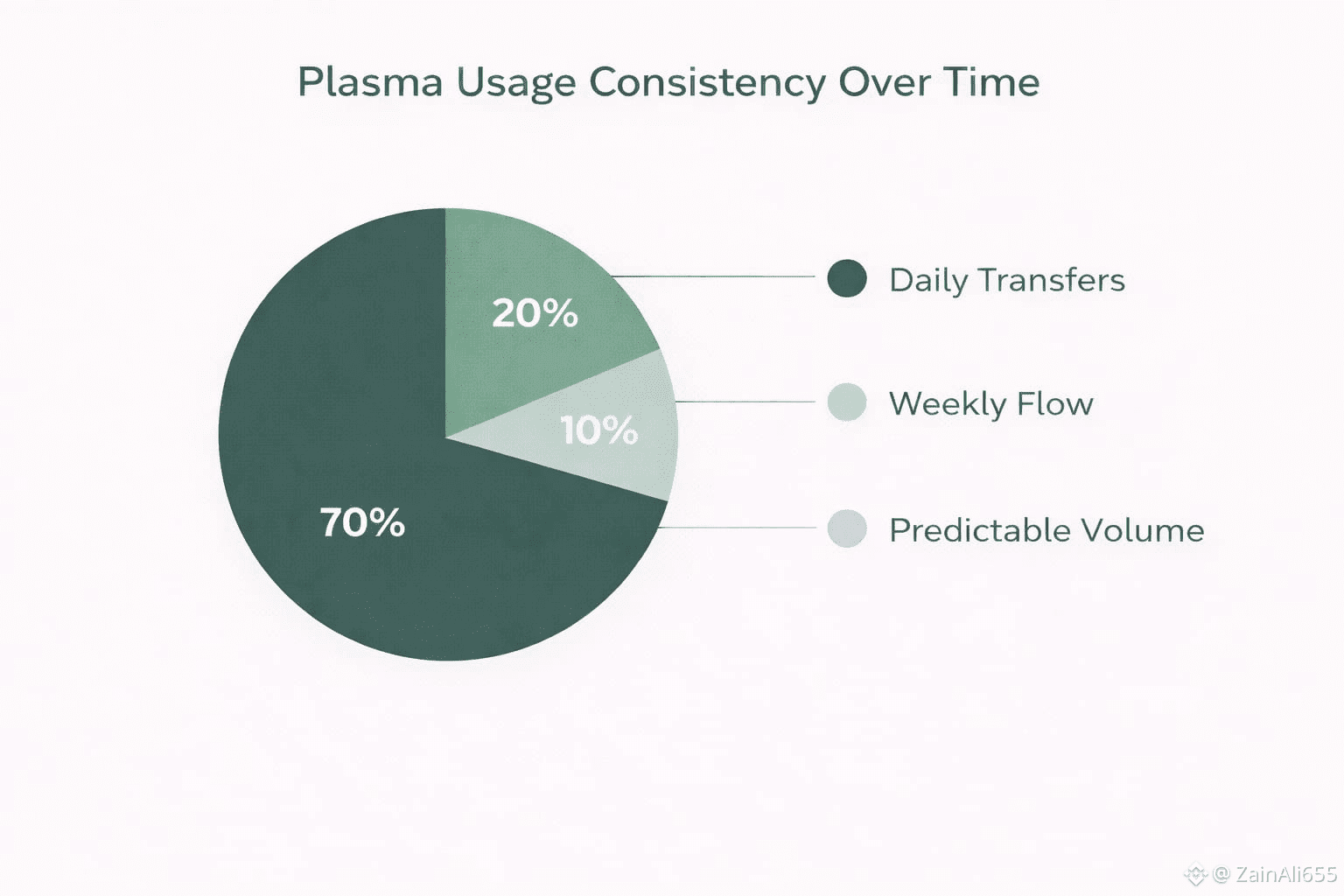 The $XPL token reflects that same mindset. It isn’t leading the story right now, and that’s okay. Infrastructure tokens tend to follow real usage, not precede it. If stablecoin settlement keeps growing and Plasma continues to deliver predictable execution, the token’s relevance becomes clearer over time. There are still risks ahead. Competition is intense, and payments-focused infrastructure always sits close to regulatory pressure. Plasma still needs to keep attracting builders and integrations to maintain momentum. But taken as a whole, the recent data feels aligned. Plasma is doing what it says it wants to do, and it’s doing it consistently. That doesn’t guarantee success, but it’s a strong signal. Sometimes the most important progress happens quietly. Plasma feels like it’s in that phase now.

