
I keep coming back to Plasma for one simple reason. The way it’s being used looks intentional, not reactive. That’s something I don’t say often about infrastructure projects, especially not this early. Plasma feels like it’s settling into a rhythm rather than constantly trying to prove itself.
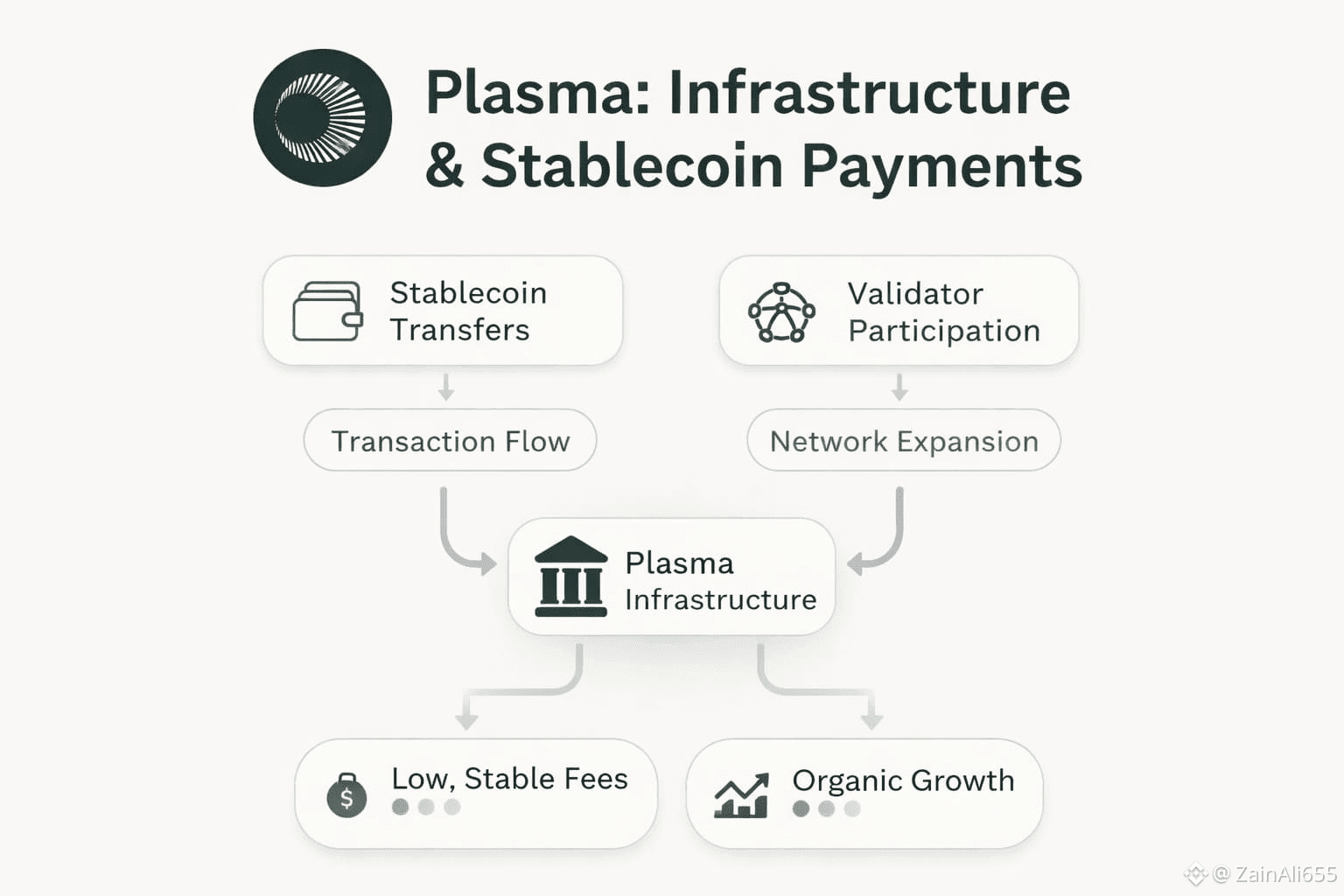
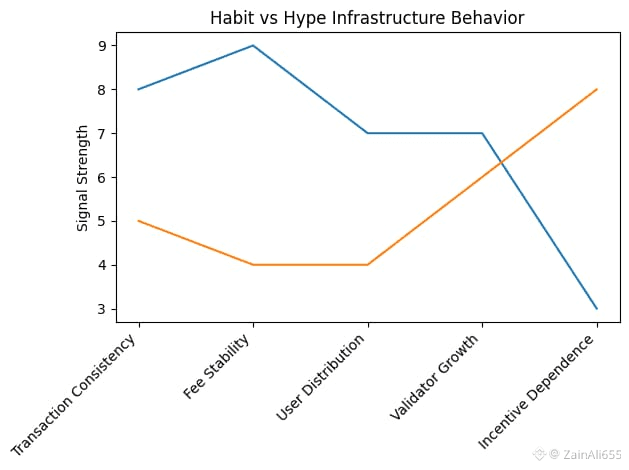
Looking at the most recent onchain behavior, @Plasma continues to see steady transaction flow driven mostly by stablecoin transfers. What’s notable isn’t explosive growth, but the lack of drop-off. Activity hasn’t fallen off after early attention faded, and it hasn’t relied on sudden incentive spikes to stay alive. Usage looks repetitive in the best way. People are coming back and doing the same thing again and again, which is usually how payment infrastructure starts to stick.
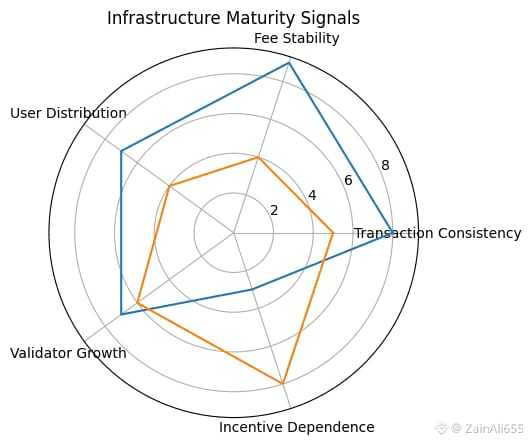
Fee behavior still looks clean. Even during periods where transaction counts increase, costs remain low and predictable. That consistency is easy to overlook, but it’s critical for anything involving payments or settlement. If fees can’t be trusted, users leave. Plasma hasn’t shown that kind of instability so far, and that’s a real data point, not a promise.
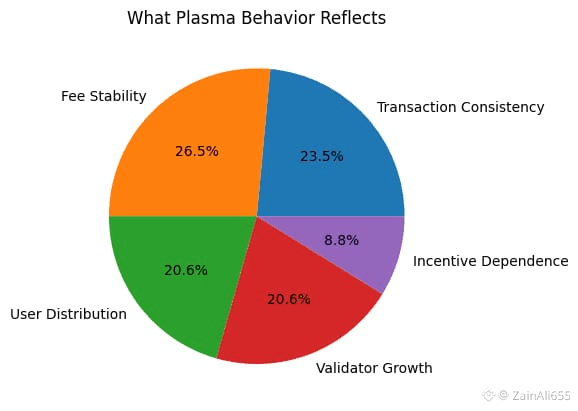
Another subtle change I’ve noticed is how wallet activity is spreading out. Recent transfers are less concentrated among a few of addresses and more distributed across a wider user base. That usually signals organic usage rather than planed volume or short-term testing. It’s slow growth, but it’s the kind that’s harder to fake. On the network side, validator participation continues to expand gradually. That tells me Plasma is still moving forward operationally, not just shipping updates for optics. Decentralization takes time, and steady progress here matters far more than flashy milestones.
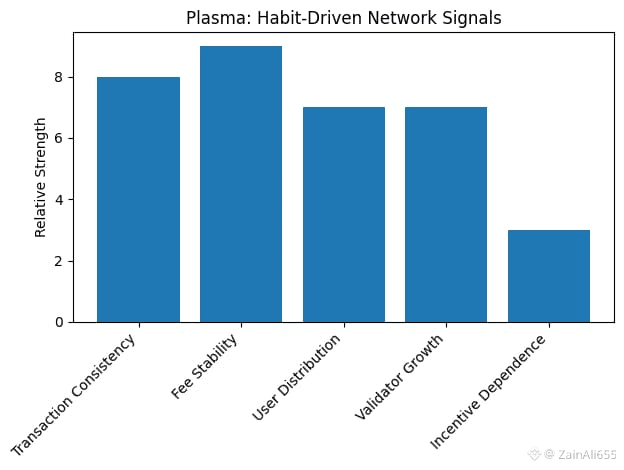
When you compare Plasma’s recent data to other chains chasing the stablecoin or payments narrative, the difference is restraint. Some networks push aggressive incentives to juice activity and TVL. Plasma seems more comfortable letting usage grow naturally around reliability and cost predictability. That approach doesn’t look impressive on a chart, but it usually holds up better over time. The $XPL token fits that same pattern. Price action hasn’t led the story, and that’s not surprising. Infrastructure tokens tend to make more sense after usage becomes dependable. If stablecoin settlement keeps growing and Plasma keeps doing what it’s doing, the token’s relevance increases naturally rather than artificially.
There are still real risks ahead. Competition in payment-focused infrastructure is intense, and regulatory pressure around stablecoins isn’t going anywhere. #Plasma still needs more integrations, more builders, and continued organic growth to stay relevant. But when I look at the latest data, the picture feels consistent. The network is behaving like infrastructure, not a campaign. It’s being used quietly, repeatedly, and without drama. That’s usually the phase where real systems start earning trust.

