
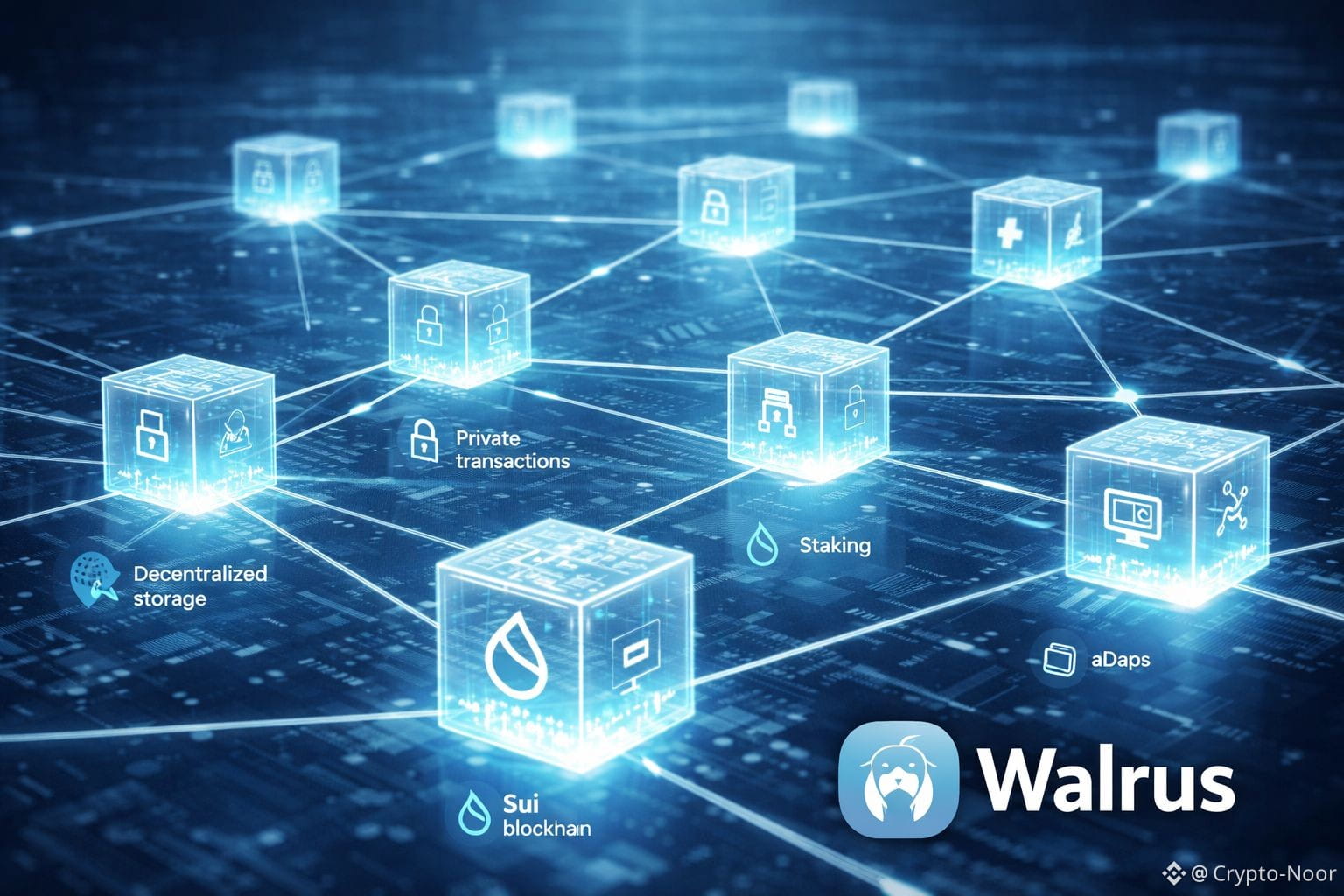
Scrolling through my cloud storage the other day, I realized just how much of my data sits somewhere I don’t fully control. That nagging thought what if someone accessed it without me knowing? is exactly the space Walrus (WAL) is trying to rethink. At its core, Walrus is a token within a protocol built to keep digital interactions private while still participating in decentralized finance. It lets users handle transactions, stake, or engage with dApps, all with an added layer of discretion most platforms don’t provide.
What sets Walrus apart is how it handles data. Instead of dumping files onto one server, it slices them into pieces and spreads them across a network using erasure coding and blob storage. Imagine sending pieces of a puzzle to trusted neighbors rather than keeping the full image in your house. Even if someone intercepted a piece, they wouldn’t see the whole picture. The protocol sits on the Sui blockchain, which allows these operations to happen quickly and without central control. For anyone who has tried sharing large files or running applications on conventional cloud platforms, the promise of distributed storage is appealing less chance of downtime, fewer privacy worries, and costs that don’t spiral out of control.
The ecosystem isn’t only about data. WAL tokens power governance decisions, letting holders weigh in on how the protocol evolves. It also supports staking, giving participants a tangible way to earn for their engagement. I’ve tried a few governance interfaces on other platforms, and it’s often confusing or sluggish. Walrus seems to streamline that experience, though it’s still a new protocol, so there’s a learning curve for first-timers.
Of course, it isn’t perfect. A decentralized network like this depends on active nodes and participants. If adoption slows or certain parts of the network fail, data availability could be impacted. There’s also the question of regulation: while privacy is a strong selling point, it may draw extra attention from authorities in certain jurisdictions. And even though Binance and other exchanges list WAL for easy access, token liquidity can fluctuate, and price swings might not reflect the utility of the protocol itself. I find it comforting that at least the system’s design doesn’t rely solely on speculation.
On a personal note, I appreciate tools that give users control over their digital footprint. Using Walrus feels like having a small corner of the internet that isn’t constantly watched, while still being part of a larger, connected ecosystem. It’s not flashy, and it doesn’t promise overnight gains, but it’s a practical approach to an increasingly complex problem: how to interact, transact, and store information without giving away too much.
The real-world implications are worth thinking about. Businesses handling sensitive client data could use this for storage without constantly worrying about hacks. Individuals could share files with friends or collaborators without trusting a single service. It’s similar to choosing a private room in a co-working space rather than leaving your laptop open in a café: you still interact with the world, but the boundaries feel clearer.
While exploring Walrus, I noticed the community discussions often revolve around security, efficiency, and real-use scenarios rather than hype. That feels refreshing, especially when the attention gathered on Binance or other major listings tends to skew toward price movements. This focus on utility over spectacle makes me think Walrus is being built with intention, not just marketing.
All that said, adopting it requires patience. The interface is evolving, and some features still need polish. Not every dApp or tool integrates seamlessly yet, which could frustrate users who expect plug-and-play simplicity. But for those willing to navigate a bit of friction, the trade off is meaningful control and privacy.
I can’t help but imagine a future where decentralized, privacy-respecting platforms like Walrus become a standard choice rather than a niche. For now, it’s a chance to experiment, to engage thoughtfully with technology that treats your data and decisions with care. It’s the kind of project that makes you pause and consider how much value you place on control in an increasingly connected world. Have you ever thought about how much of your online life is actually private?


