
Blockchains were never built to be data warehouses. They excel at transferring value and running programmable logic, but once they are asked to handle large files such as videos, images, datasets, or persistent application data the limitations become clear. Costs rise quickly, systems become brittle, and complexity grows. Walrus was created to address this exact limitation. Rather than positioning itself as another all-purpose blockchain or a flashy DeFi platform, it zeroes in on a recurring challenge in Web3: storing large volumes of data in a decentralized, dependable, and scalable way.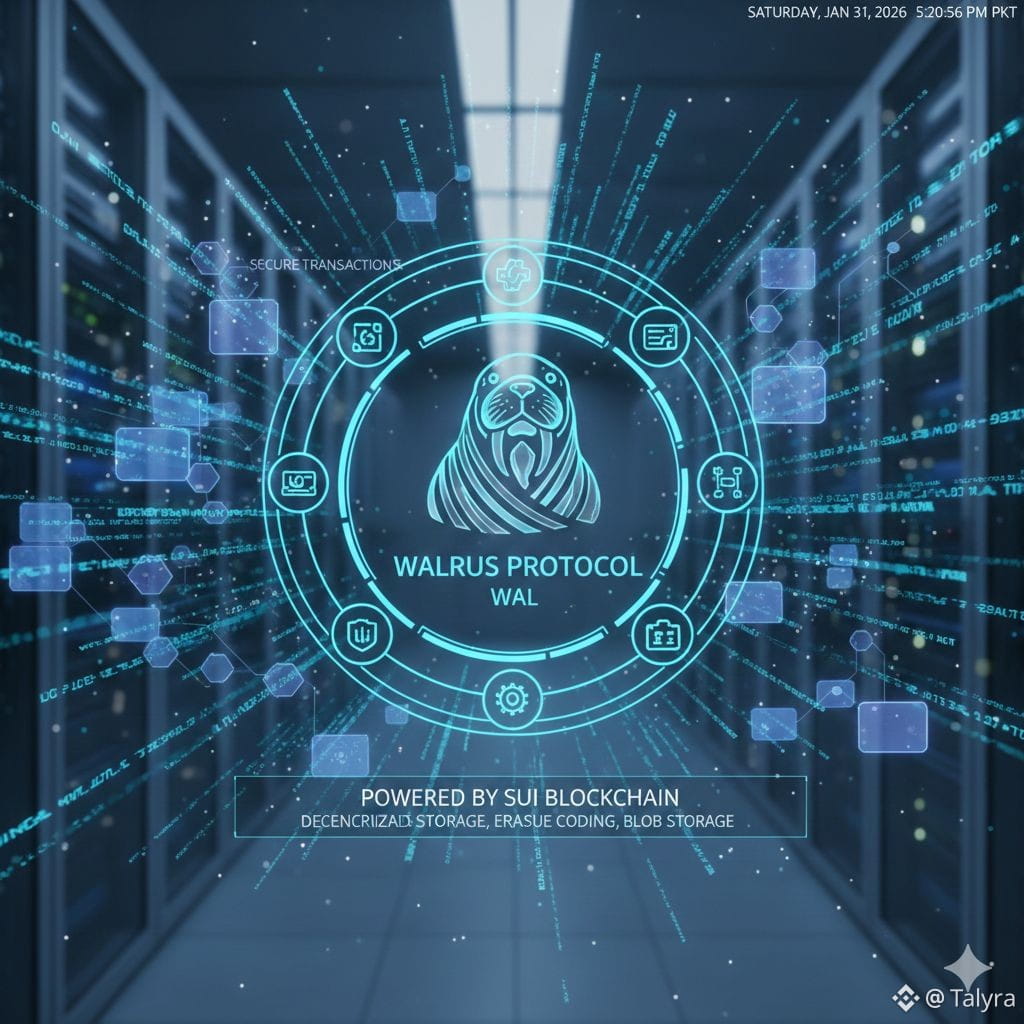
Walrus operates as a dedicated storage layer built on top of the Sui blockchain. Its purpose is to support modern applications without forcing developers to choose between centralized cloud providers and inefficient on-chain storage. By focusing specifically on large data objects, Walrus enables assets like videos, images, AI training data, game resources, and application state to be stored without congesting the base chain or undermining decentralization.
The system’s core innovation lies in how it approaches reliability and security. Instead of replicating full copies of files across many nodes, Walrus relies on erasure coding. Data is broken into encoded pieces and distributed throughout the network. As long as a sufficient subset of these fragments is accessible, the original file can be reconstructed. This design significantly reduces storage overhead while preserving resilience, making long-term storage of large data sets both affordable and robust without relying on any single provider.
Sui underpins the operational logic of Walrus. Smart contracts on Sui manage coordination, payments, and storage rules, while the bulk data itself resides off-chain within Walrus’s decentralized storage network. This division of responsibilities keeps the system performant and cost-efficient. Developers gain programmable access to stored data, and users experience low fees and fast interactions. Although the interface feels straightforward, the architecture carefully aligns computation, storage, and economic incentives behind the scenes.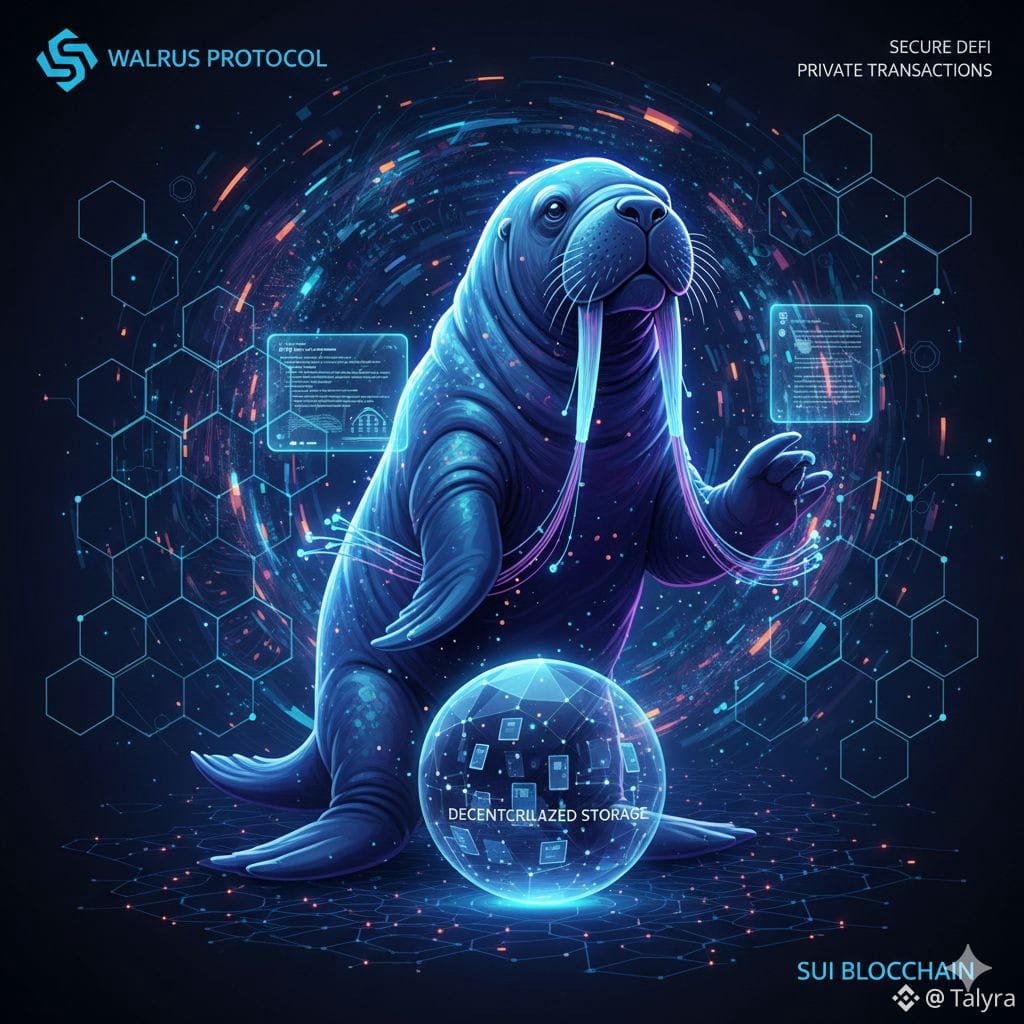
The WAL token powers the entire ecosystem. It is used to pay for storage services, to stake as a storage operator, and to participate in governance. Storage providers commit WAL as collateral, demonstrating reliability, and earn rewards for consistently storing and serving data. Token holders can also delegate their stake, reinforcing alignment between operators and the wider community. Governance mechanisms allow the network to evolve over time, with decisions about pricing, rewards, and upgrades made collectively.
Walrus stands out because of how well it maps to practical use cases. NFT creators can host high-quality media without relying on centralized servers or risking link rot. Decentralized applications can store user data in a censorship-resistant manner. AI developers gain an open and verifiable environment for housing large datasets and models. Even organizations seeking decentralized backup or archival storage can view Walrus as a realistic alternative to traditional cloud solutions.
Rather than attempting to be everything at once, Walrus remains deliberately focused on infrastructure. By treating storage as a first-class concern designed to work naturally with blockchain systems instead of being awkwardly layered on it enables an entire category of applications that were previously difficult or impossible to build. As Web3 evolves beyond simple transactions toward data-intensive experiences, platforms like Walrus may prove just as foundational as the blockchains that dominate today’s conversations.