Just days before Donald Trump’s inauguration last year, a little-noticed agreement was finalized—one that now appears far more significant than it initially seemed.
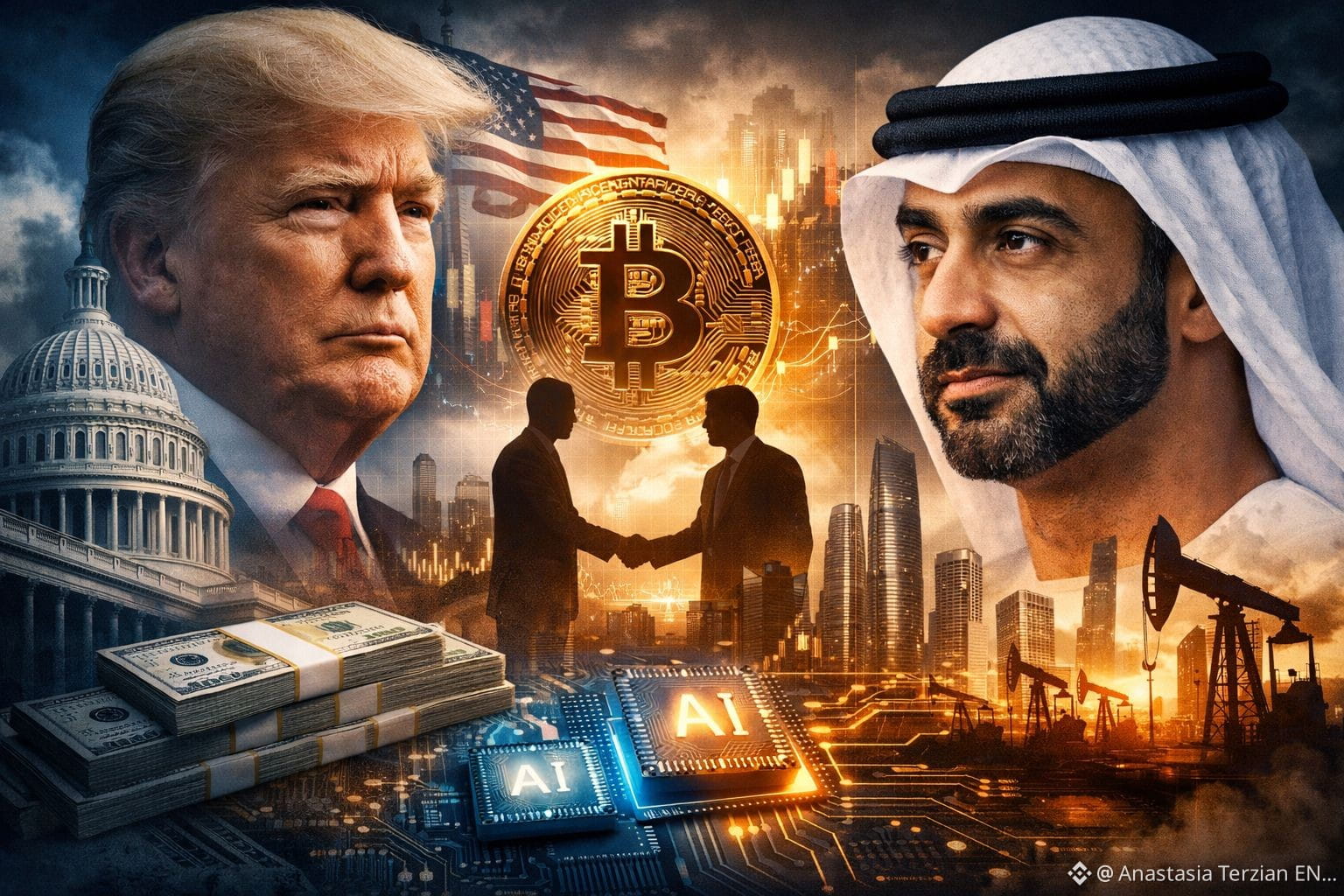
Newly surfaced documents reveal that figures connected to an Abu Dhabi royal family agreed to acquire a 49% stake in the Trump family–backed crypto project, World Liberty Financial, in a deal valued at $500 million. The agreement was signed just four days before the inauguration, away from public scrutiny and without immediate disclosure.
Under the deal’s terms, half of the purchase price was paid upfront, sending approximately $187 million directly to entities linked to the Trump family. Eric Trump signed the contract on the family’s behalf.
The financial structure went further.
Records show that at least $31 million from the transaction was designated for companies tied to the family of Steve Witkoff, a co-founder of World Liberty Financial. Only weeks earlier, Witkoff had been appointed U.S. envoy to the Middle East, placing him in a role that bridged diplomacy and regional business interests.
The investment traces back to Sheikh Tahnoon bin Zayed Al Nahyan, one of the most powerful individuals in the United Arab Emirates. Tahnoon is the brother of the UAE’s president and serves as the country’s national security adviser. He also controls an expansive financial network estimated to exceed $1.3 trillion, spanning sectors such as energy, artificial intelligence, surveillance systems, and global infrastructure.
That background is critical.
Tahnoon has been actively pressing Washington to loosen restrictions on access to advanced U.S. AI chips—technology tightly guarded due to national security implications. His influence and strategic objectives place him squarely at the intersection of money, technology, and geopolitics, where policy decisions can carry global consequences.
Viewed in this context, the World Liberty Financial investment appears less like a standard crypto transaction and more like the beginning of a strategic alignment. A massive stake in a Trump-affiliated venture, finalized just before a presidential transition, links financial incentives with potential political leverage—at a time when control over advanced AI hardware is one of the most sensitive issues in U.S. foreign policy.
There is no direct evidence of an explicit quid pro quo.
Still, the timing, the individuals involved, and the convergence of interests are difficult to overlook. What looks like a crypto investment on the surface may instead function as a conduit between Gulf capital, American political influence, and the escalating global competition over artificial intelligence.
Taken alone, the deal might fade into the background of high-value financial transactions.
Placed in context, however, it reads like an opening move in a much larger strategy—one where crypto, AI, and geopolitics are increasingly intertwined.
.
#Binance #wendy $BTC $BTC ETH $BNBHolder #MarketCorrection #cryptouniverseofficial #Binance