
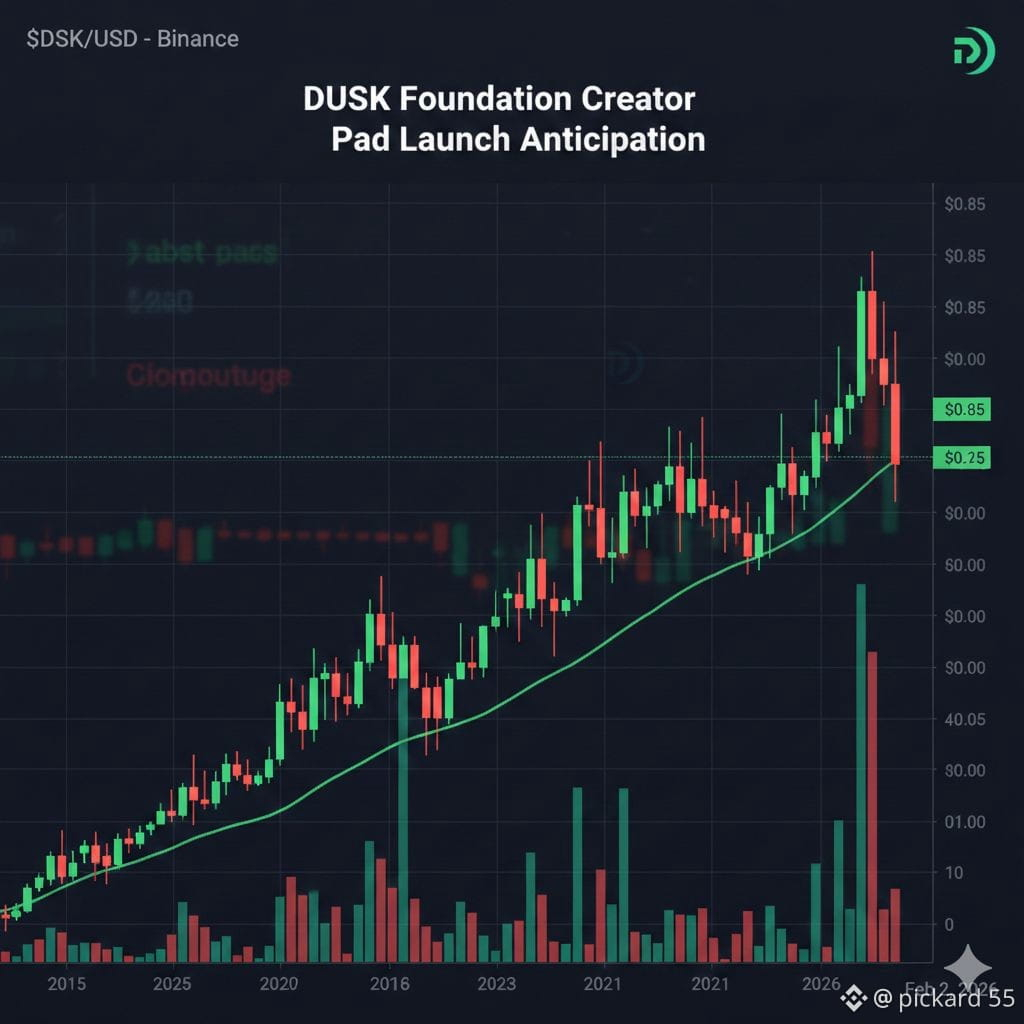
 Dusk Network is a Layer-1 blockchain designed specifically for regulated financial markets where privacy, compliance, and security must exist together. Unlike most public blockchains that expose every transaction, balance, and interaction by default, Dusk is built around the idea that financial activity often requires confidentiality. At the same time, institutions cannot operate outside legal frameworks. Dusk focuses on solving this conflict by offering privacy where it is needed and transparency where it is required. This makes it especially relevant for real-world finance, securities, and institutional use cases, not just crypto-native experimentation. This is why many people describe Dusk as infrastructure for compliant finance rather than a general-purpose chain chasing trends. @dusk_foundation $DUSK #Dusk
One of the biggest problems in traditional public blockchains is information leakage. When all transaction data is public, traders, institutions, and even everyday users expose sensitive strategies, positions, and relationships. In real financial markets, this level of exposure would never be accepted. Dusk recognizes that privacy is not about hiding illegal activity, but about protecting legitimate market participants. At the same time, regulators need systems that can prove rules are followed. Dusk tries to meet both needs by embedding privacy and compliance directly into the protocol instead of relying on external tools or centralized intermediaries.
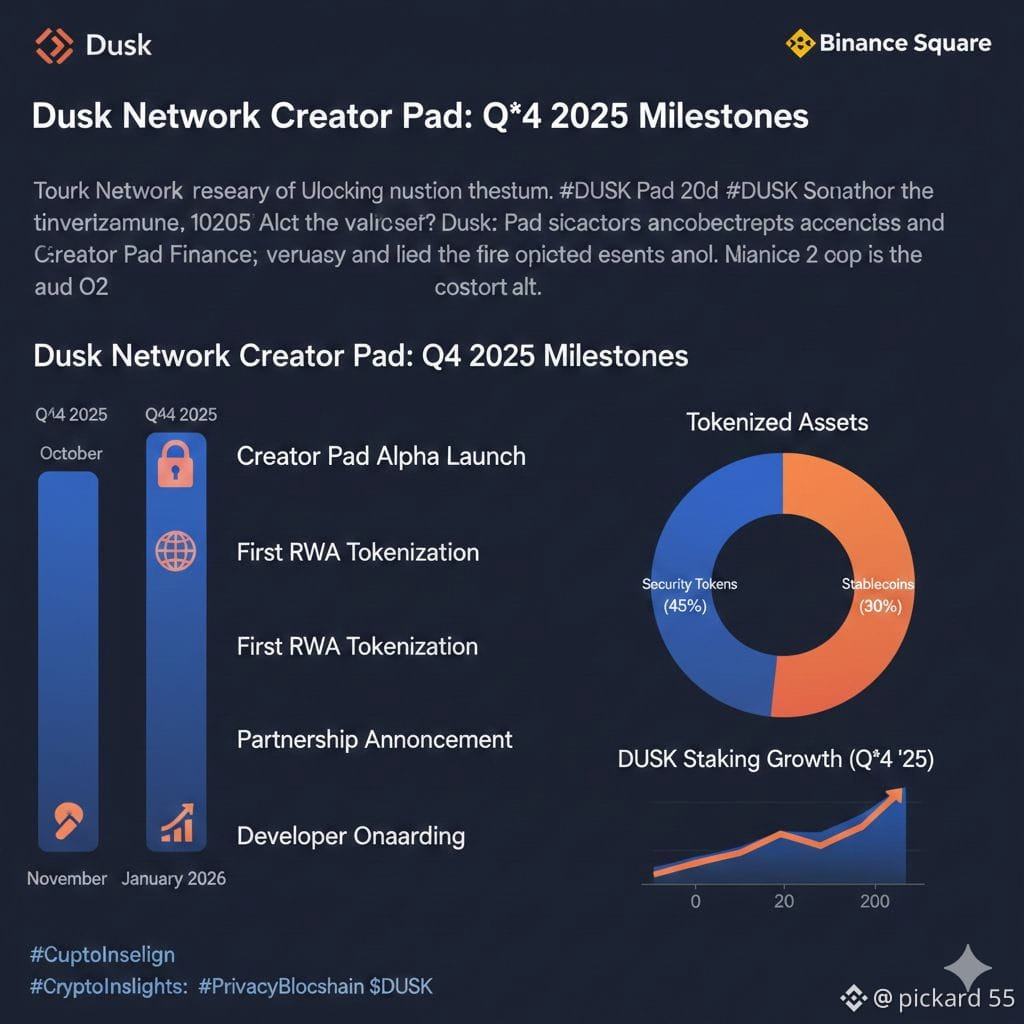 Technically, Dusk is built as a modular blockchain. At its core is DuskDS, the settlement and data availability layer. This base layer is responsible for consensus, finality, and ensuring that transactions are valid and secure. On top of this settlement layer, Dusk supports different execution environments where applications and smart contracts run. One of these is DuskEVM, which allows developers to use familiar EVM-style smart contracts while still benefiting from Dusk’s underlying settlement and privacy design. This separation allows the network to stay flexible while keeping strong guarantees at the base layer.
A key part of how Dusk works is its dual transaction model. The first model, called Moonlight, is an account-based and transparent system similar to what most people already know from Ethereum. It is used when visibility is required, for example in reporting-friendly or fully public interactions. The second model, Phoenix, is a shielded and privacy-focused system that uses cryptography to hide transaction details while still proving correctness. With Phoenix, amounts, senders, and receivers can remain confidential, while the network can still verify that no rules are broken. The ability to support both models on the same chain is important because real finance is not fully public or fully private; it depends on context.
Privacy on Dusk is powered by zero-knowledge proofs, particularly systems based on PLONK. Zero-knowledge proofs allow someone to prove that a transaction is valid without revealing sensitive data. This means users can demonstrate compliance, correctness, and ownership without exposing their entire financial history. This technology is one of the foundations that allows Dusk to claim privacy with accountability instead of privacy without rules.
Consensus on Dusk is also designed with care. It uses a staking-based system that includes concepts such as Proof-of-Blind Bid for leader selection. The goal is to reduce manipulation, increase fairness, and strengthen finality. Finality is especially important in financial markets, where participants need certainty that transactions are settled and irreversible within a clear time frame. Dusk’s approach separates roles within consensus to improve security and resilience, rather than relying on overly simple leader-election models.
The DUSK token plays a central role in the network. The maximum supply is capped at one billion tokens, made up of an initial supply and a long-term emission schedule spread over approximately 36 years. This emission is primarily used to reward staking and secure the network over time. DUSK is required for staking, participating in consensus, and paying network fees. Earlier versions of the token existed on ERC20 and BEP20 standards, but the project has documented migration paths toward native DUSK on the mainnet. The long emission timeline is designed to support long-term security rather than short-term hype.
Beyond the core chain, Dusk is building an ecosystem focused on regulated assets. One major component is the XSC standard, which is designed for issuing confidential, compliant security tokens. These are meant for real-world assets such as shares, bonds, and other financial instruments that cannot exist on fully transparent rails. Another important part of the ecosystem is Citadel, a zero-knowledge identity and KYC framework. Citadel allows users to prove that they meet regulatory requirements without exposing unnecessary personal data, which is a critical requirement for institutional adoption.
Dusk has also focused on partnerships that align with its regulated finance vision. One notable example is its collaboration with NPEX, a regulated Dutch stock exchange platform for small and medium enterprises. This partnership is aimed at bringing real securities on-chain in a compliant way. Dusk has also announced integrations with Chainlink standards, including cross-chain and data solutions, to support regulated asset flows. Initiatives around digital euro infrastructure, such as EURQ with partners like NPEX and Quantoz, further show that Dusk is targeting real financial systems rather than experimental use cases.
The roadmap shared by Dusk includes a structured mainnet rollout, token onramping, developer tooling releases, and progressive network activation. Instead of promising everything at once, the project has outlined phased deployments and testing cycles. The broader direction is clear: expand the developer stack, support more applications through execution environments like DuskEVM, and continue focusing on regulated financial infrastructure.
There are also real challenges. Balancing strong privacy with enforceable compliance is technically and legally difficult. Institutional adoption is slower than retail crypto adoption and depends on regulation, partnerships, and trust. The RWA and compliance space is crowded, and Dusk must prove that its protocol-level design offers real advantages, not just good narratives. The modular architecture and dual transaction models also add complexity, which means user experience and developer tooling must remain simple to avoid limiting adoption.
Overall, Dusk Network is not trying to compete with meme-driven or purely speculative chains. Its focus is on building infrastructure for financial markets that need confidentiality, finality, and rule enforcement at the same time. If it succeeds, Dusk could become a foundational layer for compliant, privacy-preserving finance on blockchain, which is something the industry still struggles to achieve at scale.
