
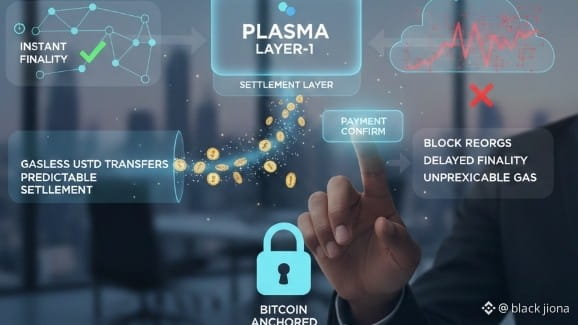
Ein Protokoll, das darauf basiert, wie Menschen tatsächlich bezahlen
Wenn ich mir die meisten Layer-1-Blockchains anschaue, sehe ich zuerst keinen Code oder Konsensmechanismen. Ich sehe unausgesprochene Annahmen darüber, wie Menschen sich verhalten, wenn Geld im Spiel ist. Was sie tolerieren. Was sie ignorieren. Was sie missverstehen. Was sie unbedingt wissen müssen, bevor sie einem System mit echtem Wert vertrauen.
Plasma, als Layer-1, der speziell für die Abwicklung von Stablecoins entwickelt wurde, macht eine Reihe von Annahmen, die ungewöhnlich bodenständig erscheinen. Es wird angenommen, dass Nutzer, sowohl Einzelhändler als auch Institutionen, viel weniger an expressiver Programmierbarkeit oder spekulativem Durchsatz interessiert sind und viel mehr an Vorhersehbarkeit, Richtigkeit und Klarheit bei der Abwicklung. Mit anderen Worten, es wird angenommen, dass Menschen wollen, dass Zahlungen sich wie Zahlungen verhalten und nicht wie Experimente.
Diese Rahmung ist wichtig, denn Zahlungen sind nicht nur ein technisches Problem. Sie sind ein Verhaltensproblem.
Der Stablecoin-Nutzer ist kein Krypto-Native
Die erste Annahme, die Plasma zu machen scheint, ist, dass der Hauptnutzer von Stablecoins nicht tief mit den Mechaniken der Blockchain vertraut ist. Stablecoin-Nutzer verhalten sich bereits anders als spekulative Händler. Sie tätigen Transaktionen mit Absicht, oft unter Zeitdruck, manchmal unter unzuverlässigen Netzwerkbedingungen und normalerweise mit geringer Toleranz für Mehrdeutigkeit.
Wenn jemand USDT sendet, um einen Lieferanten zu bezahlen, Gehälter abzurechnen oder Betriebskapital zu bewegen, interessiert ihn die Blockneuanordnung, verzögerte Finalität oder abstrakte Gas-Token, deren Preis unvorhersehbar schwankt, nicht. Sie möchten drei Dinge wissen:
Ist die Zahlung durchgegangen?
Ist es endgültig?
Kann es später zurückgesetzt, zensiert oder umgeordnet werden?
Das stabilcoin-zentrierte Design von Plasma deutet auf ein Verständnis hin, dass das Zahlungs Verhalten von Natur aus konservativ ist. Menschen optimieren für Sicherheit, nicht für Wahlmöglichkeiten. Gaslose USDT-Übertragungen und stabilcoin-erster Gas sind keine Annehmlichkeiten; sie reduzieren die Anzahl der Entscheidungen, die ein Nutzer zum Zeitpunkt der Zahlung treffen muss. Weniger Entscheidungen bedeuten weniger Fehler. Weniger Fehler bedeuten weniger Streitigkeiten. Das ist kein UX-Feinschliff, sondern eine Reduzierung des operationellen Risikos.
Finalität ist ein psychologischer Vertrag
Sub-sekündliche Finalität ist in der Praxis nicht Geschwindigkeitsfrage. Es geht darum, den mentalen Kreis zu schließen. Wenn eine Transaktion schnell und unwiderruflich abgeschlossen wird, verhalten sich die Nutzer anders. Sie geben Waren frei. Sie aktualisieren Salden. Sie machen weiter.
In vielen Blockchains ist die Finalität probabilistisch, verzögert oder schlecht kommuniziert. Dies schafft eine Verhaltenslücke: Nutzer sehen eine Transaktion als „fertig“ an, bevor das System sie tatsächlich als endgültig betrachtet. Diese Lücke ist der Ort, an dem Streitigkeiten, Doppelbuchungen und Buchhaltungsabweichungen auftreten.
Plasma’s Betonung auf schneller, deterministischer Finalität geht davon aus, dass Menschen ihre Handlungen an klaren Abgrenzungen der Abwicklung ausrichten. Wenn die Finalität klar ist, wird das nachgelagerte Verhalten einfacher. Unternehmen können in Echtzeit abgleichen. Händler können sofort versenden. Institutionen können ohne Ausnahmebehandlung für Neuanordnungsrisiken automatisieren.
Es geht weniger um Leistung und mehr darum, menschliche Erwartungen mit Systemgarantien in Einklang zu bringen.
Die Reihenfolge ist wichtiger als der Durchsatz
Zahlungen betreffen nicht nur die Einbeziehung; sie betreffen die Reihenfolge. Wer zuerst gezahlt hat. Welche Verpflichtung erfüllt wurde. Was vor was passiert ist.
Viele allgemeine Blockchains behandeln die Reihenfolge als internes Optimierungsproblem. Aber in Finanzsystemen ist die Reihenfolge eine soziale und rechtliche Tatsache. Die Designentscheidungen von Plasma, insbesondere bezüglich Konsens und Abwicklungslogik, deuten auf die Annahme hin, dass die Transaktionsreihenfolge lesbar, verteidigbar und stabil sein sollte.
Das ist wichtig für Institutionen. Es ist wichtig für die Einhaltung von Vorschriften. Es ist wichtig für die Streitbeilegung. Wenn die Reihenfolge mehrdeutig ist, sickert Vertrauen in externe Prozesse: manuelle Abstimmung, rechtliche Verträge, menschliche Schlichtung. Wenn die Reihenfolge klar ist, können Systeme automatisiert und eng im Umfang bleiben.
Ein Protokoll, das dies versteht, sagt implizit: Wir erwarten, dass unsere Nutzer sich auf die Kette als Quelle der Aufzeichnung verlassen, nicht nur als Transportschicht.
Zuverlässigkeit über ideale Bedingungen
Eine weitere Annahme, die im Design von Plasma eingebettet ist, ist, dass die Welt chaotisch ist. Nutzer werden aus Regionen mit instabiler Konnektivität transagieren. Systeme werden teilweise Ausfälle erleben. Institutionen werden langsam und konservativ integrieren.
Das Entwerfen für Offline-Toleranz und vorhersehbare Abwicklung ist eine Anerkennung, dass Zahlungssysteme sich elegant verschlechtern müssen. Ein Zahlungsprotokoll, das nur unter idealen Netzwerkbedingungen funktioniert, ist kein Zahlungsprotokoll, sondern eine Labordemonstration.
Bitcoin-gestützte Sicherheit liest sich in diesem Kontext weniger wie eine Markenentscheidung und mehr wie eine Verhaltensentscheidung. Die Anbindung an eine externe, weithin anerkannte Abwicklungsebene erhöht die Neutralität und Zensurresistenz, aber sie erhöht auch das psychologische Vertrauen. Institutionen und Nutzer fühlen sich wohler, wenn die letztendliche Quelle der Wahrheit etwas ist, das sie bereits als robust, langsam und politisch widerstandsfähig verstehen.
Vertrauen ist hier nicht abstrakt. Es geht darum, die Anzahl der Entitäten zu reduzieren, die ein Nutzer persönlich bewerten muss.
Interoperabilität als Verhaltenskompression
Interoperabilität wird oft als Zusammensetzbarkeit oder Ökosystemwachstum dargestellt. Aber aus einer verhaltenspsychologischen Perspektive geht es darum, die kognitive Belastung zu reduzieren. Wenn Stablecoins ohne semantische Drift über Systeme hinweg bewegt werden – dieselbe Bedeutung, dieselben Garantien, dieselbe Abwicklungserwartungen – müssen Nutzer ihr Verhalten an jeder Grenze nicht neu erlernen.
Die EVM-Kompatibilität von Plasma ist weniger als Entwicklermerkmal interessant als als Kontinuitätsmerkmal. Sie geht davon aus, dass bestehende Tools, mentale Modelle und betriebliche Workflows mit minimalem Reibungsverlust fortgeführt werden sollten. Diese Annahme respektiert die Trägheit realer Systeme. Menschen geben ihre Arbeitsprozesse nicht leichtfertig auf, insbesondere nicht im Finanzbereich.
Eine zurückhaltende Sicht auf den Fortschritt
Was mir am meisten auffällt, ist, was Plasma nicht optimiert. Es scheint nicht maximaler Ausdruckskraft, unendlicher Flexibilität oder neuartigen wirtschaftlichen Experimenten nachzujagen. Stattdessen schränkt es den Problemraum absichtlich ein.
Diese Zurückhaltung spiegelt ein Verständnis wider, dass jede zusätzliche Freiheit neue Fehlermodi einführt – technische, verhaltensbezogene und institutionelle. In Zahlungen ist Disziplin ein Merkmal.
Es gibt hier Kompromisse. Eine auf Stablecoins fokussierte Layer-1 wird möglicherweise niemals die exotischsten Anwendungen hosten. Die Anbindung an Bitcoin führt an bestimmten Vertrauensgrenzen zu Latenzen. Konservatives Design kann sich für Entwickler, die maximale Wahlmöglichkeiten wünschen, einschränkend anfühlen.
Aber diese Kompromisse scheinen absichtlich zu sein. Plasma scheint anzunehmen, dass finanzielle Infrastruktur Vertrauen langsam gewinnt und schnell verliert und dass das Protokolldesign diese Asymmetrie widerspiegeln sollte.
In einem Bereich, der oft von Möglichkeiten getrieben wird, fühlt sich Plasma von Verantwortung getrieben an. Und das ist für mich eine Verhaltensannahme, die ernst genommen werden sollte.