
@Dusk Founded in 2018, Dusk Network entered the blockchain space at a time when the industry was loud, fast, and often reckless. Promises were everywhere. Decentralization was framed as rebellion, privacy as disappearance, and regulation as something to be escaped rather than understood. In the middle of that noise, Dusk took a calmer and far more difficult path. It asked how finance could evolve without losing its human foundations, and how privacy and accountability could exist together instead of canceling each other out.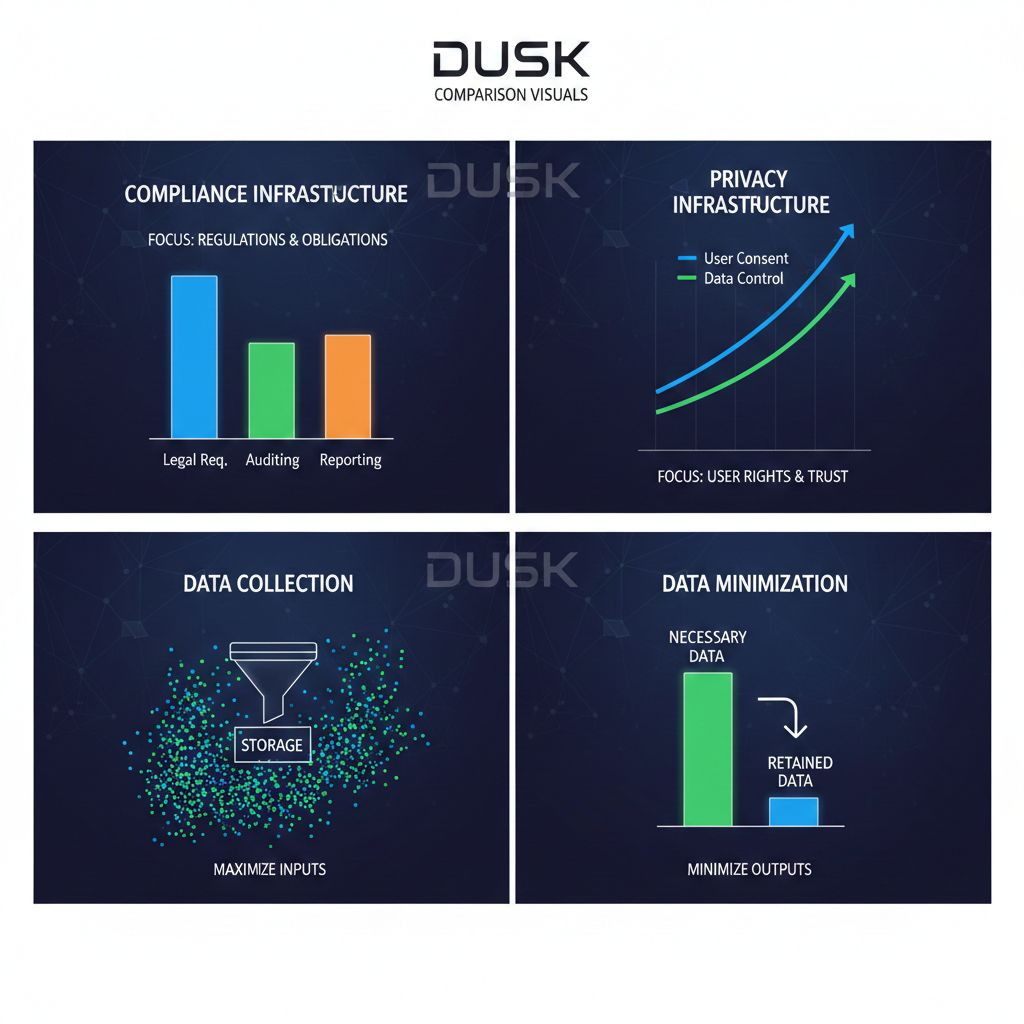
To understand why this matters, it helps to step back from technology for a moment. Finance is not just a system of numbers and ledgers. It is a system of relationships. It is built on trust between people who may never meet, on agreements that stretch across years, and on the fragile belief that the rules will be applied fairly. Traditional finance relies on institutions to protect this trust. Blockchain challenged that model by suggesting trust could live in code instead. That idea was powerful, but it was also incomplete.
Early blockchains leaned toward extremes. Some made everything transparent, turning financial life into a permanent public record. Others leaned heavily into anonymity, making it difficult to distinguish privacy from irresponsibility. Both approaches revealed uncomfortable truths. Total transparency can feel like surveillance. Total anonymity can weaken accountability. Real life rarely works at either extreme, and finance, perhaps more than anything else, exists in the space between.
Dusk was designed for that space. It is a Layer 1 blockchain built specifically for regulated, privacy-focused financial infrastructure. That phrase may sound technical, but its meaning is deeply human. It acknowledges that people need privacy not to hide wrongdoing, but to protect dignity, safety, and autonomy. At the same time, it recognizes that societies need oversight to prevent harm, fraud, and systemic collapse. Instead of choosing one side, Dusk treats both as essential.
The architecture of Dusk reflects this philosophy. Privacy is not an optional feature layered on top of a public system. It is embedded from the beginning. Through advanced cryptographic methods, transactions and asset ownership can remain private while still being verifiable. This allows financial activity to be trusted without being exposed. In simple terms, it mirrors how trust works in everyday life. We do not reveal everything about ourselves to prove we are legitimate. We reveal what is necessary, when it is necessary.
This approach becomes especially meaningful when applied to tokenized real-world assets. As traditional finance experiments with putting shares, bonds, and other assets on-chain, the limitations of existing blockchains become obvious. Public ledgers expose sensitive ownership data. Fully private systems struggle with compliance. Dusk sits between these worlds. It allows assets to exist digitally with privacy preserved, while still enabling auditability and regulatory checks. For institutions, this is not a luxury. It is a requirement.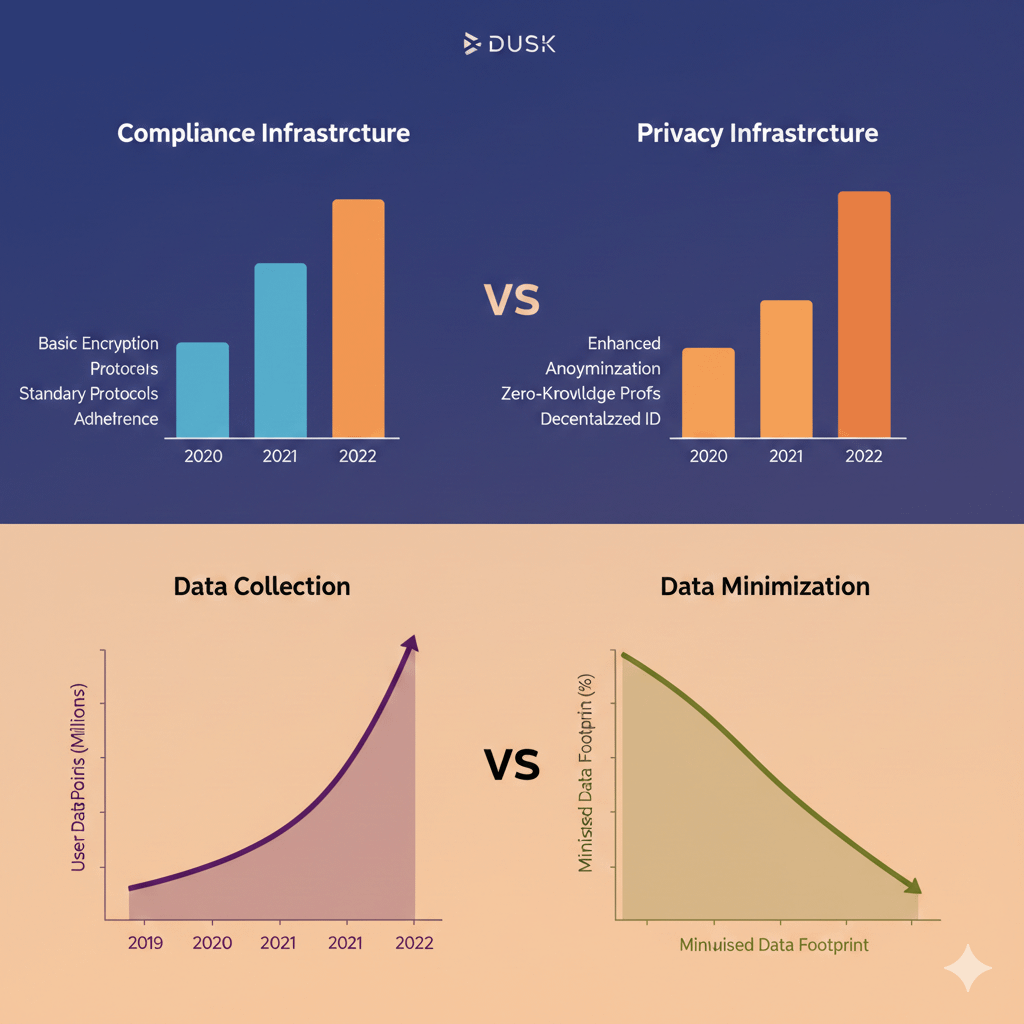
Compliant decentralized finance follows the same logic. DeFi proved that financial systems could be automated and decentralized, but it also exposed how fragile trust becomes when responsibility is unclear. When protocols fail or are exploited, the impact is not abstract. People lose savings. Confidence erodes. Dusk does not promise a future without rules. It offers a framework where decentralized systems can operate within boundaries that reflect real-world responsibilities. Identity, compliance, and privacy are not treated as enemies of innovation, but as parts of it.
There is something quietly mature about this perspective. Dusk does not assume that laws will vanish or that institutions will disappear. It assumes humans will still need structure, and that technology should serve that need rather than deny it. This makes the project less exciting in speculative cycles, but potentially far more durable in the long run.
That durability, however, comes with challenges. Privacy-preserving technology is complex and difficult to build. It requires careful design, rigorous testing, and patience. Regulatory environments change, and no system can predict every future rule. There is also the challenge of being misunderstood in an industry driven by hype. A project focused on balance rarely captures attention as easily as one promising revolution.
Yet history suggests that the most important infrastructure is often invisible. We notice it only when it fails. Financial systems that work quietly, reliably, and fairly do not inspire slogans, but they shape lives. In that sense, Dusk’s ambition is not to disrupt for the sake of disruption, but to rebuild trust at a deeper level.
What makes Dusk compelling is not just what it does, but what it respects. It respects privacy as a human right, not a technical trick. It respects regulation as a social necessity, not an obstacle. It respects the idea that finance is ultimately about people, not protocols.
In a world where financial data is increasingly exposed, sold, and monitored, the idea of privacy with accountability feels almost radical. Yet it is also deeply familiar. People want systems they can trust without feeling watched. They want innovation without instability. They want progress without losing control over their own lives.
Dusk does not claim to have all the answers. What it offers is a different way of asking the questions. Instead of asking how to escape the existing financial world, it asks how to improve it without forgetting why it exists. If blockchain is to mature beyond speculation and ideology, it will need more projects willing to take this slower, more thoughtful path.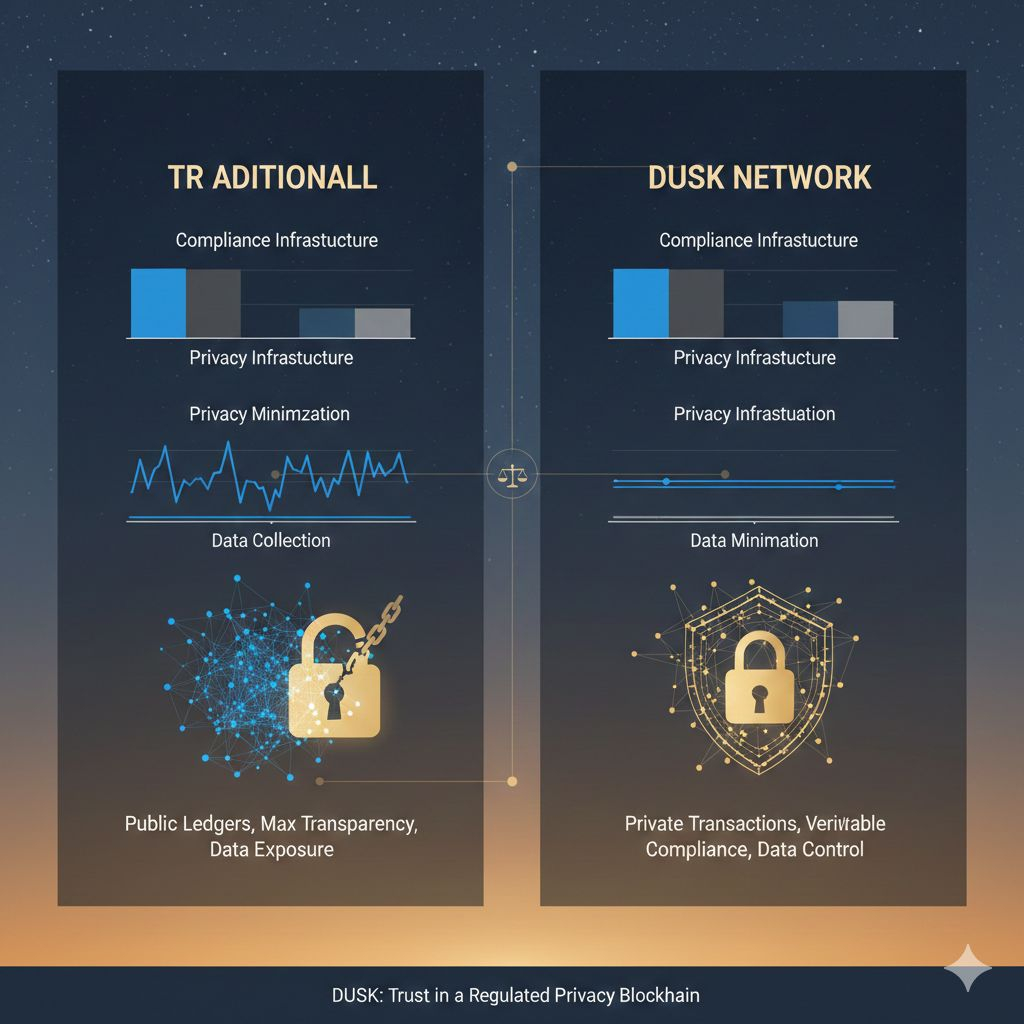
The future of finance will not be decided by the loudest voices or the fastest chains. It will be shaped by systems that earn trust quietly, over time. Dusk is one attempt at that future, not by rejecting the complexity of the real world, but by embracing it with care.
