

Dusk is opening the door for everyday people to earn rental income from premium real estate through tokenization.
Let’s be honest: one of the harshest divides in society is that wealthy individuals park their money in property and collect steady passive income, while retail investors are often left speculating on volatile secondary-market tokens. Owning an entire property feels impossible—sometimes even saving for a down payment in a major city can take months or years. Sharing rental income from prime office towers or luxury residences has traditionally been out of reach.
That’s where Dusk steps in. What stands out isn’t technical jargon, but its ambition to make real-world assets—especially real estate—accessible to ordinary participants. Instead of keeping hard assets exclusive to the wealthy, Dusk aims to fractionalize them, lowering the barrier so more people can take part.
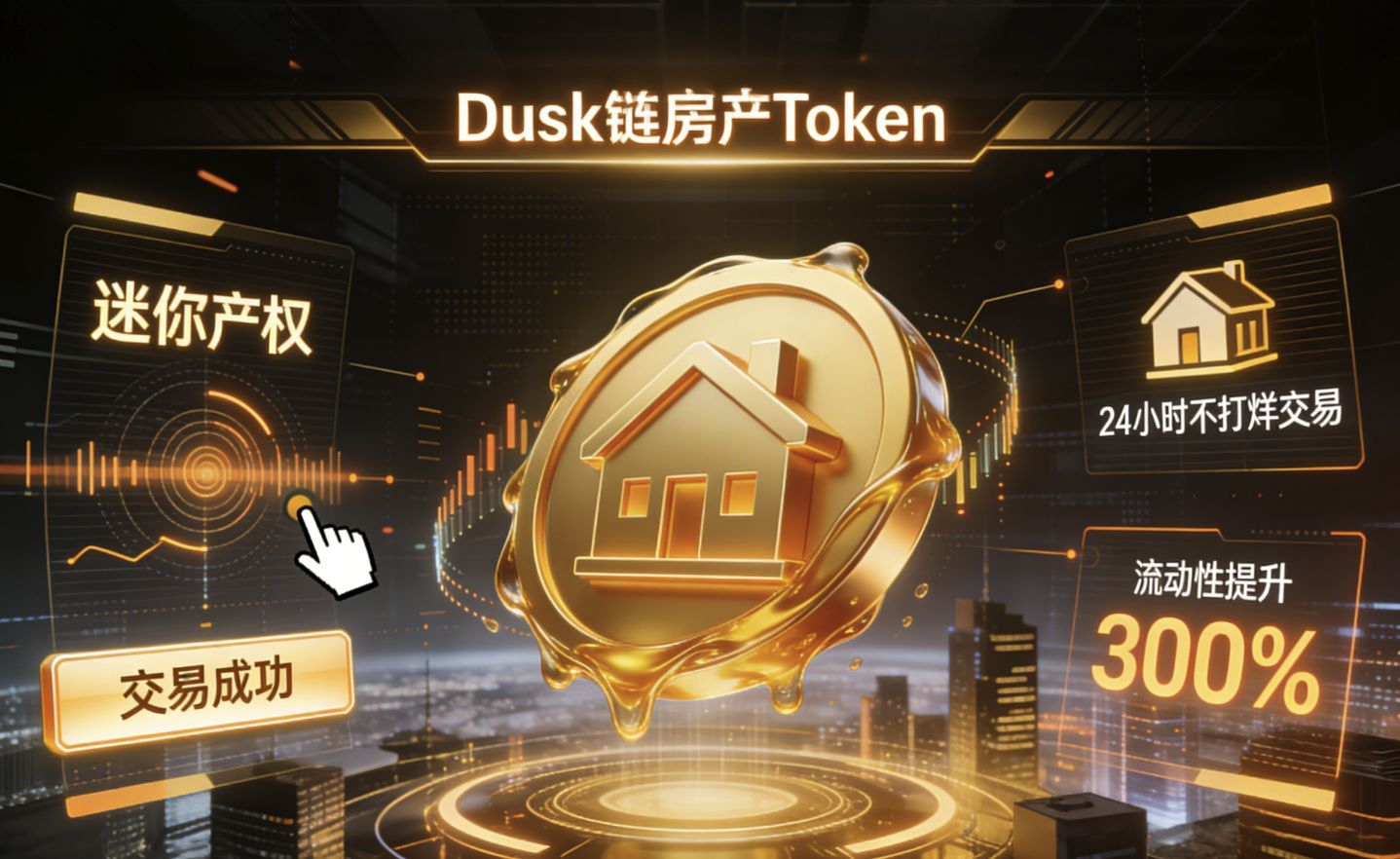
This isn’t just about minting an NFT. Dusk’s approach allows high-value properties to be legally divided into digital units. For example, a $100 million office building could theoretically be split into 100 million tokens. That means someone could hold a $1 fraction representing a proportional share of the asset and its potential rental income. It transforms “unreachable luxury property” into something accessible at small amounts, while maintaining a compliant structure rather than relying on hype.
Traditionally, real estate investing involves paperwork, intermediaries, notaries, and commissions that can exceed 3%. Transfers can take days or weeks. Dusk’s XSC standard seeks to digitize and automate many of these legal and transactional processes, reducing friction and making participation more streamlined. The goal is to make real-world asset ownership as simple as a few clicks, significantly lowering complexity and cost.
Privacy is another key differentiator. Public blockchains like Ethereum are highly transparent—wallet balances and transactions can be viewed by anyone. That level of openness can be problematic for property ownership, where discretion and data protection matter. Dusk integrates zero-knowledge (ZK) technology to enable verification without revealing sensitive information. In other words, ownership and compliance can be proven to regulators without exposing personal identity, exact holdings, or property details on-chain. This “prove without disclosing” capability is essential for real estate, where regulatory requirements and privacy must coexist.
Liquidity is also transformed. Real estate is traditionally illiquid—selling a property can take months, with negotiations and administrative hurdles delaying access to funds. By tokenizing property, ownership units can potentially be traded more easily in digital markets, converting historically “locked” assets into more flexible instruments. This aligns with the broader RWA thesis that digitization can significantly enhance liquidity for traditional assets.
Globally, real estate represents a massive portion of the estimated $300 trillion in property value. As interest in real-world asset tokenization grows—some forecasts suggest the RWA market could reach trillions of dollars by 2030—projects focused on compliance, privacy, and infrastructure may play an important role. Dusk positions itself as a pragmatic builder in this space, focusing specifically on real estate tokenization rather than chasing short-term trends.
In a crypto industry often dominated by hype cycles, the idea of using blockchain to widen access to tangible, income-generating assets is compelling. Dusk’s vision is centered on lowering entry barriers, enhancing privacy, improving liquidity, and aligning with regulatory frameworks. If real estate tokenization becomes mainstream, initiatives like this could help redefine who gets to participate in property-based wealth generation.
For many, that’s the most powerful part of the story—not speculation, but expanding access to real-world value.