Here’s a pattern I can’t unsee anymore: the more boring stablecoin data gets, the more important infrastructure chains like plasma become.
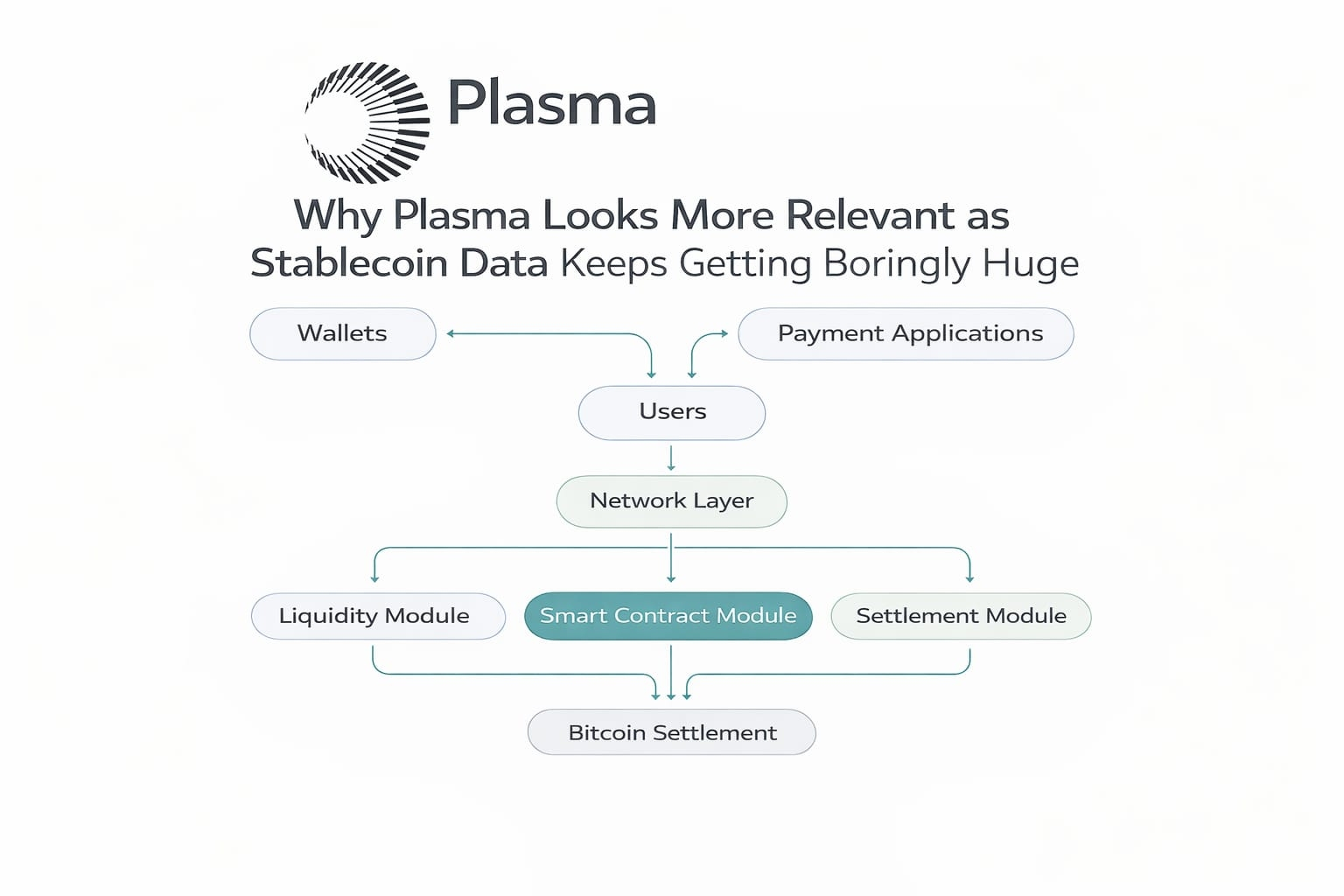
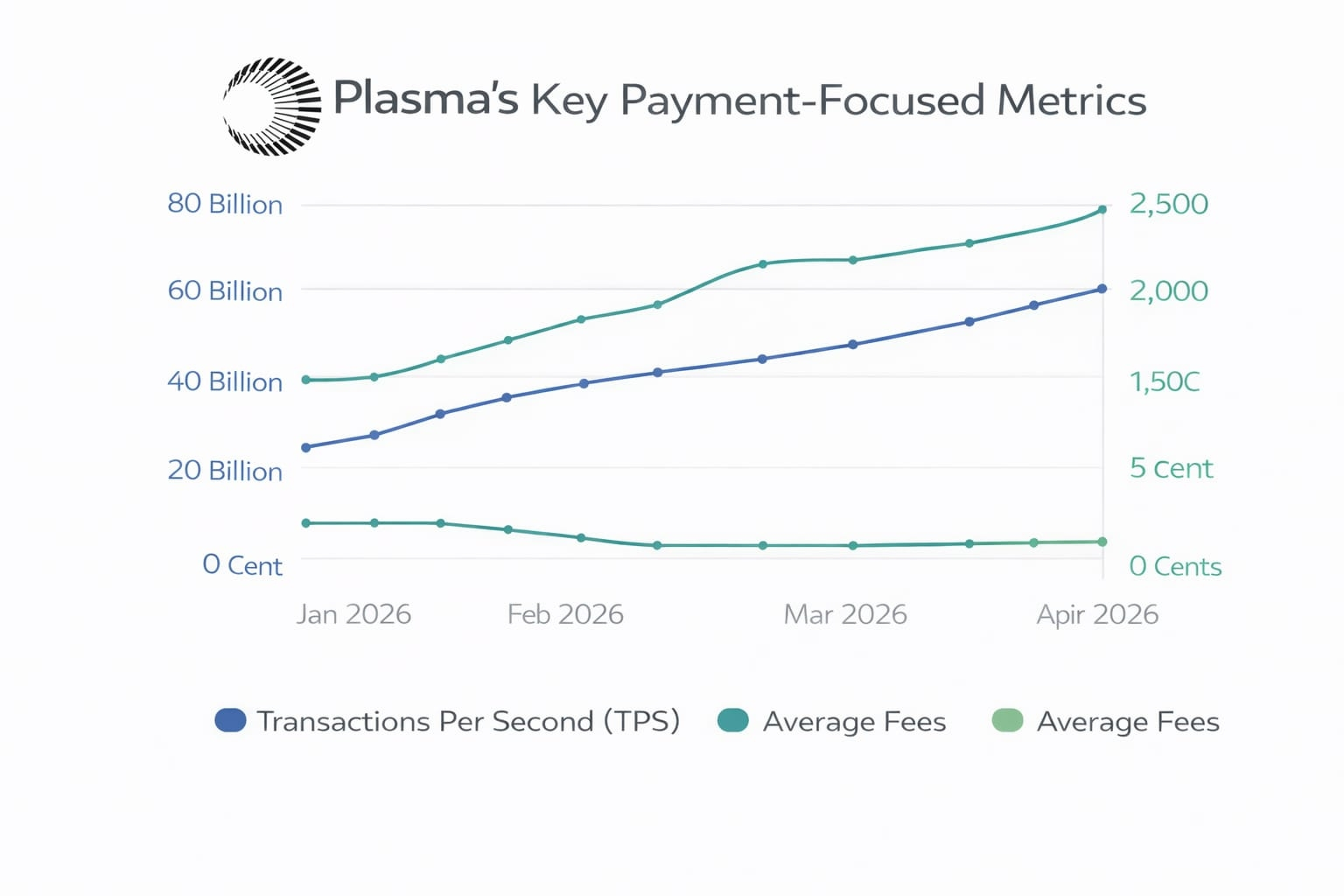
Recent on-chain aggregates show daily stablecoin settlement consistently sitting between $50–70 billion in early 2026, even during relatively calm market periods. Annualized, that’s well beyond $2 trillion in on-chain value movement. What’s changed isn’t just the volume. It’s the behavior behind it. A growing percentage of these transfers are tied to payments, treasury management, cross-border flows, and internal business settlements, not just DeFi loops.That shift exposes a mismatch. Most blockchains were built to be expressive and flexible, not predictable. Payments don’t care about expressiveness. They care about certainty. That’s where Plasma fits surprisingly well.
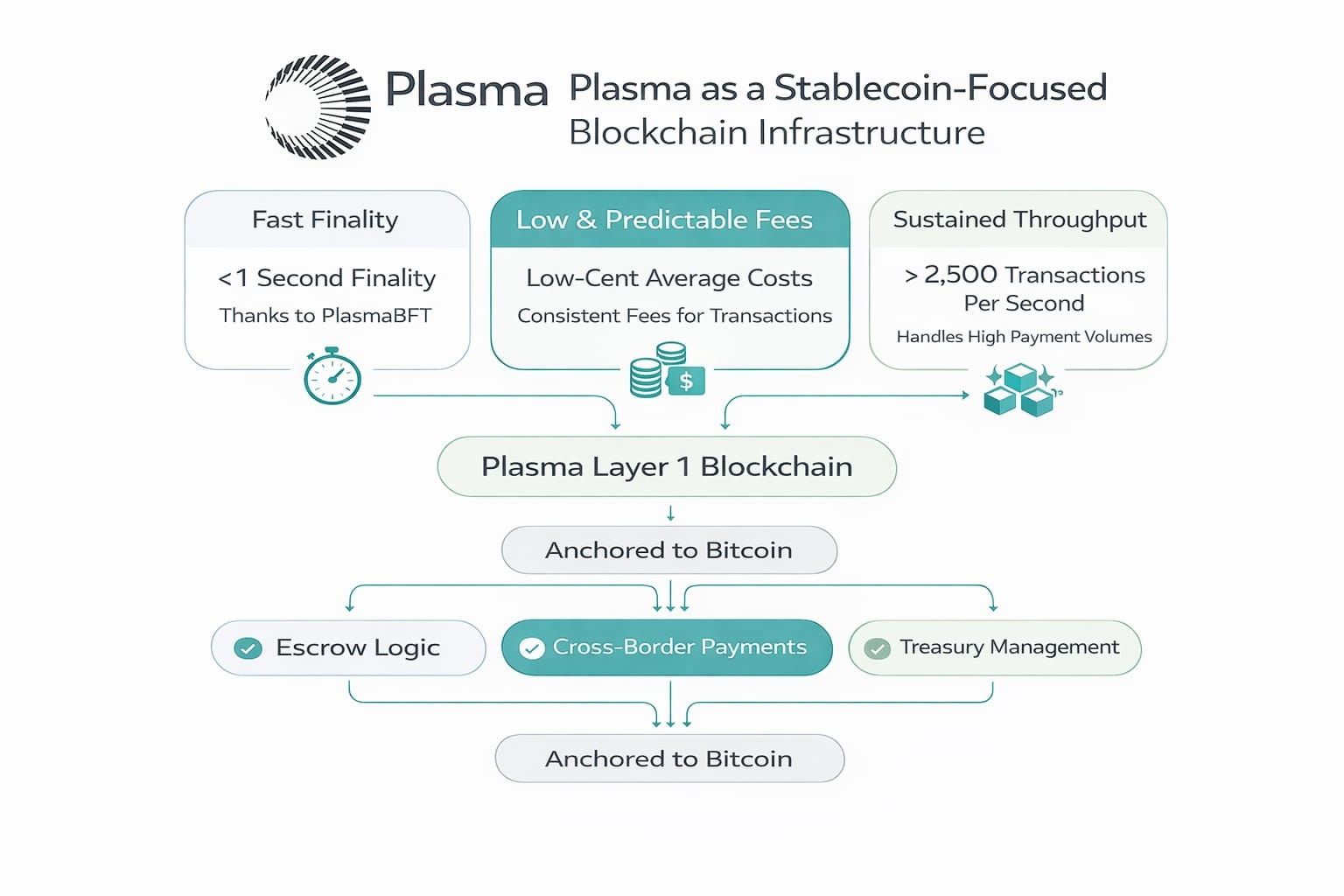
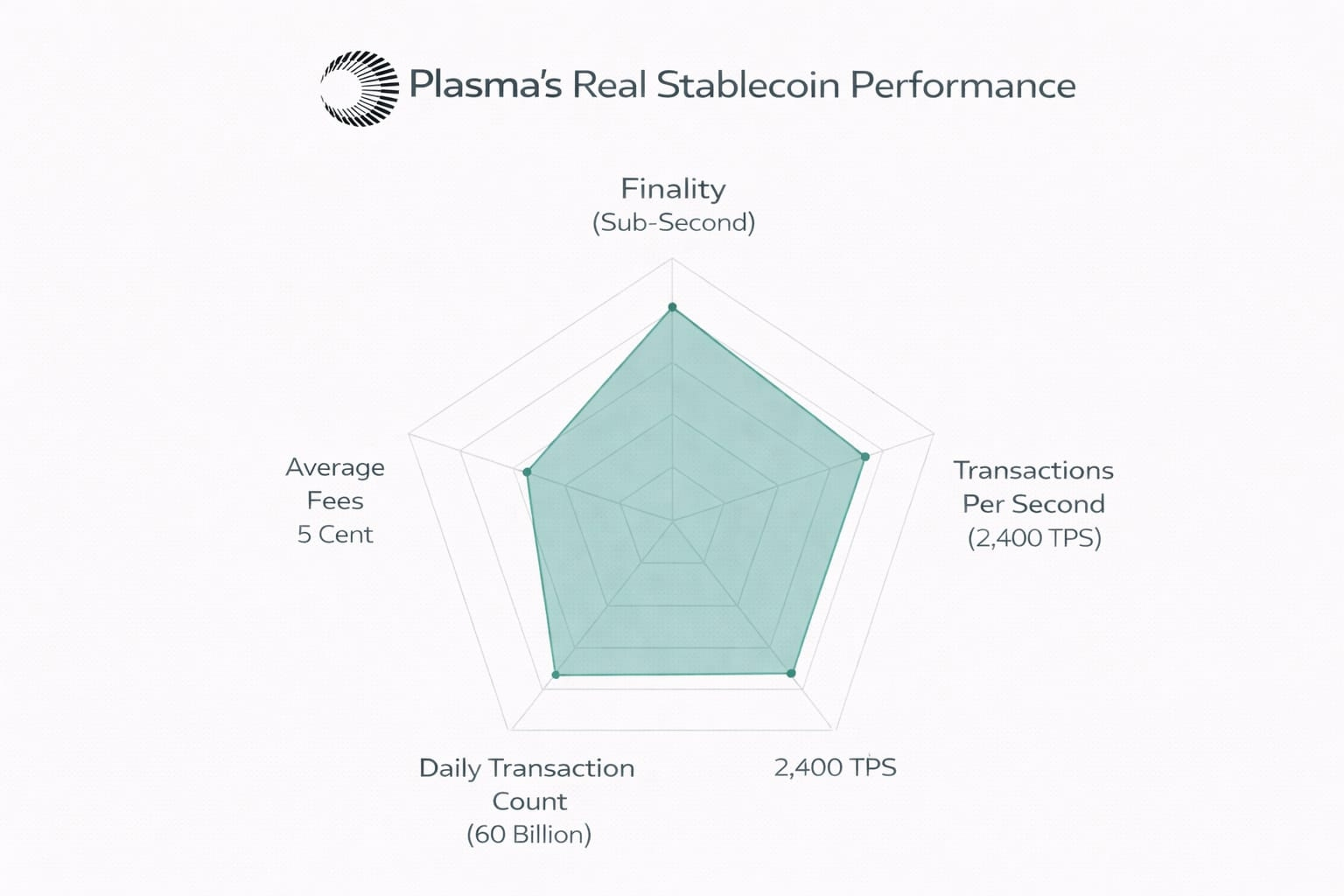
Plasma is a stablecoin-first Layer 1, and that’s not marketing language. It’s an architectural choice. The network optimizes for three things that payments actually need: fast finality, consistent fees, and sustained throughput.On the performance side, Plasma has continued to demonstrate 2,500+ transactions per second under sustained load, with internal benchmarks pushing higher without sacrificing stability. Thanks to PlasmaBFT, finality regularly lands under one second. That’s a big deal. Sub-second finality means users don’t mentally treat a transaction as “pending.” It feels done. And in payments, perception matters almost as much as reality.
Fees back that up. Network-level data shows average transaction costs staying in the low-cent range, even as transaction counts increase week over week. Teams testing payment flows on Plasma report roughly 50–70 percent lower settlement costs compared to general-purpose smart contract chains during congestion. That difference compounds fast when you’re processing thousands of transfers instead of a handful of whale moves.Another reason Plasma feels practical is its full EVM compatibility. There’s no new VM to learn and no weird tooling edge cases. Solidity works. Existing wallets work. Infra providers don’t need custom integrations. Because of that, the apps showing up first are exactly what you’d expect on a payment chain: escrow logic, invoicing systems, merchant checkout flows, and automated payouts. Not flashy. Very useful.
Security is where Plasma makes a longer-term bet. By anchoring state commitments to Bitcoin, Plasma ties its ledger history to the most battle-tested settlement layer in crypto. That doesn’t eliminate risk, but it raises the cost of historical manipulation dramatically. For a chain positioning itself as financial infrastructure rather than an experimental sandbox, that tradeoff makes sense.Usage trends support this direction. Active addresses and daily transaction counts have been climbing steadily, not in incentive-driven spikes but in consistent steps. That usually signals repeat usage. People coming back because the network does what they need it to do, day after day.
None of this means Plasma is guaranteed to win. Stablecoin regulation is still evolving, and Plasma’s trajectory is closely tied to issuer compliance and regional policy decisions. There’s also serious competition from L2s and modular stacks promising similar cost advantages through more complex architectures.
Still, the alignment feels hard to ignore. Stablecoins are already global financial rails. Plasma is building infrastructure that treats them that way from day one.
No hype cycles. No distractions. Just settlement that’s fast, cheap, and predictable — which is exactly what payments need.
@Plasma