

Imagine a blockchain that feels alive—not some cold, unchanging ledger, but something that remembers stuff, handles tiny payments constantly, and lets AI agents talk and trade like real people. That’s the whole pitch behind Vanar. Their network is built for huge amounts of data flying around, millions of small transactions, and non-stop back-and-forth between smart AI agents.
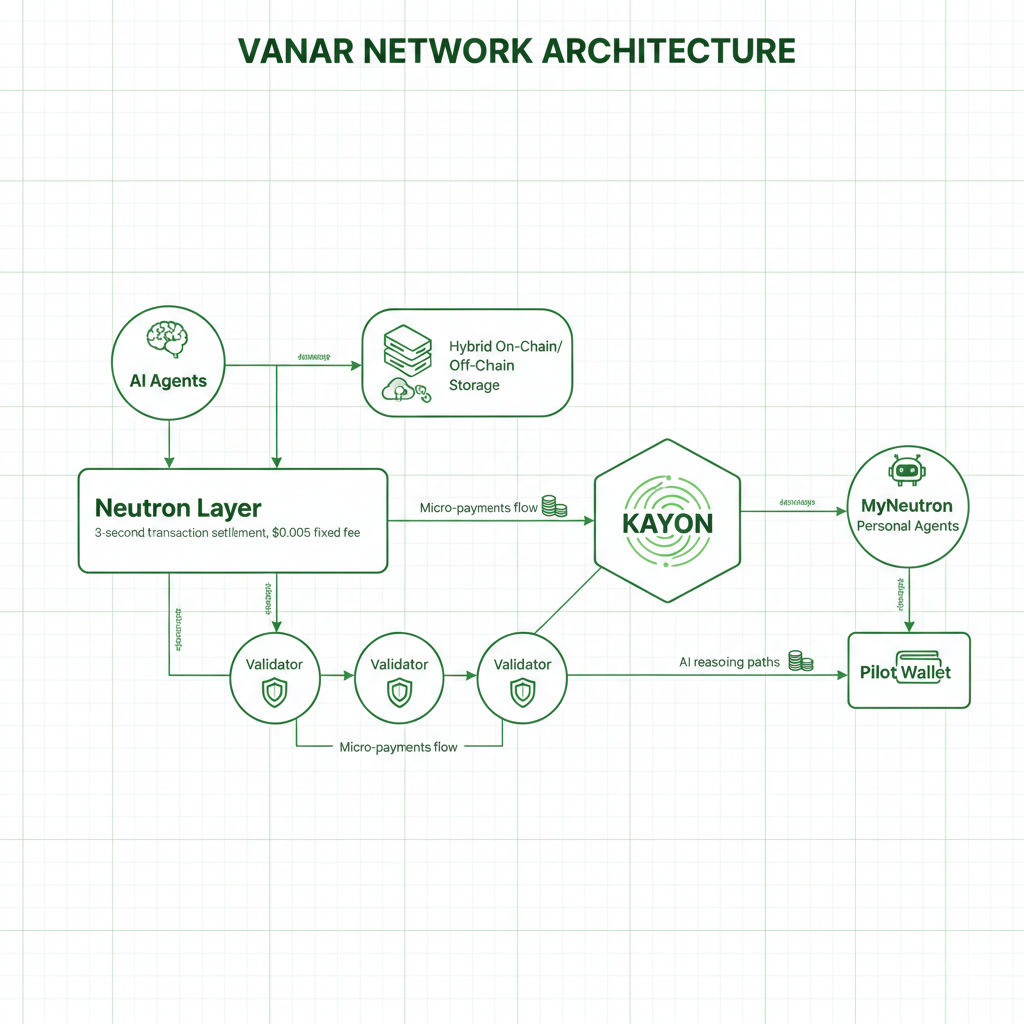
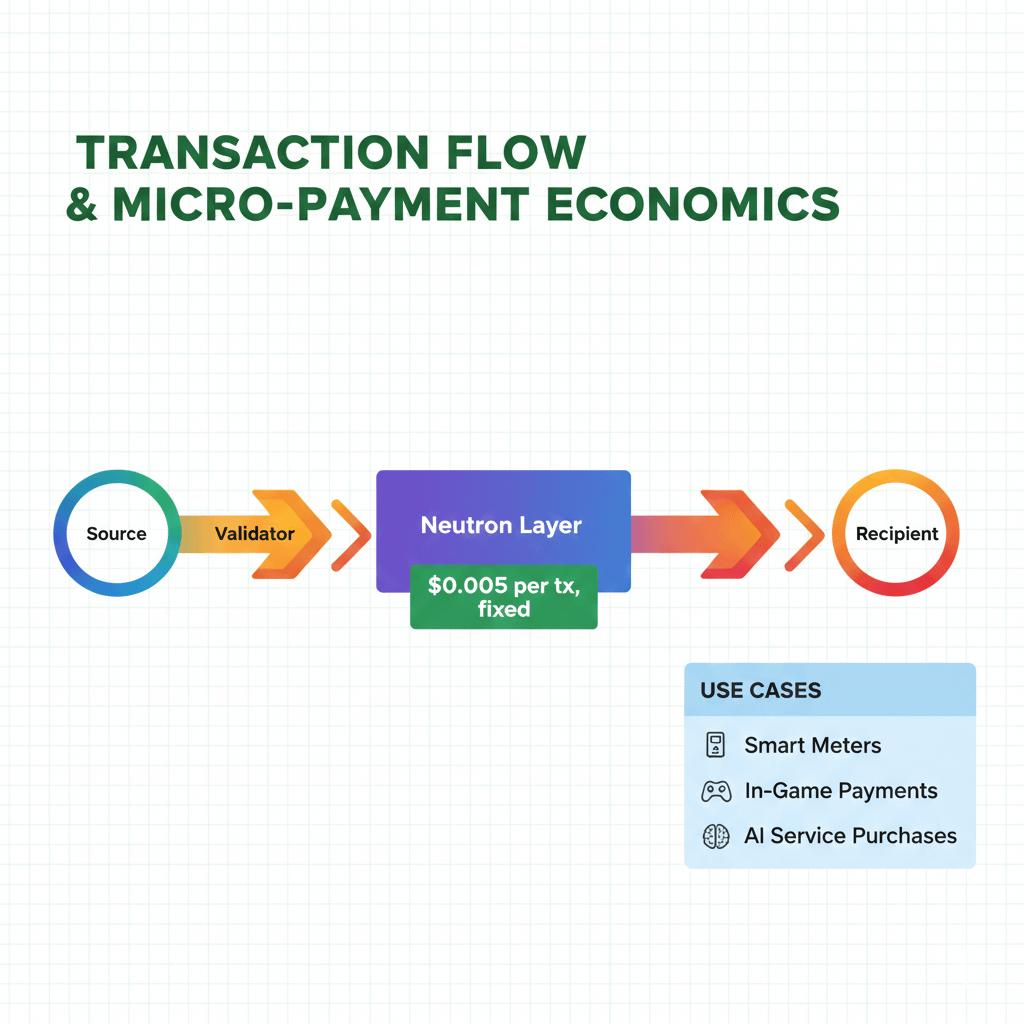
The best part? Transactions settle in roughly three seconds, and the fee stays locked at about half a cent—no matter if the network’s dead quiet or exploding with activity. That kind of rock-solid pricing makes micro-payments actually usable. Think about your smart electricity meter paying per second of usage, or an AI quietly buying bits of your personal data without the fees killing the economics. Because the cost never jumps, even the smallest interactions stay cheap and practical.
They’re also pretty serious about not wrecking the planet. Validator nodes run on renewable energy thanks to their tie-up with Google Cloud, and they offset whatever emissions slip through. Plus, the heavy AI lifting happens on NVIDIA’s CUDA-accelerated stack—so you get serious computing power without feeling guilty about the carbon footprint. That combo of green + high-performance is exactly what makes companies and regulators actually pay attention these days.
The Storage Trick That Changes Everything: Hybrid, Fast, and Actually Secure
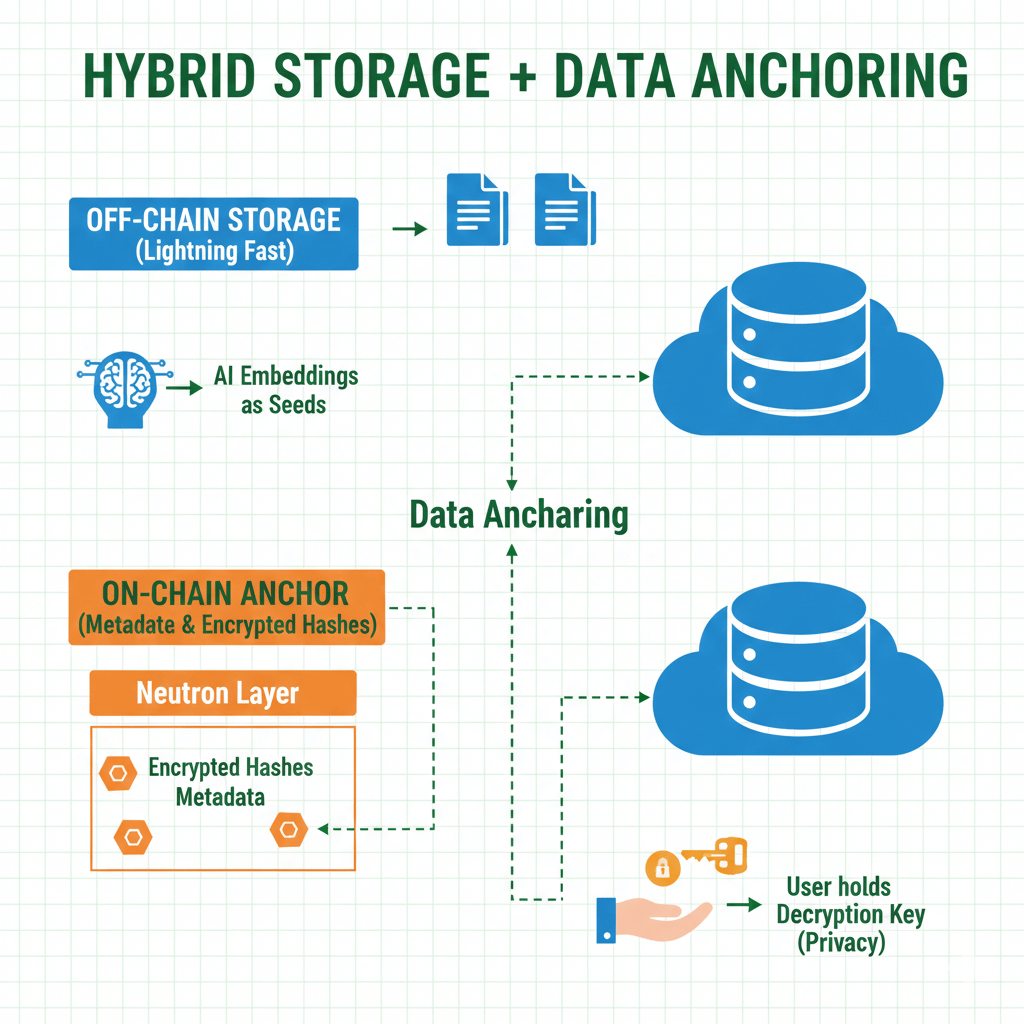
Vanar’s Neutron layer does something different from most chains. By default, data “seeds” live off-chain so everything stays lightning quick. But if you want bulletproof ownership or audit trails, you can anchor them on-chain. When anchored, only the metadata and encrypted hashes go on the blockchain—your actual files or sensitive content stay private, and only you hold the decryption key.
Here’s the really neat bit: AI embeddings (those vector representations that let machines understand meaning) count as seeds too. So you can search by concept instead of exact keywords. That turns the whole thing into a living memory layer—autonomous agents can pull data, understand context, and act on it. It’s not static storage anymore; it’s active, evolving knowledge that agents can reason over in real time.
Kayon AI: Your Messy Digital Life, Suddenly Organized
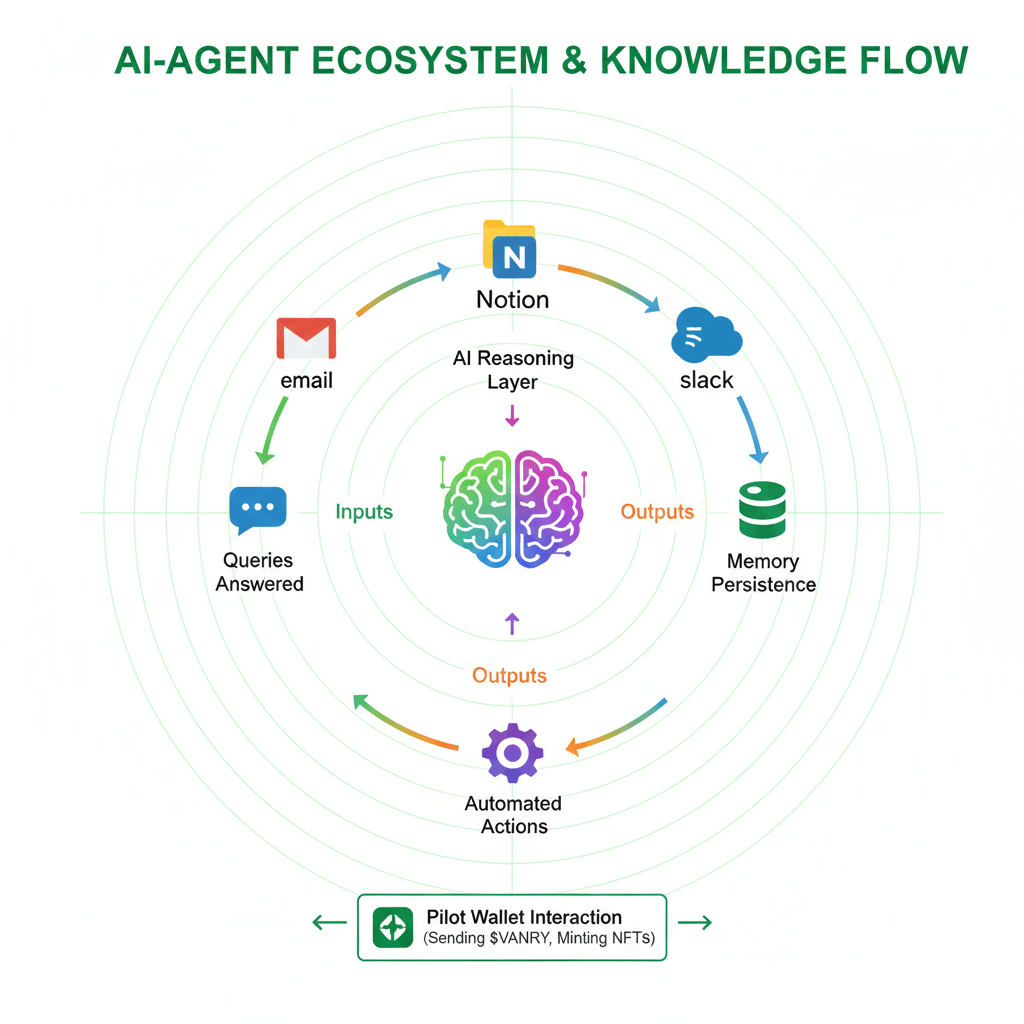
Kayon is basically the brain sitting on top of all this. It connects to the tools you already use—Gmail, Drive, Slack, Notion, Salesforce, etc.—and turns your scattered emails, docs, chats, and spreadsheets into one clean, searchable knowledge base. You decide what to connect, everything’s encrypted end-to-end, and you can unplug any integration whenever you want. Total control.
Once it’s hooked up, you just ask normal questions in plain English: “Show me everything about the Q3 roadmap,” or “Summarize my last call with the client.” Answers come back with sources cited, no hallucinations. Developers get APIs so they can build apps on top of this organized data. And they’re already planning to add Jira, HubSpot, Stripe, and more. Kayon could quietly become the universal AI backend for getting actual work done.
Personal Agents That Actually Remember You
MyNeutron (dropped in October 2025) takes that same intelligence and makes it personal. You create your own AI agents that remember everything across your tools and interactions. These agents don’t start from zero every time—they recall your meeting notes when drafting an email, know your preferences when planning your day, even buy/sell stuff in games or organize tasks based on your history. It’s like finally having an assistant that doesn’t forget what you told it last week.
Then there’s Pilot—the natural-language wallet experiment. You literally just say “Send 10 tokens to Ali” or “Mint this NFT for me,” and it figures out the blockchain steps. No more wrestling with wallets or gas settings. It lowers the barrier so much that regular people (not just crypto nerds) can actually use it comfortably.
Real-World Proof: World of Dypians
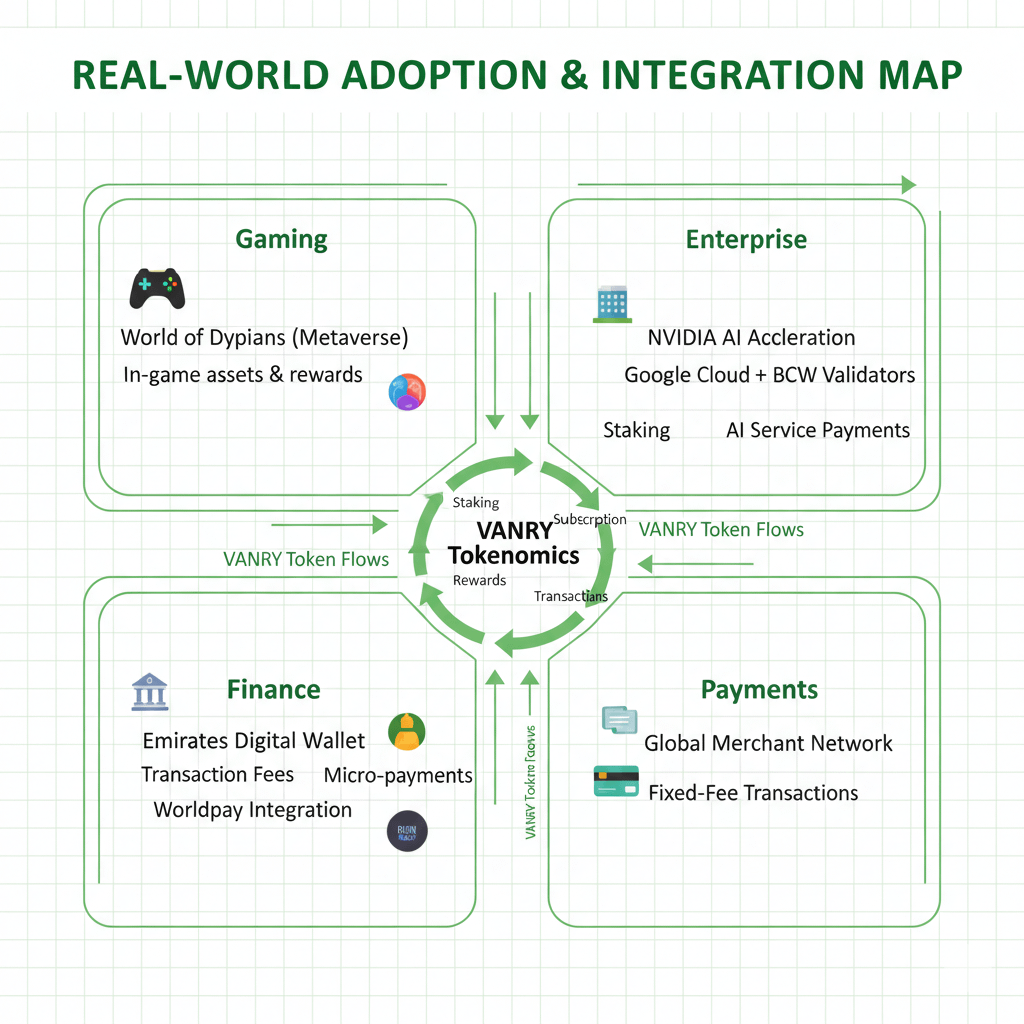
If you want to see this stuff live, look at World of Dypians. It’s a huge metaverse game (over 2,000 km²) running fully on Vanar, with 30k+ active players and more than 155 million on-chain transactions already. The NPCs are powered by AI that reacts in real time to what players do—actual on-chain reasoning. Devs get easy Unreal/Unity APIs, micro-payments for in-game stuff, social features, quests—all built-in. It’s not a whitepaper dream; it’s a functioning game people are playing right now.
Partnerships That Actually Mean Something
Vanar’s landed some legit names: NVIDIA for AI acceleration, Google Cloud + BCW Group running green validators and handling billions in fiat-crypto volume, Worldpay plugging them into global payments (150+ currencies, 99%+ success), Emirates Digital Wallet serving 13 million users in the Middle East, and Viva Games (Disney/Hasbro studio) bringing real game titles over. These aren’t random shout-outs; they’re deep integrations into finance, gaming, and enterprise.
The Token Actually Does Stuff
VANRY isn’t just speculation fuel. Starting early 2026 you’ll pay for premium Neutron/Kayon features with it (subscription-style based on usage). Validators stake it for security and earn rewards. Some actions burn tokens, adding deflationary pressure. The more the platform gets used, the more VANRY matters—tied to real adoption, not hype.
Future-Proofing + Honest Market Take
They’re already researching quantum-resistant encryption to stay ahead of future threats. Not needed tomorrow, but smart long-term thinking. Right now VANRY trades way below what the tech suggests it could be worth—classic crypto gap between innovation and market sentiment. The token’s upside will come down to how quickly enterprises, gamers, and devs start using the AI/memory features. Vanar’s betting AI agents become major economic players, and chains with real memory + reasoning will be essential. We’ll see if the market agrees.
Bottom Line
Vanar’s trying to build one cohesive platform: hybrid storage that’s fast yet secure, natural-language querying over your whole digital life, super-cheap fixed-fee transactions, and progressive decentralization—all tuned for the age of AI agents and constant micro-payments.
They’re testing it everywhere—metaverse games, supply chains, payments, personal assistants. Whether it becomes the dominant stack depends on adoption, regulation, and how fast AI evolves. But the direction feels different: not just storing data, but making it understand itself, reason, and act in real time.
Pretty wild future they’re sketching out.
