


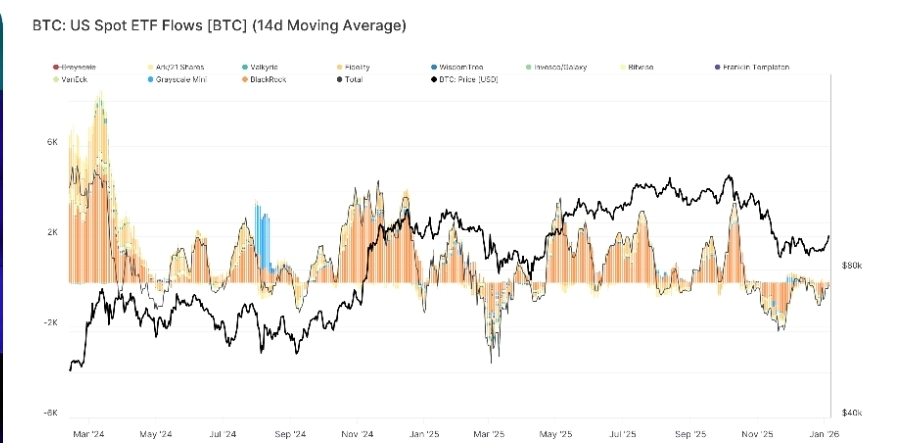
Short answer:
Not officially.
But practically?
More than most people realize.
Because Bitcoin didn’t just get adopted.
It got absorbed.
What changed
Bitcoin used to move on:
• Halving cycles
• Retail momentum
• Exchange leverage
• Miner behavior
Now?
It reacts to:
• ETF inflows
• Treasury yields
• Options positioning
• Institutional rebalancing
That’s a different ecosystem.
And different ecosystems produce different volatility.
The structural shift
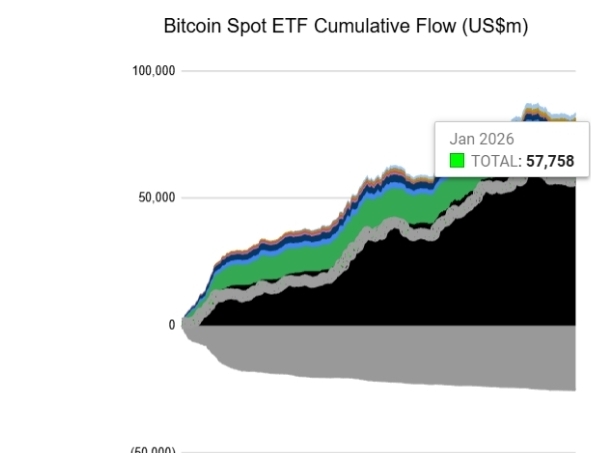
When BlackRock launched its spot ETF product, it wasn’t just another vehicle.
It changed the buyer profile.
Same with Fidelity and other issuers.
Now large capital can access Bitcoin without:
• Self-custody
• On-chain movement
• Exchange exposure
• Crypto-native friction
That sounds bullish.
And structurally, it is.
But it comes with something else:
Correlation.
Bitcoin now trades like a risk asset
Watch what happens when:
• The US dollar spikes
• Treasury yields jump
• Tech stocks sell off
Bitcoin reacts faster than before.
Why?
Because ETF holders behave like equity investors.
They rebalance.
They de-risk.
They hedge.
And when institutions sell, they don’t panic.
They execute.
Quietly.
At scale.
The volatility paradox
Here’s the twist:
ETFs may be reducing short-term chaos…
While increasing systemic sensitivity.
Retail panic is loud but shallow.
Institutional repositioning is calm but heavy.
That shift changes:
• How bottoms form
• How rallies accelerate
• How liquidity dries up
We’re no longer in a purely reflexive retail market.
We’re in a capital flow market.
The new power structure
Before ETFs:
Crypto-native whales influenced price.
Now?
Flows from retirement accounts, pension exposure, and macro funds matter.
And those flows respond to:
• Inflation data
• Federal Reserve guidance
• Bond auctions
• Global liquidity cycles
Bitcoin didn’t lose independence.
It gained macro gravity.
So are ETFs “controlling” Bitcoin?
Not directly.
They don’t dictate price.
But they shape liquidity.
And liquidity shapes everything.
When inflows accelerate:
Momentum compounds.
When inflows stall:
Price feels heavier.
That’s not manipulation.
That’s structure.
The uncomfortable truth
The more institutional Bitcoin becomes…
The less it behaves like a rebellion.
And the more it behaves like an asset class.
That doesn’t kill the thesis.
It matures it.
But maturity is slower.
More mechanical.
Less explosive.
So…
Is this bullish?
Long term: yes.
Short term?
It means Bitcoin will increasingly trade on macro calendars instead of crypto Twitter sentiment.
And most retail traders aren’t prepared for that transition.
The question isn’t whether ETFs control Bitcoin.
The real question is:
Do you understand who your counterparty is now?
Talk again soon.
Follow for more structural breakdowns 🫶