When people try a blockchain app for the first time, I can almost feel what they feel. That tiny worry right after you press a button. Did it work. Did I lose money. Why is it taking so long. That gap between action and response creates fear, and fear creates drop off. Fogo is built to attack that feeling at the root. They are building a Layer 1 aimed at very low delay and very high throughput, and they do it by staying compatible with the Solana Virtual Machine so the chain can run apps in a proven way while pushing the base layer toward real time behavior. If this happens the way it is designed, the chain starts to disappear in the user’s mind, and the app starts to feel like a normal app again, fast, confident, and predictable.
I’m not going to dress it up with complicated words because the core idea is simple. Fogo wants a world where on chain actions feel immediate, especially for finance style apps where timing matters and hesitation hurts. Their docs describe the chain as built for DeFi, and they point out that low latency opens the door to things that are hard to do on slower networks, like real time order books, auctions that need tight timing, and liquidations that must happen at the right moment. That is not just a tech flex. That is the difference between a system people test for fun and a system people trust for serious use.
How It Works
Fogo works by taking an execution engine that already knows how to run fast and then building a network design around it that tries to keep speed consistent, not only in perfect conditions but also when the network is busy. The Solana Virtual Machine is the execution environment that runs programs and processes transactions. A good way to think about it is that it is the rules and machinery that make sure code runs the same way for everyone, so thousands of computers can reach the same result. A helpful explanation from a developer education source is that a blockchain virtual machine exists so untrusted code can run safely and still produce the same output everywhere, and it also supports measuring and limiting work so the system is not abused. It also notes a key idea behind the Solana Virtual Machine, it is built to run many transactions at the same time when it is safe to do so, instead of forcing everything into one slow line. That is one of the reasons SVM style execution can feel fast when it is engineered well.
Now here is the part that makes Fogo feel like its own thing. Their architecture docs say they preserve core Solana style networking and consensus components, including Proof of History, Tower BFT, Turbine, and leader rotation, and they keep full compatibility at the SVM execution layer so existing programs and tools can migrate without modification. In plain words, they are not asking developers to relearn everything. They are saying bring what already works, then let the base layer improvements deliver a smoother experience. If this happens, builders can move quickly, and quick building is what turns an empty chain into a living ecosystem.
Fogo also makes a very direct claim about what slows blockchains down in the real world. One major issue is that performance can be capped by the slowest widely used client software. Their docs describe a unified client approach where they adopt a single canonical client based on Firedancer to remove that bottleneck. They even describe a staged path, starting with a hybrid implementation and then moving to full Firedancer as development completes. If you are a user, you might not care about the word client, but you do care about the result. This design is built to keep the network from feeling great one moment and then suddenly jittery the next moment because part of the network cannot keep up. And if this happens, you get the kind of consistency that makes people relax, because the system feels steady instead of fragile.
Then there is the most human part of the engineering, which is admitting that distance creates delay. Signals take time to travel. If validators are spread across the world, the chain has to wait for messages to cross oceans and continents. Fogo’s docs describe a multi local consensus model using zones where validators operate close to each other to reduce network delay, ideally in a single data center where latency approaches hardware limits, enabling very low block times. They also describe dynamic zone rotation across epochs and on chain voting with a supermajority to decide future locations, giving validators time to set up secure infrastructure. This is the tradeoff they are choosing. They are saying we can coordinate location to get speed, and we can rotate to avoid getting trapped in one place forever. If this happens as intended, it can create something people have wanted for years, on chain execution that feels immediate without pretending the world has no geography.
Finally, their docs describe a curated validator set. The idea is simple, even a small number of underpowered validators can drag down performance, so validators must meet minimum stake thresholds and also be approved for operational capability. They also describe enforcement that protects network health, including removing persistently underperforming nodes and taking action against harmful behavior that hurts users. Whether you love or hate the idea of curation, I understand why they do it. They are trying to protect the user experience from being ruined by weak operators. If this happens, the chain has a better chance of staying smooth during the moments that matter most, when demand is high and people are nervous.
Ecosystem Design
Ecosystem design is not only about who builds on the chain. It is about how the chain feels when a new person arrives. I have watched people bounce off crypto for one reason that keeps repeating, it feels like a maze. Too many steps, too many approvals, too many chances to mess up. Fogo’s approach is to remove friction by leaning into compatibility at the execution layer and by offering primitives that make onboarding less stressful. Their docs explicitly frame a path for builders to deploy using familiar Solana development workflows, and they emphasize that existing tooling can migrate. That matters because developer speed becomes user speed. The faster builders ship, the more quickly users see real apps instead of empty promises.
The most important ecosystem choice they describe is Fogo Sessions. Their building guide describes Sessions as a chain primitive that combines account abstraction with paymasters, enabling users to interact without signing every transaction or paying gas fees. I will say this in a very human way. This is built to reduce fear. When you remove constant signing and fees, you remove constant reminders that you could make an expensive mistake. Their docs also mention user protection features like spending limits and domain verification, so users can explore without risking their entire wallet balance. If this happens at scale, it changes the first impression of Web3 from stressful to welcoming. And welcoming is what turns curiosity into habit.
Utility and Rewards
Token utility only matters if it connects to real behavior. Fogo’s official tokenomics post explains that the token drives the network economy through network gas, staking yield, and a flywheel model where a foundation supports projects through grants and investments and partners commit to revenue sharing that directs value back to the ecosystem. In plain words, the token is used to pay for actions on the network, it is used to secure the network through staking, and it is part of an economic loop meant to keep builders and the community aligned.
I want to focus on what this means emotionally, because that is what users respond to. Paying gas for every step can make people feel like they are being taxed for learning. The tokenomics post explicitly notes that apps can sponsor gas costs, creating a gas free experience for users. If this happens widely, the token can still power the network, but the user does not have to feel punished for taking their first steps. That is how you unlock growth, not by yelling about decentralization, but by lowering the cost of trying.
Staking yield is the other side of the story. The tokenomics post states that token holders and validators earn yield for securing the network. That creates a simple incentive loop, people support the network, and the network rewards them for helping keep it stable and secure. If this happens in a healthy way, it can create a community that cares about long term reliability instead of short term hype, because they have a reason to protect the system that users rely on.
Adoption
Adoption is not just wallets and transactions. Adoption is when people stop checking if something will work and start assuming it will work. Fogo’s docs are clear that they are built for DeFi applications and for workloads that require high throughput and low latency, and they list examples where timing is crucial. This focus matters. Chains that try to serve everyone often end up serving no one deeply. Fogo is trying to own the lane where delay is not a small annoyance, it is a real cost. If this happens, the chain can become the default home for apps that need precise execution and fast response.
Independent research coverage has also framed Fogo around making on chain finance feel closer to traditional performance standards, emphasizing targeted tradeoffs like a single canonical high speed client, multi local consensus, and a curated validator set. I am careful with this point because hype is easy, but the framing is useful. It tells you what the network believes it must sacrifice and what it refuses to sacrifice. And when a project is honest about its tradeoffs, it becomes easier to trust, because you are not being sold a fantasy where everything is perfect at once. 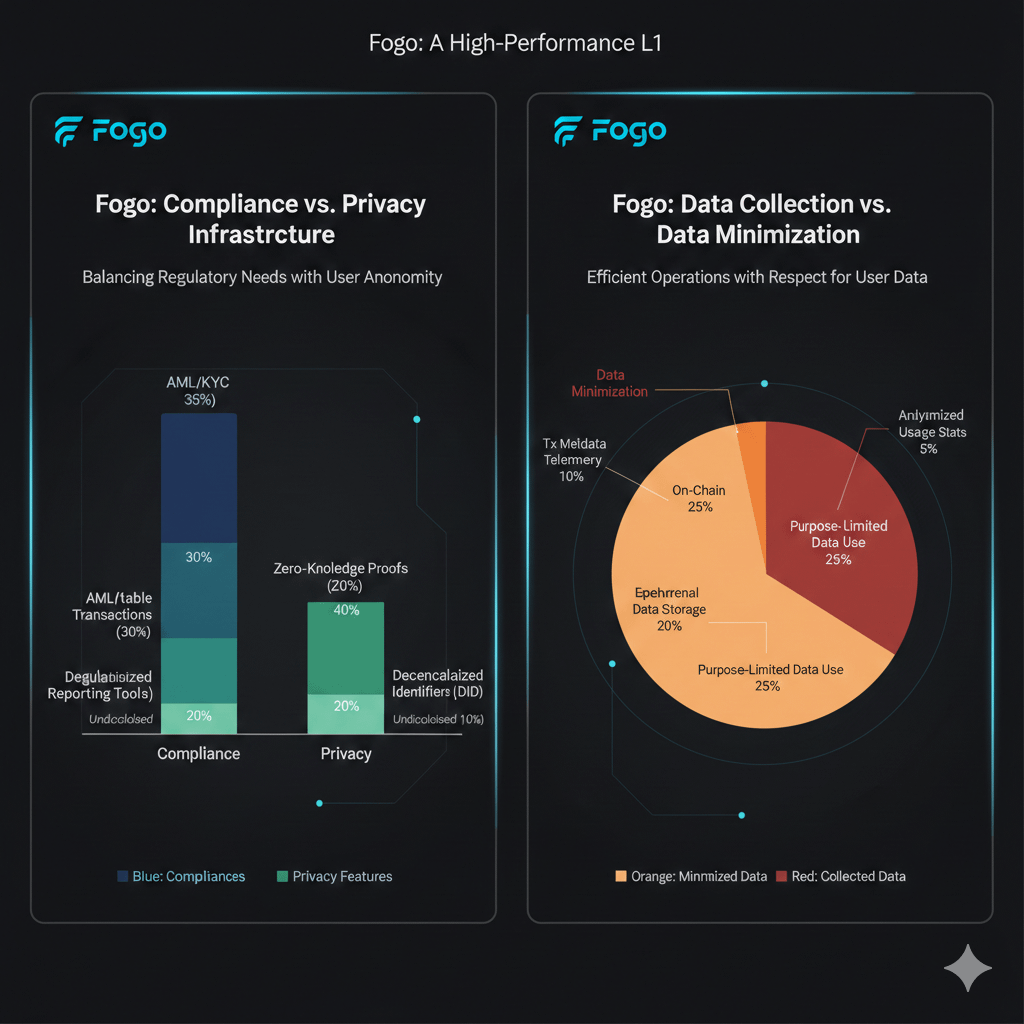
Sessions also plays directly into adoption because it changes onboarding. When users can interact without repeated signing and without constantly paying fees, more people try. When more people try, more people find a reason to stay. And when people stay, the network becomes real, not because of marketing, but because of lived experience.
What Comes Next
What comes next for Fogo is simple to say and hard to execute. They need to prove that their speed does not break under pressure, that zone coordination and rotation can stay fair over time, and that the curated validator approach can protect performance without creating a feeling of unfair gatekeeping. Their architecture docs lay out the mechanics, zones, rotation across epochs, on chain voting with supermajority, and a validator set designed to maintain performance standards. The next chapter is whether these choices stay strong when the network grows and incentives get more complicated.
On the engineering path, the docs describe starting with a hybrid client approach and transitioning to full Firedancer as development completes. Firedancer documentation itself describes the hybrid validator concept and notes that a full Firedancer validator has been in heavy development, which supports the idea that these systems evolve in stages. If this transition happens smoothly, it strengthens the biggest promise Fogo is making, consistent low latency execution that does not depend on perfect conditions.
I will close with why I think this matters for the future of Web3. Most people do not reject crypto because they hate the idea. They reject it because it makes them feel uncertain. They fear slow confirmation. They fear hidden costs. They fear one wrong click. Fogo is built to reduce those fears by chasing speed, consistency, and safer onboarding, while keeping compatibility with a proven execution model so builders can ship without starting from scratch. If this happens, it becomes more than another chain. It becomes a signal that Web3 can finally start meeting everyday expectations, where using on chain apps feels fast, calm, and human. And that is how the next wave of adoption actually arrives.