

The crypto industry doesn’t suffer from a lack of “speed” or “innovation.” It suffers from deeper structural problems — economic, architectural, and governance-related.
This article breaks those down in simple, direct terms — and then explains how Fogo approaches them differently.
Most networks talk about TPS (transactions per second).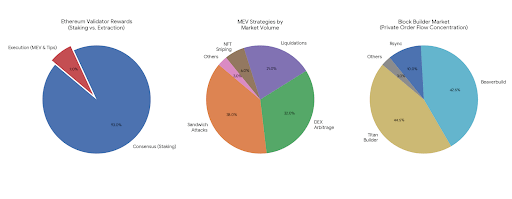
But TPS alone doesn’t matter for real financial systems.
What actually matters:
How fast does a transaction settle?
How predictable is that settlement?
How quickly does the network reach finality?
For example:
Ethereum prioritizes decentralization and security. It processes fewer transactions on Layer 1 and relies heavily on Layer 2 networks for scaling.
Solana offers high throughput and faster blocks, but maintaining stability under heavy load has historically been challenging.
If a chain processes 50,000 TPS but takes seconds to finalize or behaves inconsistently under stress, that performance isn’t useful for serious trading systems.
In finance, consistency matters more than peak benchmarks.
Decentralization Isn’t Always What It Looks Like
A network can have hundreds or thousands of validators and still concentrate power economically.
What actually determines control:
Who holds the most stake?
Who can afford the hardware?
How many independent client implementations exist?
How geographically distributed are nodes?
If validator requirements are expensive, fewer participants can compete. Over time, influence concentrates — even in a permissionless system.
This leads to:
Hidden coordination risk
Soft censorship
Validator alliances
Economic capture
Decentralization is not just node count. It’s power distribution.
MEV Has Changed Incentives
MEV (Maximal Extractable Value) is no longer a small technical detail. It has reshaped blockchain economics.
When validators can profit from reordering transactions:
Users compete in priority auctions
Private order flow markets emerge
Speed becomes a weapon
On networks like Ethereum, this has become an organized marketplace. On faster chains, the effect can be even more intense because small timing advantages matter more.
The problem is not just fairness.
It’s that validator incentives shift from “secure the network” to “extract from order flow.”
High Performance Often Means Fragility
When a blockchain pushes hardware and parallel execution aggressively, the system becomes more complex.
Complex systems:
Break in unpredictable ways
Require coordinated restarts
Depend heavily on client reliability
Several high-performance Layer 1 networks have experienced outages during stress periods.
Fast systems that go offline aren’t useful for financial infrastructure.
Token Models Often Rely on Inflation
Many networks secure themselves by issuing new tokens to validators.
If network usage doesn’t grow fast enough, inflation dilutes holders.
The core question becomes: Is the token needed because the network is useful — or because inflation pays validators?
Security funded only by inflation is fragile long-term.
Developers Don’t Switch Easily
Even if a new chain is technically better, moving ecosystems is expensive.
Developers must:
Learn new tools
Re-audit contracts
Rebuild integrations
Recreate liquidity
Technical superiority alone rarely wins. Familiar environments reduce friction.
How Fogo Approaches These Issues
Fogo is a Layer 1 built using the Solana Virtual Machine (SVM) execution model. But its strategy isn’t just “be faster.”
Its design choices reflect specific tradeoffs.
Latency First, Not Just Throughput
Fogo focuses on:
Extremely low block times
Fast finality
Deterministic transaction ordering
The goal is not theoretical scalability.
The goal is execution reliability for trading systems.
Why this matters:
Order books need predictable settlement
Liquidations need precise timing
Derivatives pricing depends on consistent finality
Instead of maximizing everything, Fogo narrows its focus.
Curated Validators Instead of Fully Open Entry
Unlike fully permissionless validator models, Fogo uses a curated validator system.
This means:
Validators must meet performance standards
Underperforming or harmful nodes can be removed
Governance plays an active role
This increases operational consistency.
But it introduces a tradeoff:
Less open participation
More governance responsibility
Fogo chooses performance control over pure permissionless entry.
Governance as an Enforcement Tool
Fogo’s governance model allows intervention against validators acting maliciously or extractively.
This is important for MEV control.
Rather than assuming extractive behavior is unavoidable, Fogo creates a structure where participation depends on compliance.
That doesn’t eliminate MEV — but it changes the risk profile for validators.
The strength of this system depends entirely on how transparent and responsive governance remains.
Client Performance and Diversity
High-performance validator implementations are central to Fogo’s design.
Multiple client implementations reduce:
Single-point failure risk
Correlated software bugs
System-wide shutdown events
Performance without redundancy is fragile.
Fogo attempts to address both.
Token Utility Tied to Network Usage
The FOGO token serves three purposes:
Gas
Staking
Governance
The intention is to link demand for the token directly to network activity rather than relying purely on inflation.
If trading activity increases, fee demand increases.
If activity declines, security incentives weaken.
This model aligns security with real usage.
Familiar Environment for Developers
Because Fogo uses SVM:
Developers familiar with Solana tooling can transition more easily
Existing libraries remain relevant
Learning curves are lower
Instead of building a new virtual machine, Fogo builds on an existing ecosystem base.
That reduces migration friction.
How It Compares
Compared to Solana
Solana emphasizes open validator participation.
Fogo emphasizes performance standards through curation.
Solana is broader.
Fogo is narrower and more controlled.
Compared to Ethereum
Ethereum prioritizes decentralization and modular scaling through Layer 2 solutions.
Fogo keeps execution on Layer 1 and optimizes latency directly.
Ethereum is conservative and modular.
Fogo is focused and performance-oriented.
The Core Tradeoff
Fogo is not trying to be everything.
It makes a deliberate decision:
Sacrifice some permissionless openness
Enforce validator quality
Focus on trading infrastructure
In exchange, it aims for:
Faster and more predictable settlement
Reduced extractive ordering
Lower friction for SVM developers
Whether this works long-term depends on:
Governance integrity
Real ecosystem growth
Liquidity depth
Sustained validator accountability
Performance claims matter less than performance under pressu