
Vanar: Numbers Don't Lie, They Whisper About Trust
When I observe a project coin or token, I do not stop at its utility.
I always study its tokenomics because numbers tell the truth. Circulating supply matters since it shows how much is already in the market and how much is still waiting to be unlocked.
Unlock schedules matter too because they reveal whether future dilution will be sudden or gradual. For me, these numbers are not decoration.
They are signals for users who care enough to analyze deeper.
Most people ignore tokenomics and rush straight to utility, but for me it is always the first thing I observe.
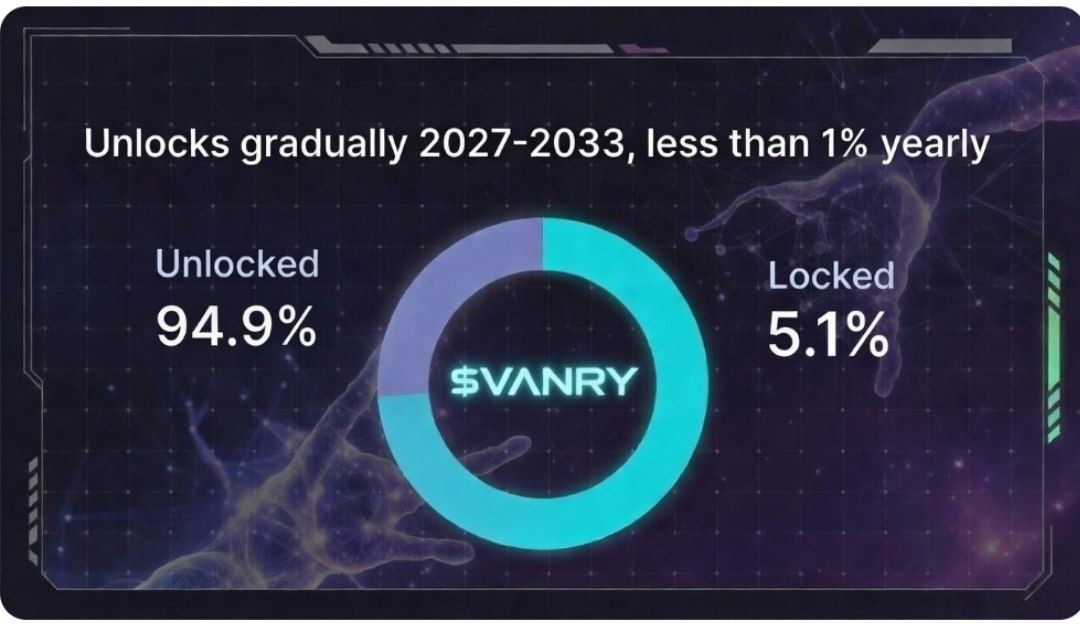
Looking at Vanarchain, VANRY, on Binance, I see clarity. Out of maximum supply of 2.4B, 2.29B are already circulating.
That means 94.9 percent of the supply is unlocked, with only 5.1 percent still locked for gradual release between 2027 and 2033. The unlocks are small, less than 1 percent each year, which tells me the project is not hiding supply mechanics or planning sudden shocks. Unlike projects that face heavy unlock cliffs and sudden dilution, Vanar's Vanarchain schedule spreads releases thinly over years.
For a DeFi user, that stability is as valuable as yield itself.
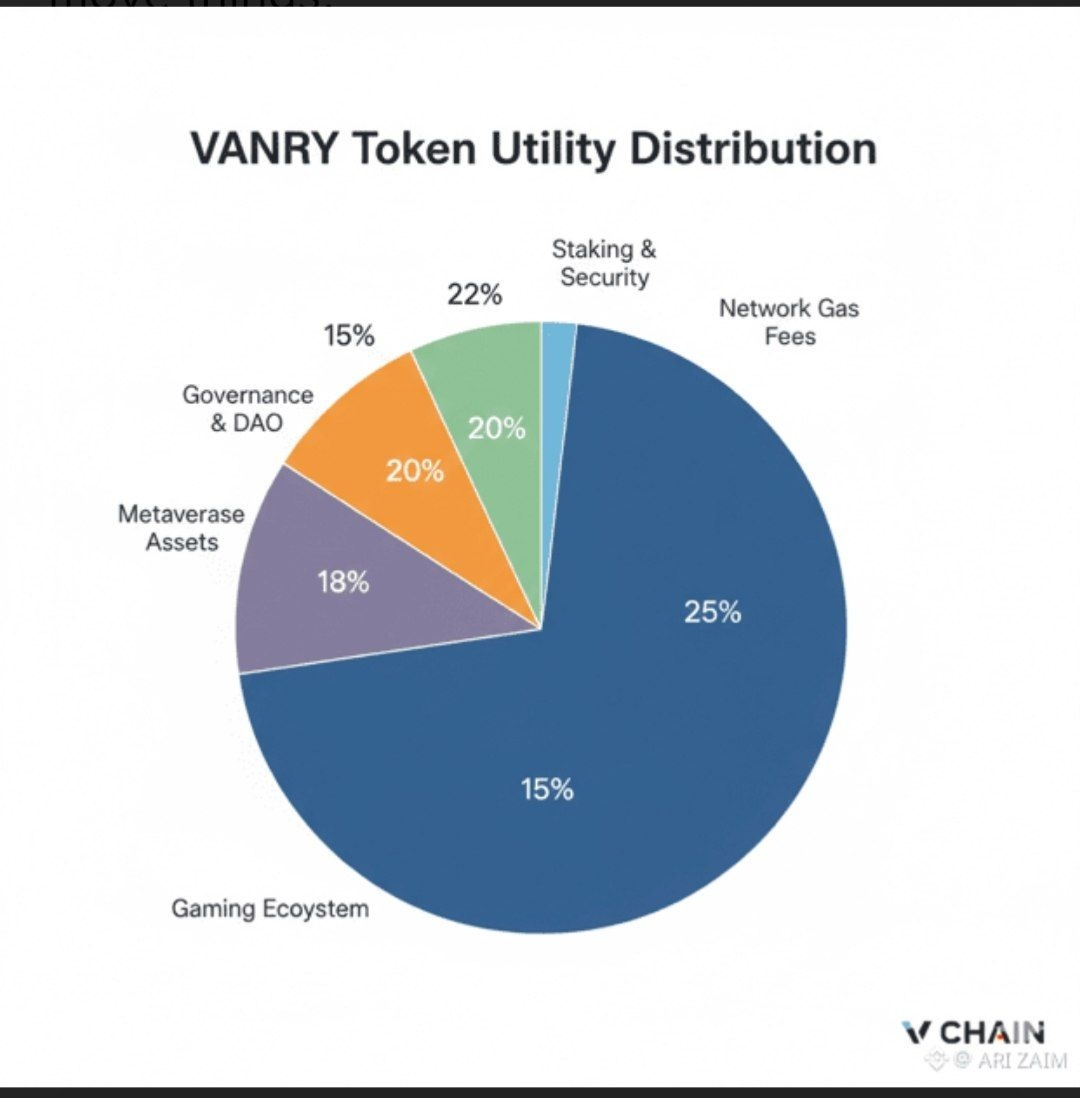
It is not just about numbers. Tokenomics is the architecture of trust.
When I see a design where supply is transparent, unlocks are predictable, and transaction fees are engineered to stay ultra low around $0.0005, I know the foundation is intentional.
Vanar's rhythm with three second blocks, predictable costs, and balanced distribution makes me believe this is not hype. It is infrastructure built to last.
All this information is what helps me decide whether to invest in a coin or not.
After reviewing Vanar's tokenomics and its strengths, it is definitely a must one for me. Numbers do not lie, and here they whisper about clarity, rhythm, and trust.
What do you trust more when analyzing a project, the utility it promises or the tokenomics that prove it?