
@Fogo Official : The Chain That Was Built for the Ones Who Count Milliseconds
A love letter to latency obsession, Firedancer, and the audacity to build faster
There is a particular kind of madness that lives at the intersection of high-frequency trading and blockchain idealism.
It's the madness of people who lie awake at night thinking about milliseconds — not millions of dollars, not users, not narratives — just the cold, hard, deeply unsexy truth that somewhere between your transaction leaving your wallet and landing on-chain, time is being wasted. Precious, unforgivable microseconds. Bleeding out into the void.
These are the people who built #Fogo .
The Audacious Premise
Picture the scene: it's 2024, Solana is riding high as the fastest consumer blockchain on the planet, the darling of DeFi degens and institutional tourists alike, and a group of ex-Jump Crypto, ex-Citadel, Pyth-building madmen look at it and say, with absolute sincerity:
"Not fast enough."
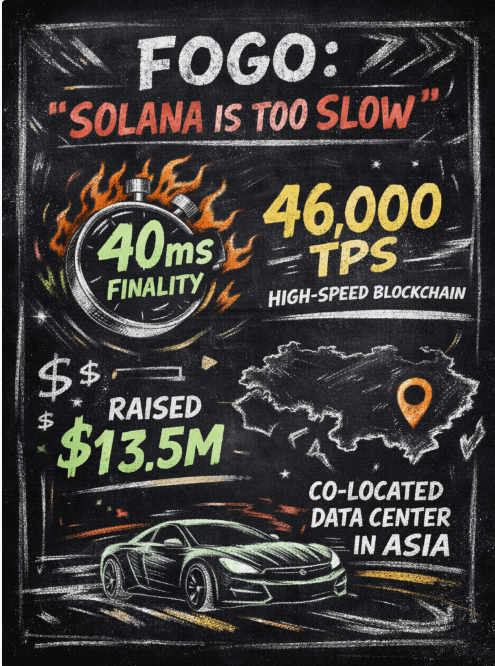
That's the founding myth of Fogo Chain. Not "Ethereum is broken" — that's old news. Not "we need a new L1" — there are hundreds of those. The specific, surgical complaint was this: even once Firedancer goes live on Solana, the chain will still be slowed down by validators running old clients. Fogo would be a pure Firedancer chain from day one — immediately reaping the full speed benefits.
Translation: Solana is a Ferrari. But it's stuck in New York City traffic because not everyone on the road is driving a Ferrari. Fogo said: what if we built a road only Ferraris were allowed on?

Who Are These People?
The core team reads like a heist crew assembled for a very specific job: Doug Colkitt, founder of Ambient Finance and ex-Citadel quant; Robert Sagurton, former Global Head of Digital Asset Sales at Jump Crypto; and Michael Cahill, CEO of Douro Labs — the team behind the Pyth oracle network.
These aren't anonymous devs or pseudonymous CT accounts. These are people who have spent careers inside the machinery of traditional finance, watching NASDAQ process hundreds of thousands of operations per second, and then walked into crypto and felt the friction like a physical thing. Like running through water. Like screaming into a pillow.
They raised $13.5 million — a $5.5M seed from Distributed Global and an $8M community round via Cobie's Echo platform, attracting CMS Holdings, Big Brain Collective, and over 3,000 angel investors. That community round at a $100M valuation got some people riled up on crypto Twitter ("you can raise $8M just by redeploying software you don't understand?" one Solana dev complained). Colkitt's response, essentially: yes, and we're going to prove why.
The Tech, Explained Like You're at a Bar
Fogo is built on the Solana Virtual Machine (SVM), which means every Solana app can migrate over without rewriting a single line of code. That's the compatibility layer — the reason this isn't just another "we're faster than Solana" vaporware chain that has zero ecosystem.
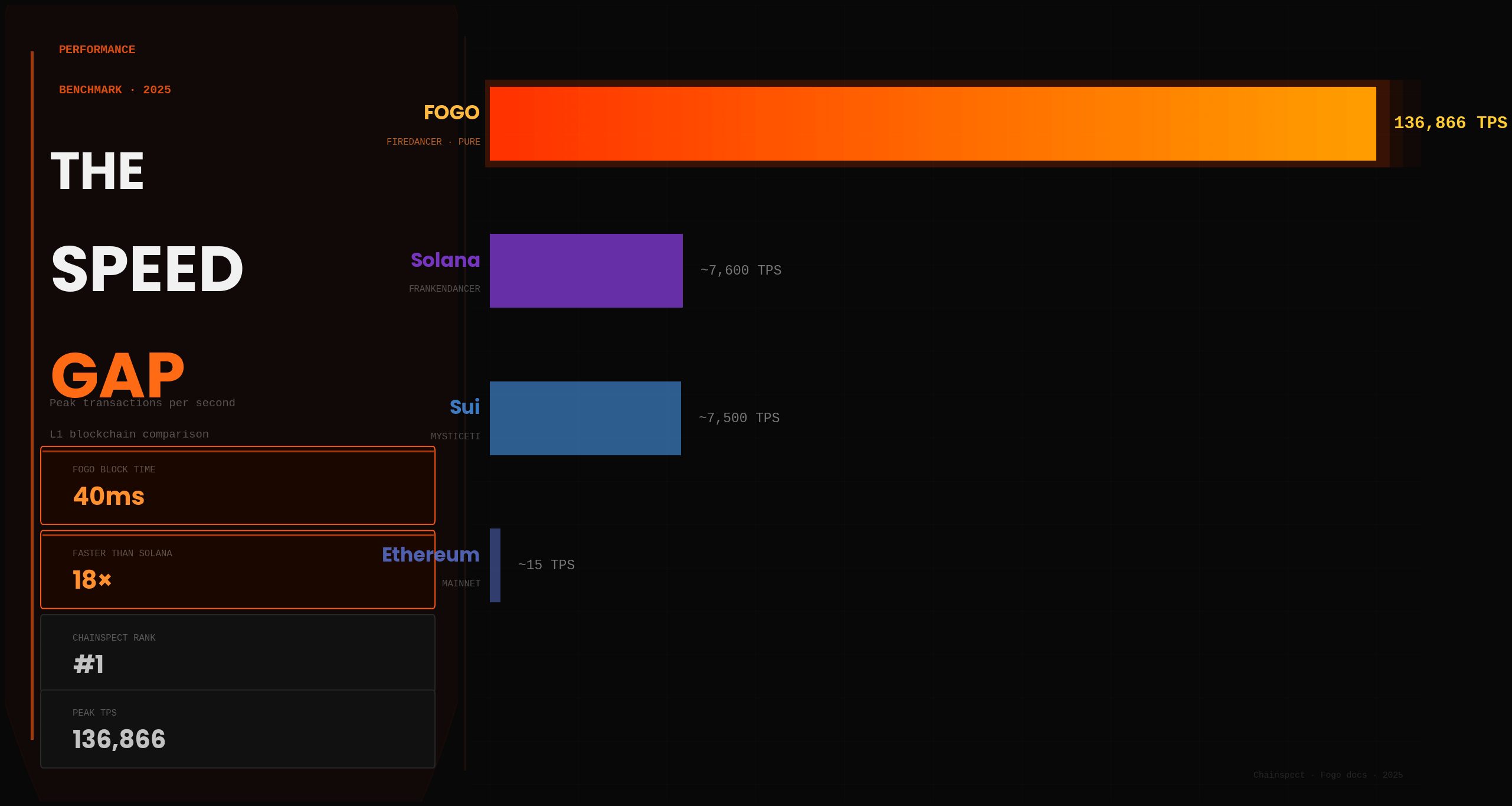
The secret weapon is Firedancer — Jump Crypto's ground-up rewrite of the Solana validator client in C, built the way high-frequency trading infrastructure is built: stripped down, brutally optimized, allergic to bloat. Fogo's devnet hit block times around 20ms and throughput approaching 46,000 TPS — numbers that start to sound less like blockchain and more like financial exchange infrastructure.
Then there's multi-local consensus — the design choice that makes traditional blockchain people uncomfortable and TradFi people nod slowly and say "obviously." Instead of validators scattered randomly across the globe reaching consensus across continents, Fogo validators coordinate physical locations to achieve lower latency. At mainnet, all initial active validators operate within a single high-performance data center in Asia, strategically positioned near major crypto exchange infrastructure.
Yes, that means less geographic decentralization. Fogo doesn't pretend otherwise. The argument is simple: if you want to build NASDAQ on-chain, you have to make some of the same infrastructure choices NASDAQ made.
January 15, 2026: The Mainnet Drops
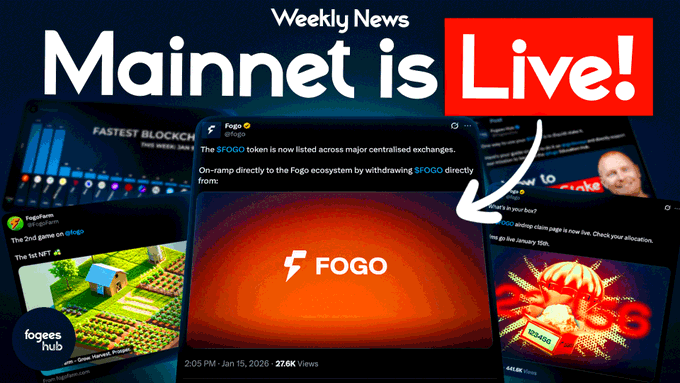
After a private testnet in March 2025, a public testnet in July, and enough points programs and airdrop drama to keep Crypto Twitter occupied for months, Fogo launched its public mainnet on January 15, 2026, with live apps, exchange listings on Binance, OKX, Bybit, and Bitget, and a token airdrop for early supporters.
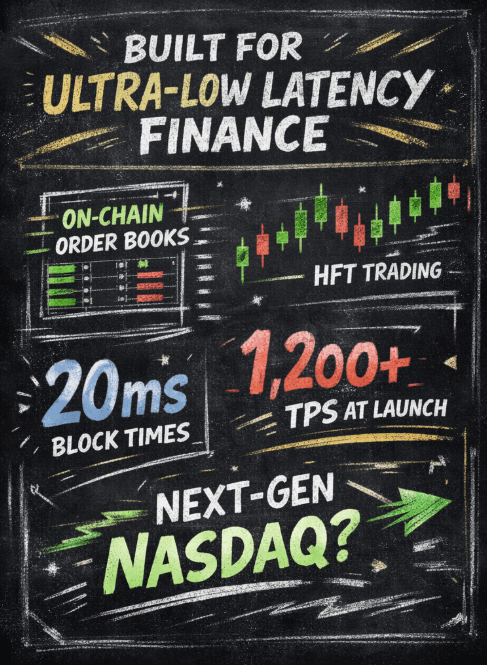
More than 10 dApps went live at launch: Valiant (DEX), Pyron and Fogolend (lending), Brasa (liquid staking), and Moonit (token launchpad), among others. The network was already delivering on its promises — 40-millisecond block times and over 1,200 transactions per second with its first mainnet application.
The token launched, traded, dipped (as tokens do), and the ecosystem began its awkward, beautiful first steps. As of right now, FOGO sits around $0.025 with a market cap near $96 million — humbled from its launch highs, but breathing, building, alive.
The Bigger Bet
Here's what Fogo is really wagering on: that the next era of crypto isn't about telling your friends you own Bitcoin, or aping into meme coins, or even about DeFi as we've known it. It's about on-chain finance that actually competes with off-chain finance on its own terms — speed, fairness, precision.
The end-game goal is becoming the crypto version of NASDAQ. That's not a metaphor. That's a product roadmap. Put the derivatives markets on-chain. Put the order books on-chain. Give the quants a playground that doesn't embarrass them.
Whether Fogo gets there is a story still being written. The chain is young, the ecosystem is small, and the skeptics aren't wrong that running a single client in a co-located validator set is a meaningful centralization trade-off. But the vision is coherent, the team is credentialed, and — perhaps most importantly — the thing actually runs.
In a space full of chains that promise speed and deliver excuses, Fogo shipped a mainnet with 40ms block times and told the world to time it.
That's not nothing.
That's, in fact, quite a lot.
$FOGO is live. The chain is running. The block times are real. Whether the market catches up to the tech — that part is still loading.
