
As artificial intelligence becomes increasingly embedded in finance, automation, and digital infrastructure, one challenge is becoming impossible to ignore: trust. AI systems today often operate as opaque “black boxes,” producing outputs that users must accept without verifiable proof. This growing reliability gap is exactly the problem @Mira - Trust Layer of AI is aiming to solve through its decentralised verifiable AI architecture.
Mira Network is developing what can be described as a trust layer for AI — a protocol environment where machine learning computations and outputs can be validated cryptographically and anchored on-chain. In practical terms, this means AI decisions, analytics, or autonomous actions could be independently verified rather than blindly trusted. As AI agents begin managing capital, executing trades, or automating workflows in Web3 ecosystems, this kind of verifiability becomes essential infrastructure rather than an optional feature.
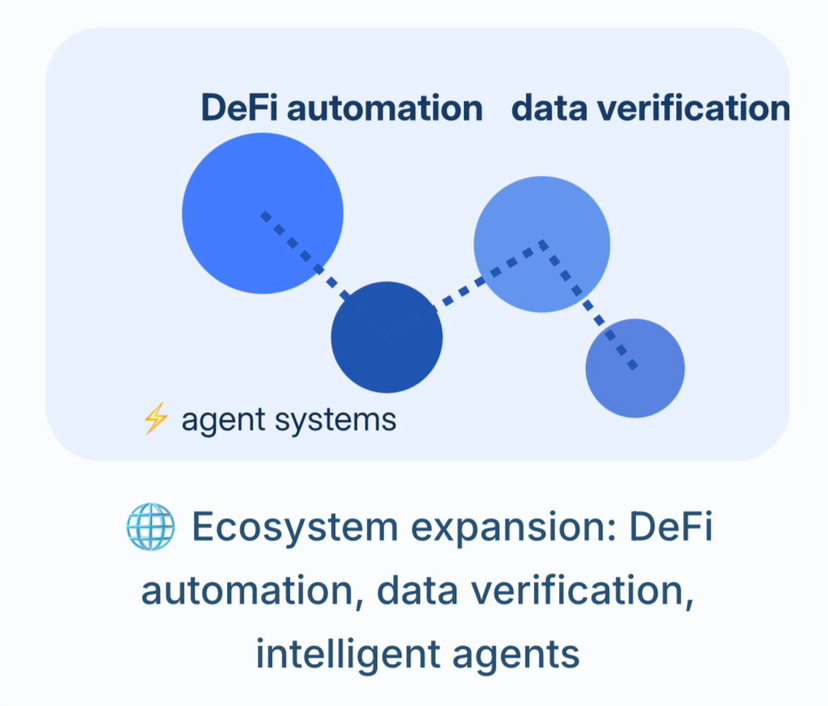
Recent ecosystem developments in 2026 suggest that Mira is moving beyond theory toward application. The project is expanding use cases across sectors such as decentralised finance automation, data verification, and intelligent agent systems. These areas all share a common requirement: provable correctness of AI outputs. By enabling verifiable inference and decentralised validation, Mira could allow smart contracts and decentralised applications to safely integrate AI-driven logic.
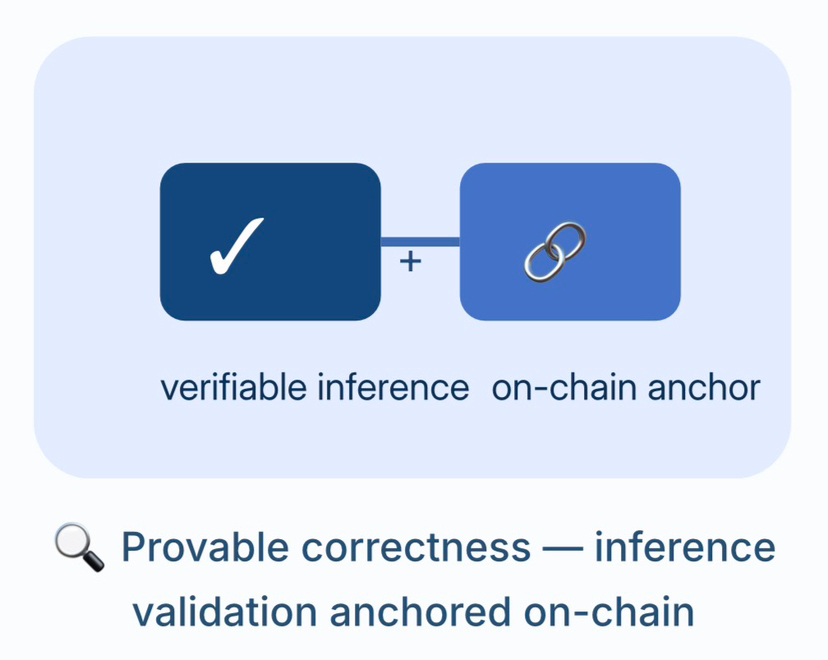
The $MIRA token underpins this model by coordinating incentives across the network. Validators are rewarded for verifying AI computations, developers gain access to trust-less AI services, and users benefit from transparent and auditable outputs. As more applications rely on verified AI pipelines, token utility may increasingly reflect real network demand rather than speculative cycles — a key factor in long-term protocol sustainability.
Another important direction for #Mira is scalability and usability. Infrastructure projects often struggle to transition from research to production adoption, but Mira’s ongoing upgrades indicate a shift toward performance optimisation and developer accessibility. Improved throughput, verification efficiency, and integration tools could significantly lower the barrier for AI-enabled Web3 applications to deploy on the network.
Looking forward, the intersection of AI and crypto is widely expected to define the next phase of decentralised technology. Autonomous agents, on-chain analytics, and AI-driven governance systems will all require trust-less computation layers. If verifiable AI becomes a standard requirement for decentralised automation, @Mira - Trust Layer of AI has the potential to serve as foundational infrastructure — similar to how oracle networks secured data for DeFi.
In this context, Mira is not simply another AI-crypto project; it is attempting to solve a core reliability problem that could determine how safely AI integrates into blockchain ecosystems. As adoption grows, the role of $MIRA in securing and scaling verifiable intelligence may become increasingly central to the emerging AI-Web3 stack.
