
@Mira - Trust Layer of AI #Mira $MIRA

The Problem: Why AI Still Can’t Truly Act Alone
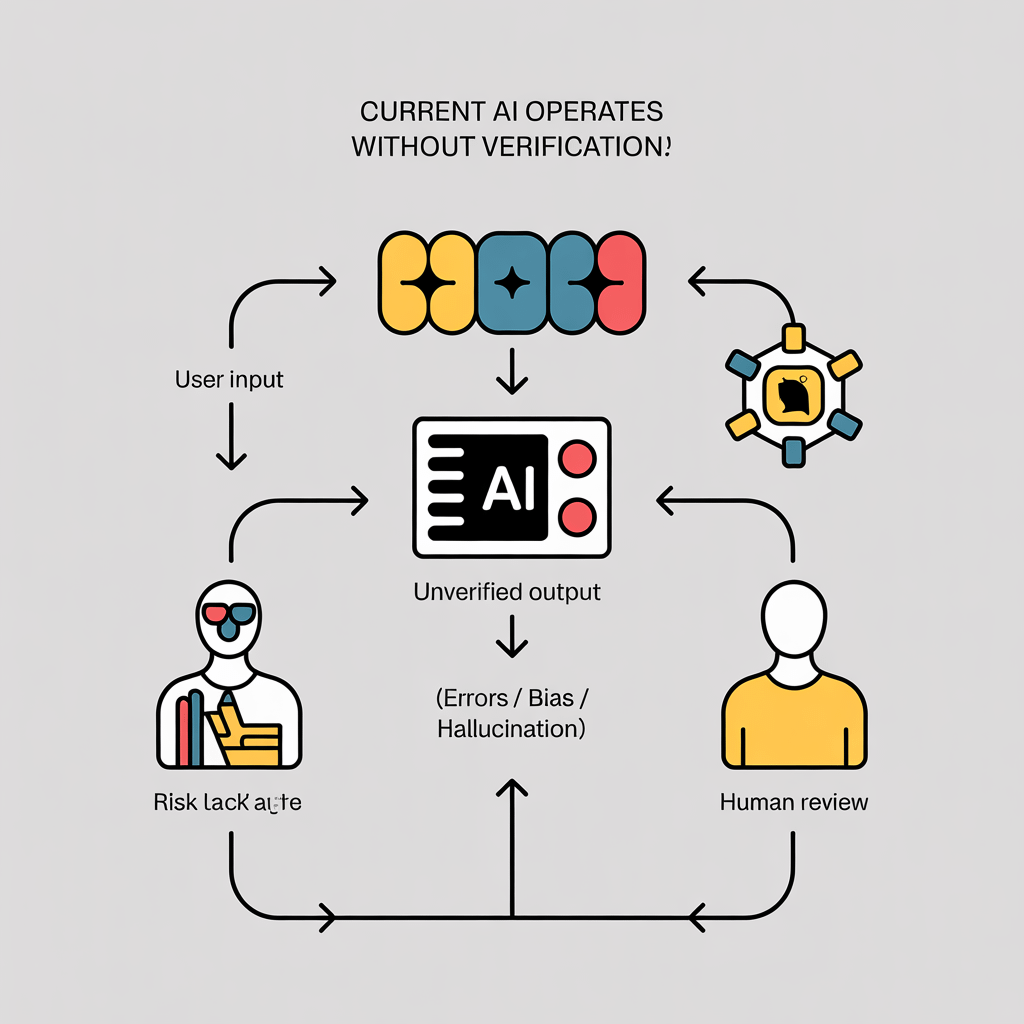
Artificial intelligence has made remarkable progress in generating text, analyzing data, and automating tasks. Yet despite these advances, most AI systems still cannot operate independently in high-stakes environments. The core limitation is trust. Current AI models can produce incorrect, biased, or unverifiable outputs, which makes organizations hesitant to grant them real authority. For example, an AI system managing financial trades, medical recommendations, or legal decisions must be provably reliable, not just statistically accurate. Without mechanisms to verify decisions, autonomy becomes risky. This trust gap is the main barrier preventing AI from transitioning from assistant tools to fully autonomous agents.
The Missing Layer: Verification and Accountability
Traditional AI systems rely on internal probability calculations rather than external validation. This means users often have no clear way to confirm whether an AI’s output is correct or fabricated. In critical scenarios, uncertainty is unacceptable. What’s needed is a verification layer that can independently check AI reasoning, confirm outputs, and record decision trails. Such a system would function like an auditor for machine intelligence—ensuring that every action can be traced, validated, and trusted. This concept is becoming increasingly important as AI is integrated into infrastructure, governance, and automated marketplaces.
How Mira Network Addresses the Trust Gap
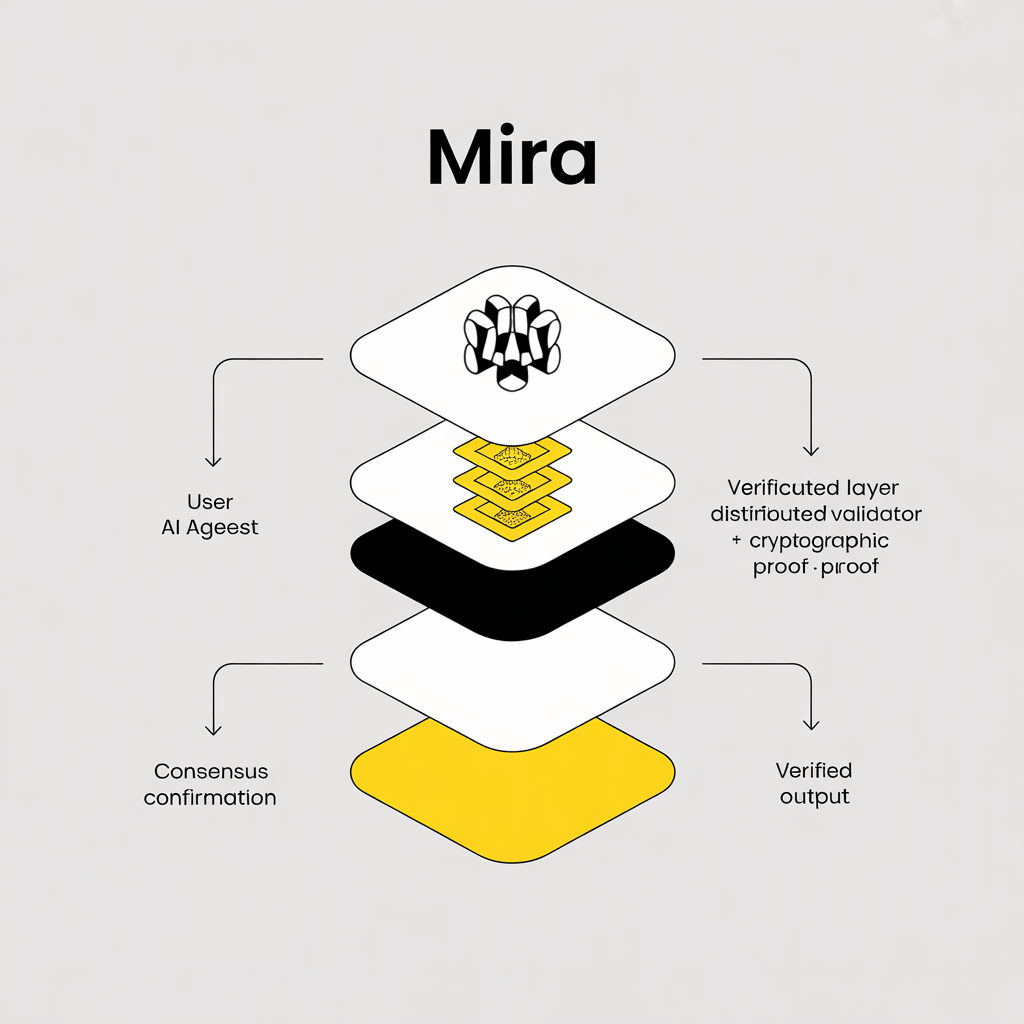
Mira Network is designed to serve as this missing trust layer for autonomous AI. Instead of relying solely on a model’s internal logic, its architecture introduces external verification mechanisms that validate AI outputs before they are executed or accepted. The system combines distributed validation, cryptographic proofs, and consensus methods to confirm that an AI’s decision meets predefined correctness standards. By decentralizing verification, Mira reduces reliance on a single authority and makes the validation process transparent and tamper-resistant. This approach transforms AI from a “black box” into a system whose decisions can be audited and trusted.
Enabling True Autonomy
With a verification layer in place, AI agents can safely perform complex tasks without constant human oversight. For instance, an autonomous trading bot could execute transactions only after its logic is verified. A logistics AI could reroute supply chains with guaranteed correctness checks. The key shift is that autonomy becomes conditional on proof. Instead of blindly trusting AI, systems trust verified outputs. This model aligns with how critical infrastructure operates today—actions must be validated before they are finalized.
The Broader Impact on the AI Ecosystem
If verification layers become standard, they could redefine how AI is deployed across industries. Developers would design systems expecting external validation, regulators would gain auditable trails, and users would gain confidence in automated decisions. In effect, trust infrastructure could do for AI what security protocols did for the internet: enable widespread adoption by making systems dependable. As autonomous technologies continue to evolve, frameworks like Mira’s suggest that the future of AI won’t just be about intelligence—it will be about verifiable intelligence.