
When I first started looking into Fogo, I expected the usual story. A new blockchain claiming to be faster, cheaper, more scalable than everything that came before it. That’s how most projects introduce themselves. They show big performance numbers, bold promises, and comparisons designed to grab attention. But the more I read about Fogo, the more I felt like the real story wasn’t about speed at all. It felt like it was about something quieter and more serious.
If we’re honest, most people in DeFi don’t really live in volatile tokens. They live in stablecoins. Traders calculate profit in stablecoins. Liquidity providers think in stablecoins. Even when someone takes risk in altcoins, they usually exit back into stablecoins. That’s the center of gravity. So if a blockchain wants to become a real trading venue, the first thing it needs isn’t hype. It needs stablecoins that move smoothly, settle reliably, and don’t disappear when the market shakes.
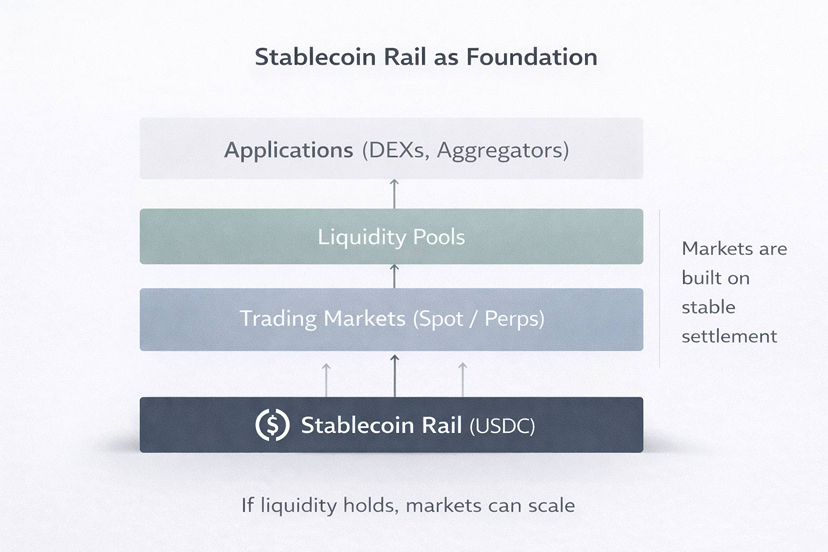
That’s where Fogo’s direction starts to make sense to me. Instead of launching hundreds of applications and hoping liquidity magically appears, they seem to be focusing on the rail itself. The basic infrastructure that allows stablecoins like USDC to flow in and out without friction. It’s not flashy. It doesn’t trend on social media. But if that rail works, everything else becomes easier.
The early structure of Fogo reflects that mindset. The mainnet wasn’t positioned like a dramatic “big bang” launch. It was introduced in stages, almost like a controlled environment. Public endpoints are available, configurations are visible, and the network is open enough to be observed. That transparency tells me they want performance to be measured, not just advertised. If something breaks, it can be seen. If it holds under pressure, that can also be verified.
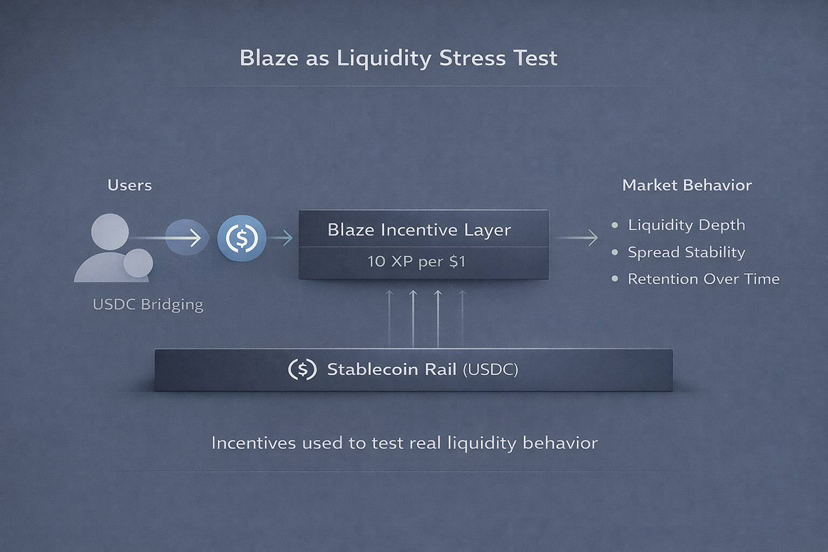
Then there’s Blaze. On the surface, it looks like a typical incentive program. Users bridge USDC, they earn XP, they participate in early ecosystem activity. But if I look at it differently, Blaze feels less like a marketing campaign and more like a stress test. By encouraging users to bridge USDC through established cross-chain routes such as Wormhole’s Portal, Fogo is testing how its system behaves when real capital moves.
The real question isn’t how much USDC comes in. The real question is what happens after it arrives. Does it stay? Does it form healthy trading pairs? Do spreads tighten? When volatility hits and money flows both directions, does the system remain stable? If it becomes resilient under those conditions, then we’re not just seeing temporary activity. We’re seeing infrastructure starting to prove itself.
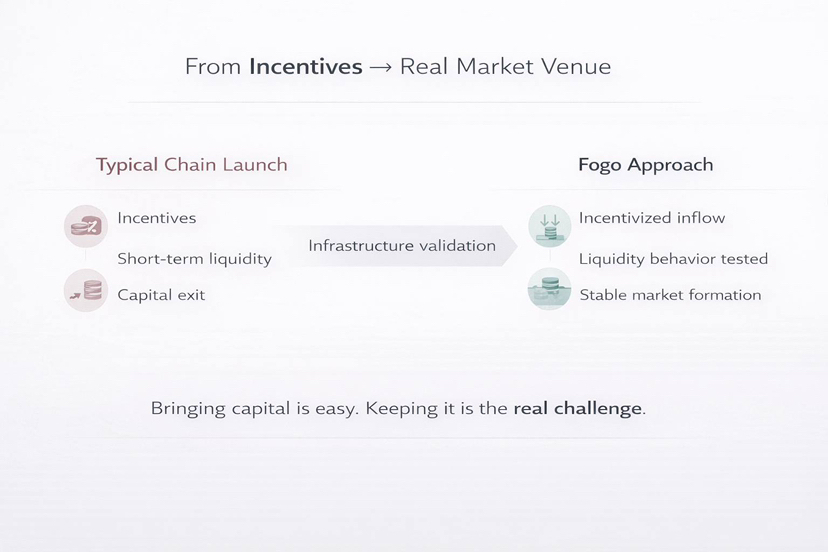
One thing I appreciate is that Fogo doesn’t appear to be pretending incentives are permanent liquidity. Everyone in crypto knows how easy it is to attract mercenary capital. High rewards bring money quickly, but that money can vanish just as fast. The real challenge is keeping liquidity once the extra rewards fade. If USDC becomes a base currency inside the ecosystem rather than a short-term visitor, that’s when the thesis works.
Of course, there are risks. Bridge infrastructure across the industry has been attacked before. Even if Fogo’s base layer is solid, cross-chain activity always carries technical complexity. There’s also the risk of expectations growing too fast. XP programs can sometimes create assumptions about future rewards, even when none are guaranteed. Managing that narrative carefully matters just as much as writing secure code.
What makes this approach feel different to me is the order of priorities. Many blockchains try to prove adoption by announcing endless partnerships and applications. But markets don’t grow because of announcements. They grow because capital feels safe. There must be reliable entry and reliable exit. If it’s easy to deposit but stressful to withdraw during volatility, traders leave. If liquidity collapses during market swings, trust fades.
Fogo seems to understand that dynamic. If it becomes a place where stablecoins move smoothly and predictably, then developers can build on top of something solid. Spot markets can deepen. Derivatives platforms can rely on stable collateral. Treasury operations become more efficient. Over time, external integrations, even with centralized exchanges like Binance if relevant, can reinforce liquidity pathways. But none of that matters if the foundation isn’t strong first.
When I step back, I don’t see Fogo trying to be loud. I see it trying to be dependable. And maybe that’s what DeFi needs more of right now. We’ve seen cycles of speed wars and token hype. But infrastructure that quietly works under pressure is rarer.
If it becomes a chain where stablecoins don’t just arrive for rewards but actually stay because the market structure makes sense, then we’re seeing something more mature. We’re seeing an attempt to treat decentralized trading like real financial infrastructure rather than a temporary experiment.
And that leaves me thinking about a simple idea. In crypto, everyone loves building faster cars. But markets are shaped by the quality of the roads. If Fogo’s real mission is to build better roads for stablecoins, then the long-term impact won’t be loud at first. It will be subtle. It will show up in tighter spreads, calmer volatility, and deeper liquidity that doesn’t disappear overnight.
Sometimes the projects that change things the most are the ones that focus less on being seen and more on quietly making money move the way it should.