
Fabric Protocol coordinates general-purpose robots on a public network, combining verifiable computing with modular blockchain infrastructure. Unlike traditional robotics systems that rely on centralized control, Fabric integrates robot activity with a public ledger to improve transparency and accountability.
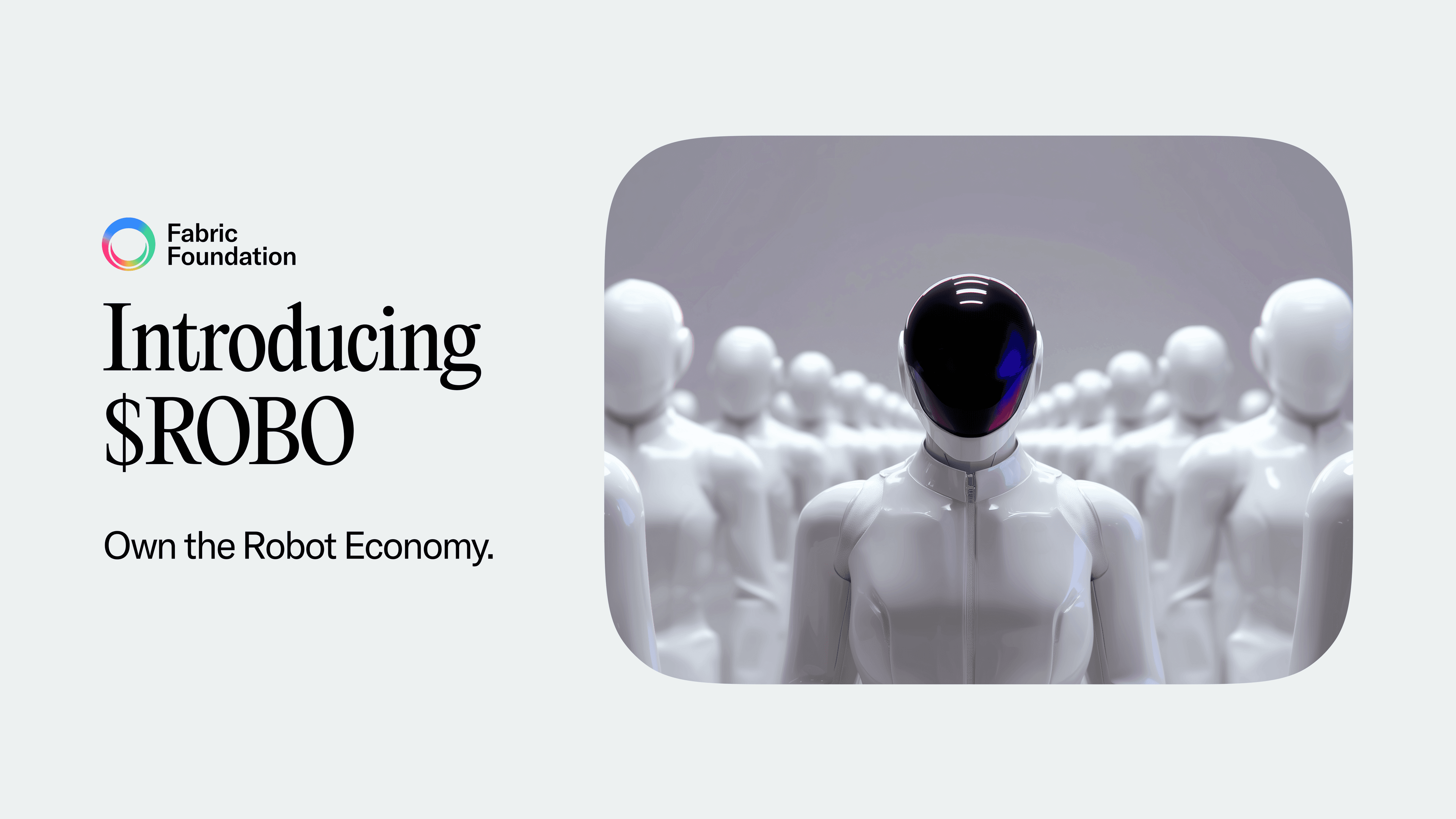
The core idea is simple but powerful: for autonomous robots to operate safely, their data, computation, and decisions must be verifiable. Today, most robotic systems run in closed ecosystems, with data flowing between machines and servers without independent verification. This creates trust gaps, regulatory concerns, and coordination challenges.
Fabric addresses this with a decentralized coordination framework. Robot data and computational outputs are anchored, verified, and auditable on a public ledger. Human operators, developers, and institutions can track how machines interact with their environment, making autonomous systems accountable and transparent.
This is where $ROBO comes in. It functions as the coordination and incentive layer of the Fabric ecosystem, enabling transactions, governance participation, and aligned incentives. Robots no longer operate as isolated units; they participate in a structured economic and computational network.
The agent-native infrastructure treats machines as network agents that interact under programmable rules. Computation is validated, data exchanges recorded, and governance decisions evolve transparently over time.
By combining modular blockchain with robotics, Fabric tackles long-standing issues in the field:
Lack of transparent data trails
Limited accountability in autonomous decisions
Centralized coordination risks
Difficulty integrating regulation with automation
Scaling remains challenging — latency, computation cost, and real-time processing are critical
But the broader point is clear: as autonomous machines become common, verifiable coordination layers are essential. Fabric Protocol and $ROBO provide a foundation for safe, accountable, and scalable robot networks.