Crypto – Fundamental Analysis & Future Outlook
$ROBO is the native token of the Fabric Foundation, an emerging project aiming to build the infrastructure for a decentralized robot economy — where autonomous machines interact, transact, and coordinate in an on-chain environment. Unlike typical digital assets that serve as payment tokens or DeFi utilities, ROBO is designed to be the core economic layer powering robot identities, payments, and coordination mechanisms across open networks of intelligent machines. (fabric.foundation)
The vision behind ROBO is ambitious: as robots and AI agents become increasingly capable, they’ll require decentralized identity, payment settlement, and protocol governance that traditional financial and identity systems can’t provide. ROBO has been structured to meet this need by facilitating on-chain coordination, enabling robots to participate in tasks, execute transactions, and settle fees in a trustless way. (fabric.foundation)
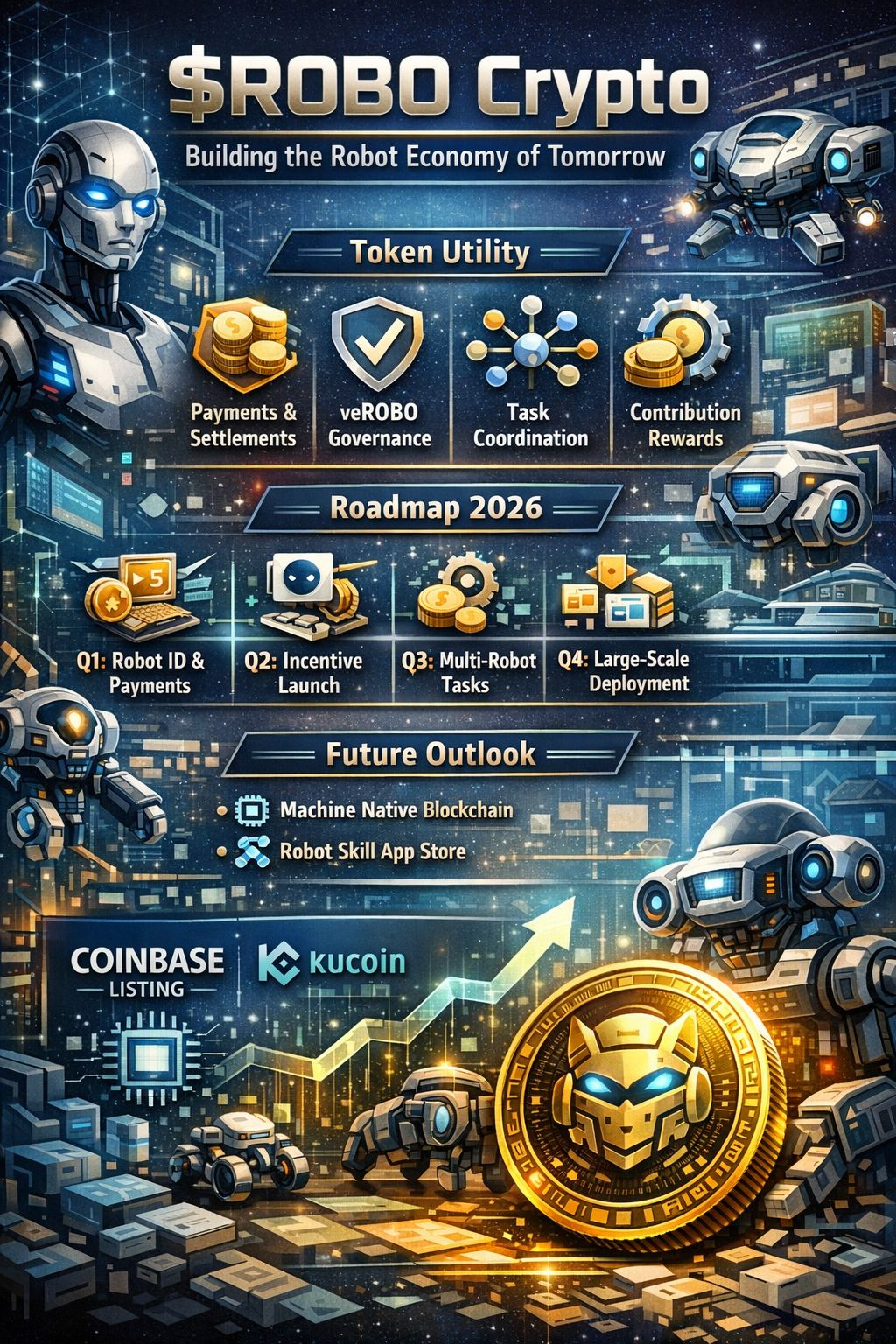
Token Utility & Mechanisms
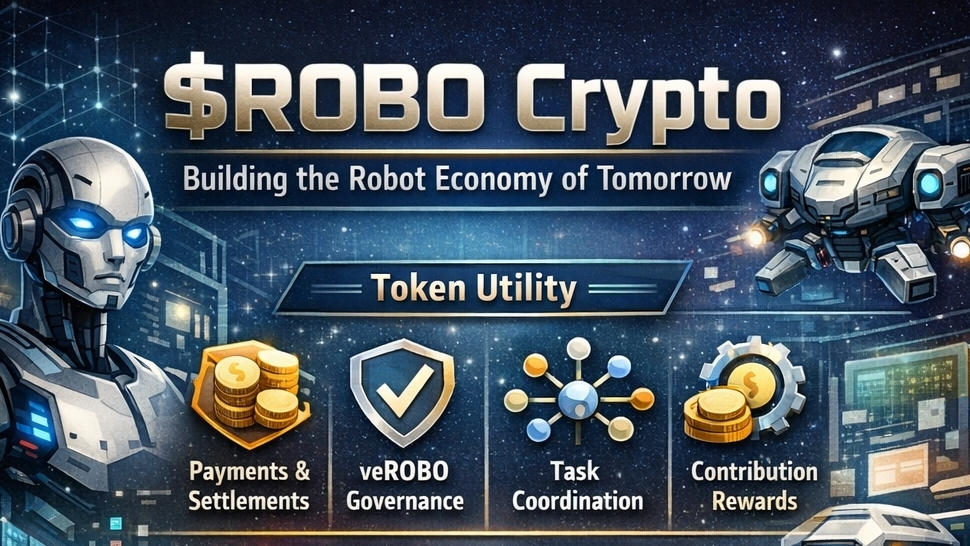
At its core, ROBO serves several key functions within the Fabric ecosystem:
Payment & Settlement: All transaction fees for robot identity verification, task execution, and protocol services are settled in $ROBO, positioning it as the fundamental settlement currency for this emerging economy. (fabric.foundation)
Governance (veROBO): Holders can lock $ ROBO to participate in governance decisions, influencing protocol parameters, fee structures, and upgrade proposals. (MEXC)
Coordination & Participation: Stakeholders use ROBO to coordinate robot activation and task allocation, promoting decentralized participation in network operations. (fabric.foundation)
Contribution Incentives: Active participants who contribute compute, training data, or complete verified tasks can earn ROBO based on contributions, aligning rewards with real network value creation. (MEXC)
Development & Roadmap
The official roadmap for 2026 outlines a phased rollout:
Q1: Deployment of robot identity systems and initial task settlement components. (MEXC)
Q2: Launch contribution-based incentives tied to verified task execution. (MEXC)
Q3: Support for coordinated multi-robot workflows. (MEXC)
Q4: Refined incentive mechanisms for large-scale deployment, laying the groundwork for future expansion. (MEXC)
Beyond 2026, Fabric aims to evolve into a machine-native Layer 1 blockchain with a Robot Skill App Store open to developers worldwide — targeting broad utility and scalability. (MEXC)
Market Signals & Future Potential
$ROBO’s inclusion in major exchange listing roadmaps like Coinbase and KuCoin signals growing institutional attention, although short-term trading liquidity and price action remain speculative. (followin.io)
In the long term, $ROBO’s success hinges on the adoption of the Fabric network as the underlying infrastructure for decentralized robots and machine agents. If Fabric becomes the standard for on-chain robotics coordination, demand for ROBO could grow significantly as the ecosystem expands.
Summary: ROBO isn’t just another token — it’s positioned as the value layer for a decentralized robot economy, with clear utility, a structured roadmap, and potential for long-term network growth. However, being a foundational infrastructure play, its real success will depend on real-world adoption, developer engagement, and integration with broader AI/robotics ecosystems rather than purely speculative trading. (MEXC)