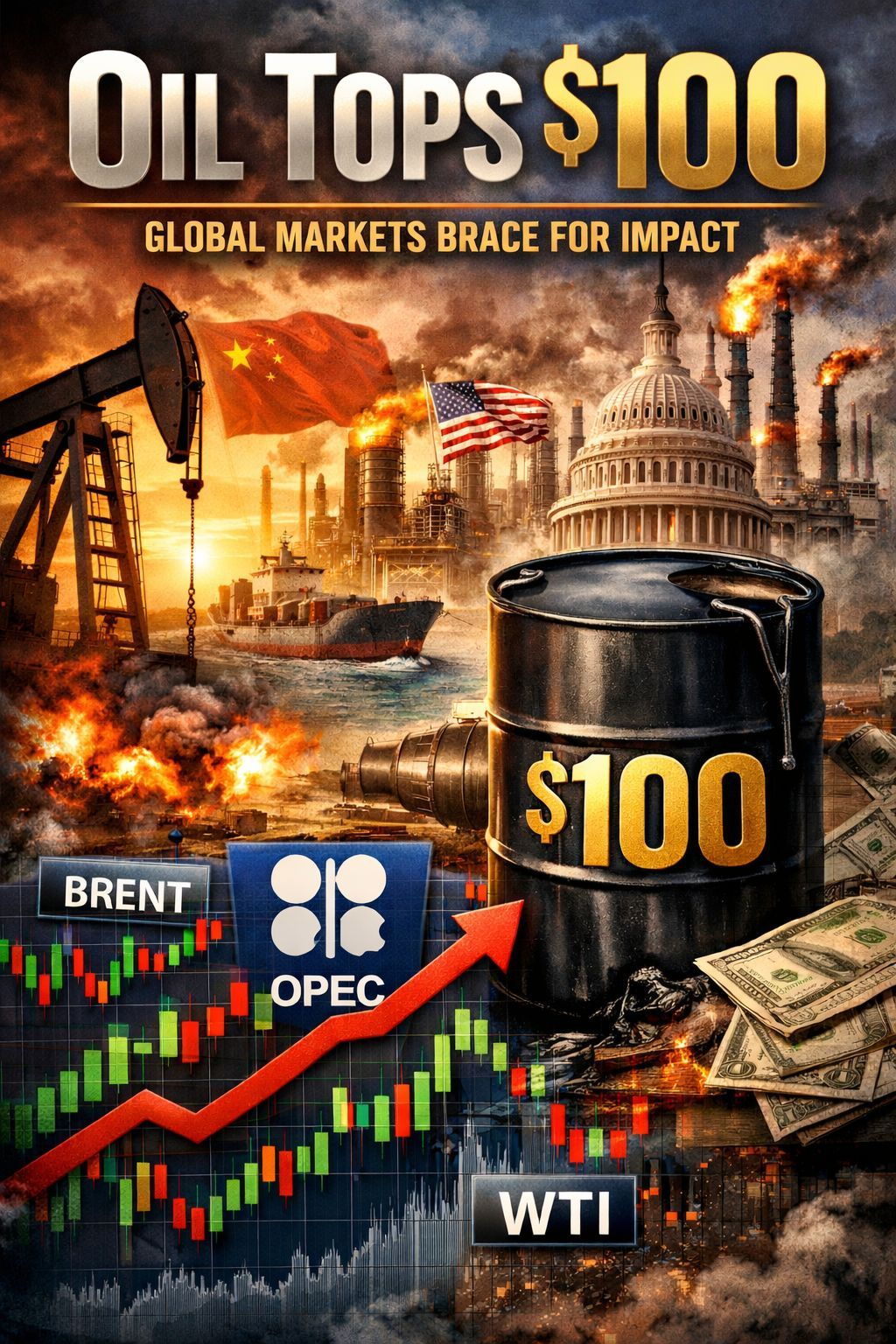
Global energy markets were jolted as oil prices climbed above the symbolic $100 per barrel threshold, fueled by supply concerns, geopolitical instability, and sustained demand.
Key benchmarks such as Brent Crude and West Texas Intermediate (WTI) posted sharp gains as traders responded to shrinking inventories and escalating uncertainty in major oil-producing regions.
Analysts attribute the rally to continued production discipline within the OPEC alliance, compounded by geopolitical tensions that threaten supply chains.
Meanwhile, robust consumption—particularly from major economies like China and the United States—has added further strain to an already tight market.
The ripple effects are expected to be felt worldwide, with rising crude prices likely to drive up fuel costs across transportation, manufacturing, and broader consumer sectors.
Economists caution that sustained energy inflation could complicate policy decisions for central banks, including the U.S. Federal Reserve, as they navigate persistent price pressures.
Should crude hold above $100 for a prolonged period, analysts suggest the shift could accelerate the global energy transition, boost investment in renewables, and weigh on economic momentum across import-dependent regions.