
I learned this the hard way during a past cycle. I was tracking a token that seemed alive with activity — huge volume, constant social chatter, and an ever-increasing chart. But after digging deeper, I realized the true picture. The wallets weren’t forming a solid base, the usage wasn’t substantial, and most of the excitement was just rapid turnover. That memory sticks with me, especially when I think about ROBO. While the concept behind it feels bigger than the average AI token, that also makes the market harder to analyze with a clear mindset.
ROBO powers the Fabric Protocol, which aims to provide infrastructure for AI and robotics, rather than just another chatbot token. According to the project’s materials, ROBO will support network fees, operational bonds, robot service payments, and hardware deployment coordination. The white paper describes Fabric as a global network for building and governing general-purpose robots, and the official blog envisions robots being paid in ROBO for their labor. That’s a bold concept, and probably why the token gained rapid attention after its listing.
However, the market behavior tells a more complicated story. As of March 13, ROBO was trading at $0.0403, with a market cap of around $90 million and a fully diluted valuation of $403 million. With 2.23 billion tokens in circulation out of a 10 billion max supply, it reached an all-time high of $0.06071 on March 2, before pulling back 34%. Binance listed it on March 4 with a Seed Tag, indicating it’s a higher-risk, early-stage asset. So while the market is interested, it’s clearly factoring in both potential and uncertainty.
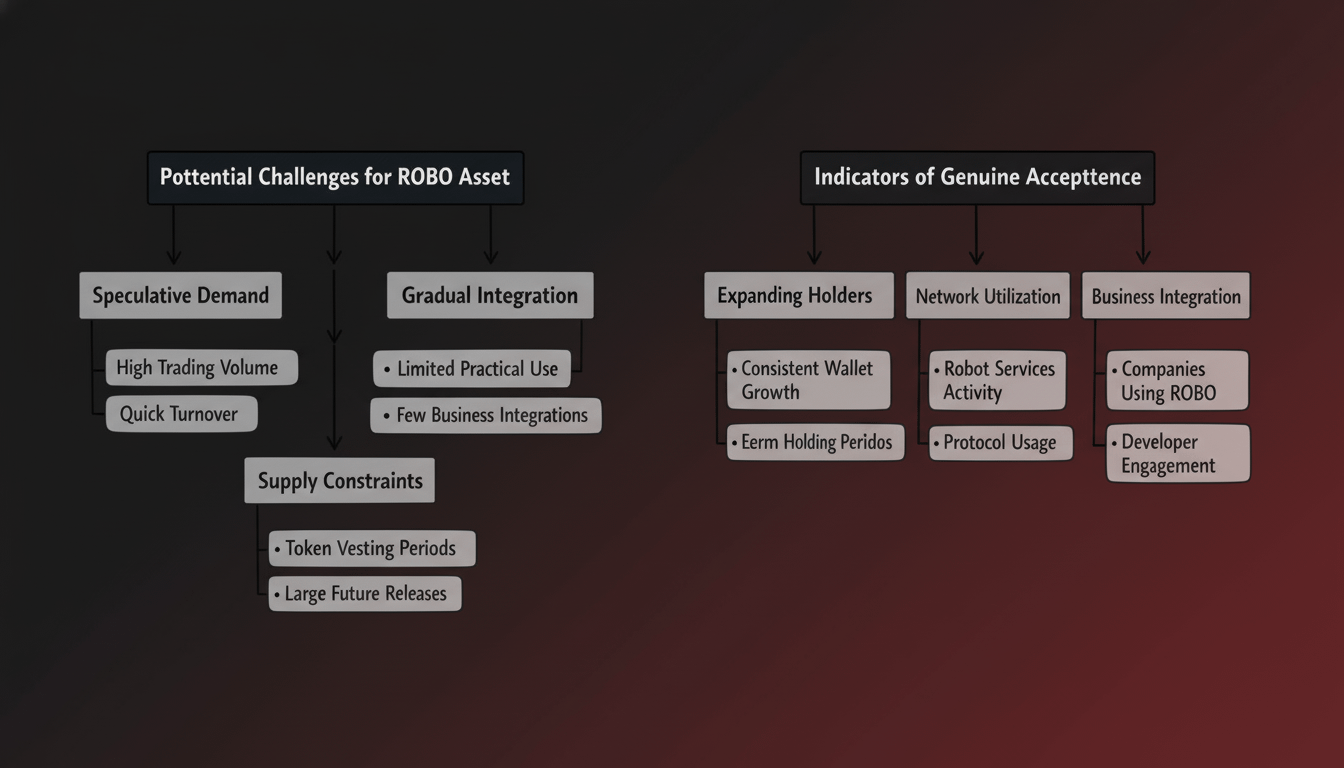
What I keep coming back to is the retention issue. Etherscan reported 28,992 holders and 1,065 transfers in the last 24 hours, while CoinGecko tracked nearly $47.7 million in daily volume. This signals strong liquidity, but doesn’t guarantee long-term commitment. It's like a new restaurant that has a line out the door on opening day — the buzz matters, but repeat customers are what count. With ROBO, I’m watching whether the number of holders, actual network usage, and demand for robot-related services rise consistently, rather than letting exchange turnover tell the whole story.
What could go wrong is simple. The robot economy could take longer to mature than traders expect, and token demand may stay mostly speculative while real use cases are still developing. Supply matters, too — the white paper shows significant allocations that will vest over time, though not all insiders are immediately selling. What would shift my view positively is if businesses, developers, or operators use ROBO because they need access to the network, not just because they’re hoping for a price increase. If you’re considering this project, don’t let volume alone fool you. Watch whether real participation starts to build. In crypto, the true value is often in who sticks around after the hype fades.
@Fabric Foundation #ROBO $ROBO
