
When we talk about robotics and AI, the conversation often centers around big corporations and exclusive research labs. But the Fabric Foundation is taking a different route. They're showing us how robotics can be developed in a way that's open and collaborative, rather than being a closed-off race between a few big players.
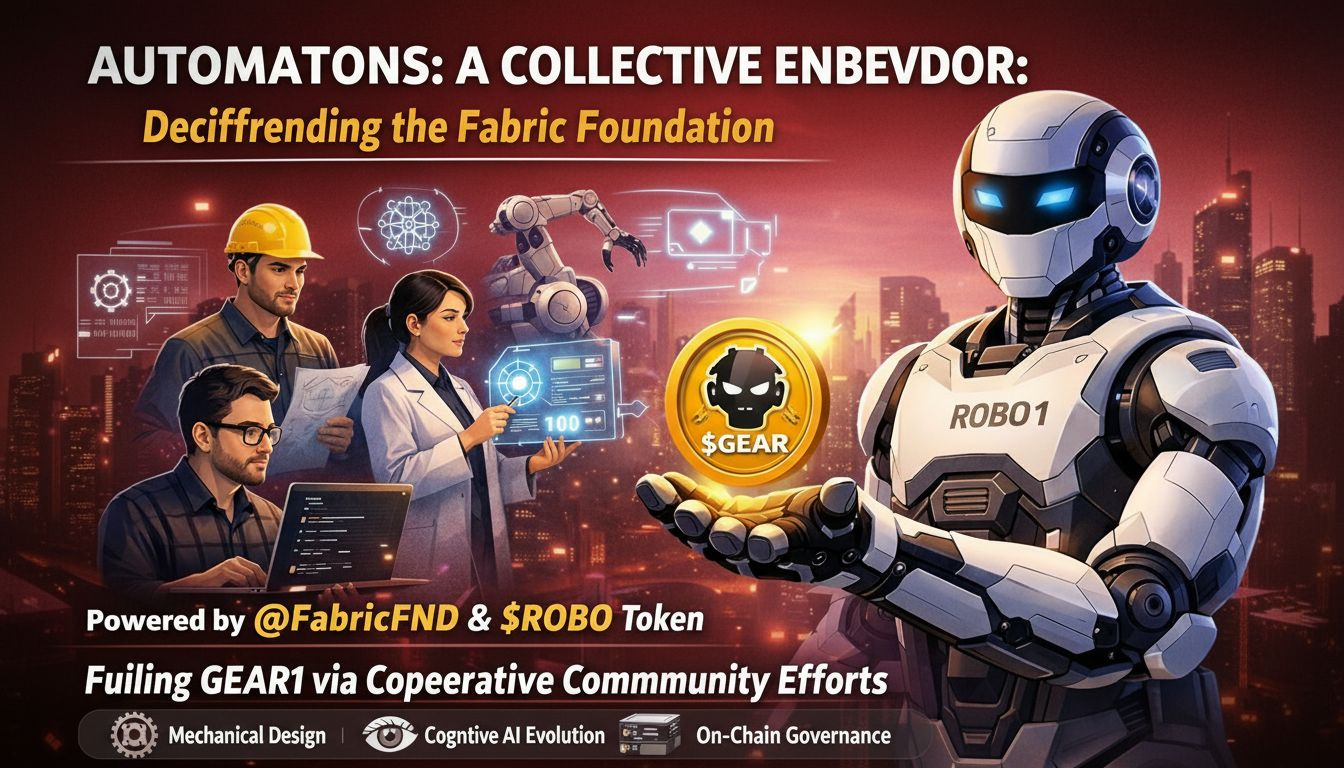
At the heart of this vision is $ROBO , a token designed to coordinate how people get involved and are rewarded across the Fabric network. Instead of just one company controlling a robot, Fabric is proposing a system where anyone—engineers, researchers, developers—can have a hand in shaping the future of a versatile robot, ROBO1.
The idea is simple but powerful. Robotics isn’t just about building a machine. It involves expertise in mechanical design, perception systems, decision-making, and constantly improving AI. With Fabric’s decentralized infrastructure, all these pieces can be added, improved, and verified publicly on the blockchain. And contributors are recognized and rewarded for their work, creating a space where innovation can grow through cooperation.
What makes this model stand out is its focus on transparency and shared governance. By coordinating development on a public ledger, it allows for open oversight and collective decision-making. This could help address one of the biggest concerns in AI and robotics: ensuring that these machines develop in ways that are aligned with human values.
In simple terms, Fabric is rewriting the story of robotics. Instead of robots being created by just a handful of institutions, the future could see a global community of contributors working together to shape the next generation of robots.
If this vision takes off, ROBO and the Fabric ecosystem could be a groundbreaking step toward community-driven robotics. It’s still a work in progress, but it opens up some exciting possibilities for how humans and machines might work together in the future.
@Fabric Foundation #ROBO $ROBO
