
I've been watching the Midnight Network build for a while now and honestly the last few months have been a lot to keep up with. Between the token launch, the exchange listings, the mainnet countdown and everything happening on the infrastructure side, it feels like every week there's something new to process. So I figured I'd write it all out in one place because the story here is actually pretty interesting once you put the pieces together.
Where things stand right now
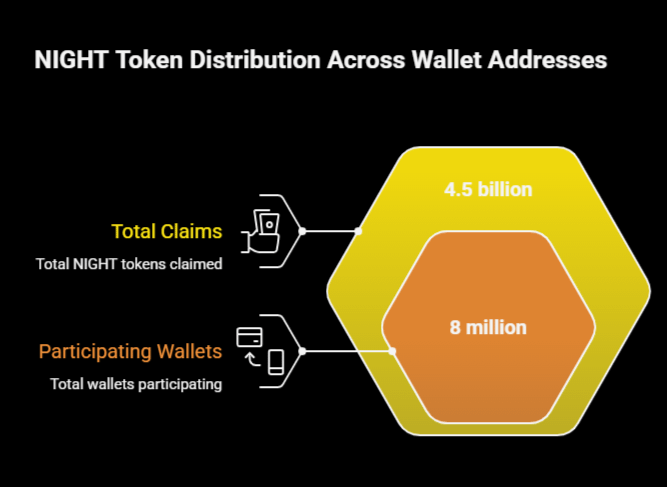
The NIGHT token went live on Cardano back in December 2025 and it set off what turned out to be one of the largest token distributions in blockchain history. The Glacier Drop and Scavenger Mine phases combined pulled in over 4.5 billion NIGHT claims across more than 8 million participating wallet addresses. That participation number is genuinely wild when you think about it. For context the Scavenger Mine phase alone was open to anyone with a laptop and an internet connection and still managed to register that kind of volume.
The tokens are releasing through a 360 day thawing schedule where each allocation unlocks in four equal 25 percent installments. Start dates were randomized across addresses between December 2025 and early March 2026 so everyone isn't rushing to claim at the same time. I think that design choice matters more than people give it credit for because it spreads the sell pressure over a long window instead of concentrating it at one moment.
The mainnet timeline is real and close
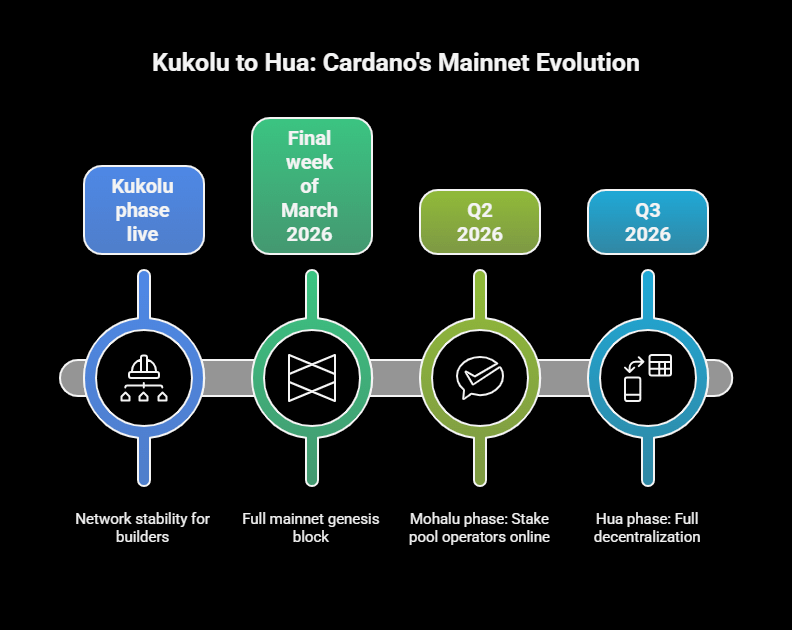
This is the part I find most interesting right now. The Kukolu phase is live and the team confirmed at Consensus Hong Kong that the full mainnet genesis block is scheduled for the final week of March 2026. That is not far away at all. Kukolu is described as the safe port phase meaning the network is now stable enough for builders to deploy real applications without expecting resets. The foundation is set.
After Kukolu comes Mohalu in Q2 2026 which is when Cardano stake pool operators come online and the DUST Capacity Exchange gets activated. Then Hua in Q3 which is the full decentralization phase where stake pool operators take over all block production and the bridging infrastructure for cross chain interoperability goes live. The roadmap is phased and deliberate which I actually appreciate compared to projects that promise everything at once.
The NIGHT and DUST model makes more sense than it sounds
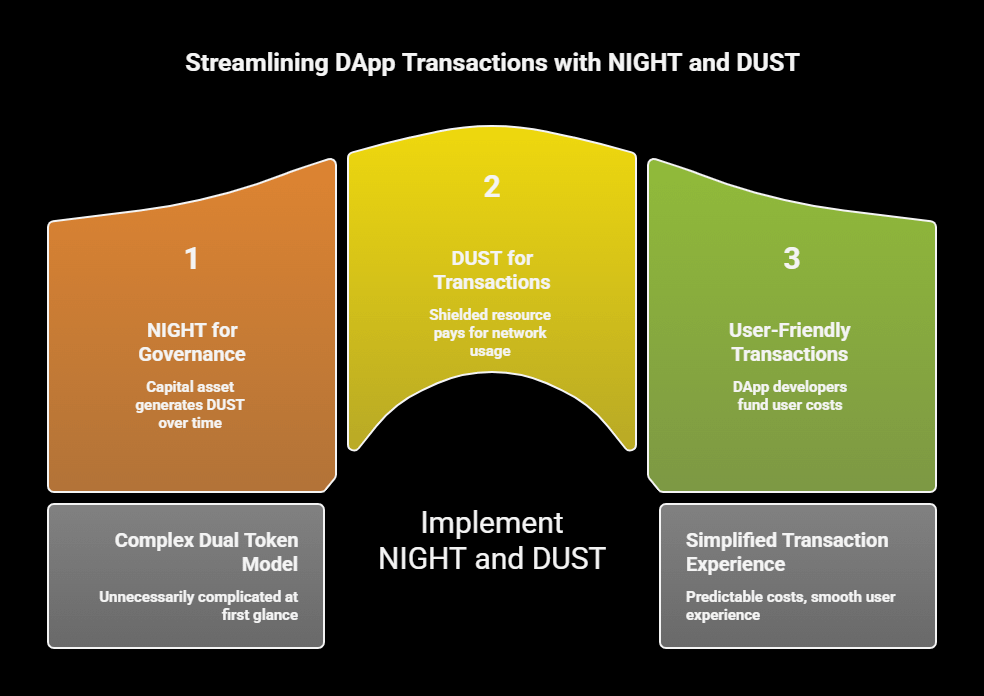
When I first read about the dual token model I thought it sounded unnecessarily complicated but the more I've sat with it the more it actually clicks. NIGHT is the governance and capital asset. Holding NIGHT automatically generates DUST over time. DUST is the shielded non transferable resource that pays for transactions and smart contract execution on the network. It recharges like a battery after being used.
The practical result is that if you're building a DApp on Midnight you can fund the transaction costs from your own NIGHT holdings so your users never have to directly pay for anything. That's a meaningful difference from most chains where end users constantly need to top up a gas wallet. For enterprise use cases that kind of cost predictability and user experience smoothness is genuinely valuable.
The total NIGHT supply is fixed at 24 billion. There's no inflation mechanism. The max supply is the max supply and that's it. DUST on the other hand decays and regenerates continuously based on how much NIGHT you hold. The technical foundation running all of this is ZK SNARKs using the Kachina protocol with a smart contract language called Compact that's built on TypeScript so the barrier to entry for developers is lower than you'd expect from a ZK focused network.
Who is actually backing the infrastructure
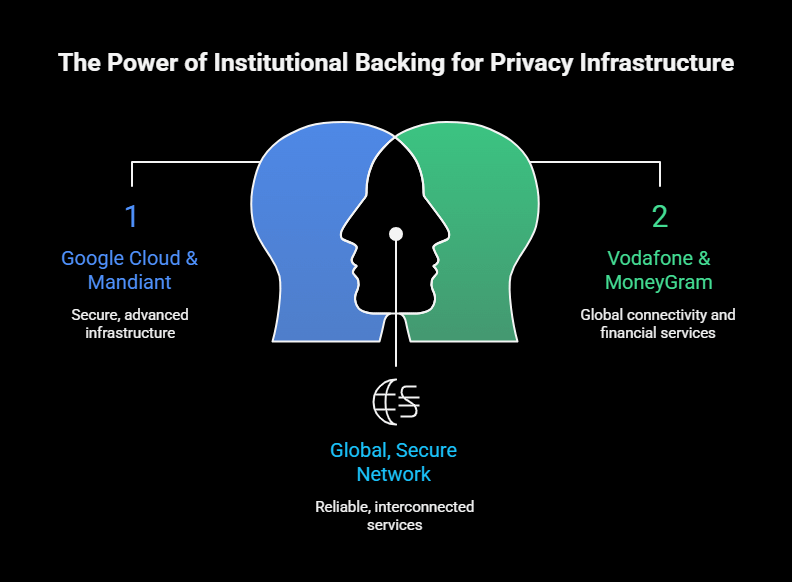
This is where it gets legitimately interesting from an enterprise credibility standpoint. Google Cloud signed on as a federated node partner and is providing secure infrastructure, running a validator, and deploying advanced threat monitoring through its Mandiant division. Vodafone and MoneyGram have also joined as federated node partners for the initial mainnet launch.
There was actually a public debate at Consensus Hong Kong about this setup where a founder from another project argued that relying on hyperscalers creates centralization risk. Charles Hoskinson pushed back saying that building global private systems at scale requires that kind of infrastructure and that the cryptography ensures data remains confidential regardless of who is running the hardware. It's a real philosophical tension in the space and I don't think either side is entirely wrong. What I will say is that having Google Cloud and Mandiant involved is a very different signal to regulated industries than most privacy projects send.
Balance, a Canadian digital asset custodian, also recently confirmed custody support for Midnight ahead of the mainnet launch which is another piece of institutional infrastructure clicking into place.
The exchange side of things
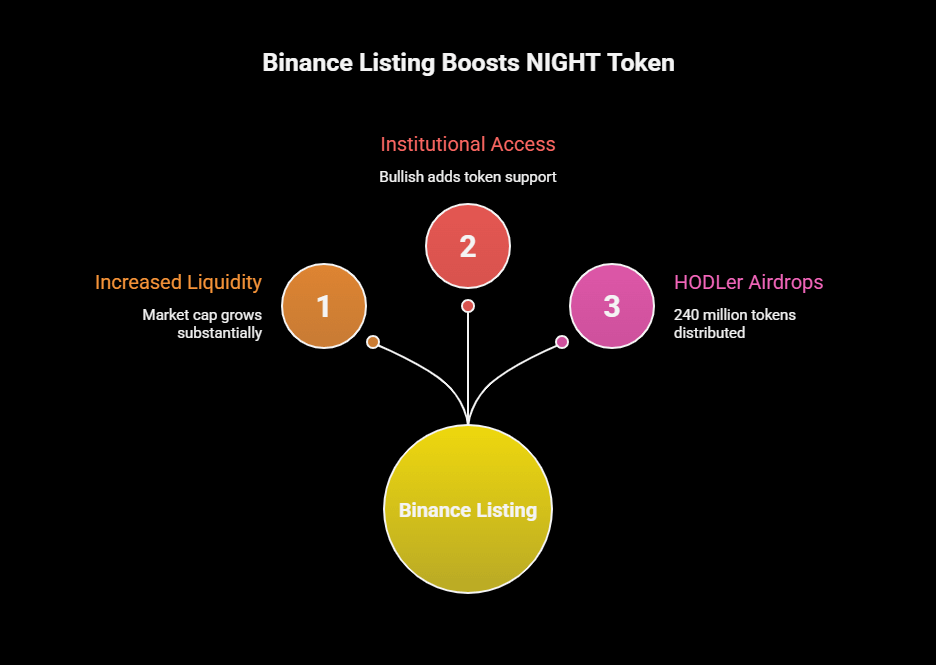
Spot trading for NIGHT went live on Binance on March 11 with pairs against USDT, USDC, BNB and TRY. Binance also made NIGHT the 61st project in its HODLer Airdrops program distributing 240 million tokens which is one percent of the total supply to BNB holders. OKX and Gate have also been active venues for the token and Bullish recently added support too which opens institutional access channels.
As of this writing NIGHT is trading around five cents with a market cap just under a billion dollars and a fully diluted valuation sitting at around 1.2 billion. The all time high was just over 11 cents back when momentum was stronger. I'm not here to call price direction because the token unlock schedule and general market conditions are real variables but the liquidity picture has clearly grown substantially since launch.
The builder side is getting serious
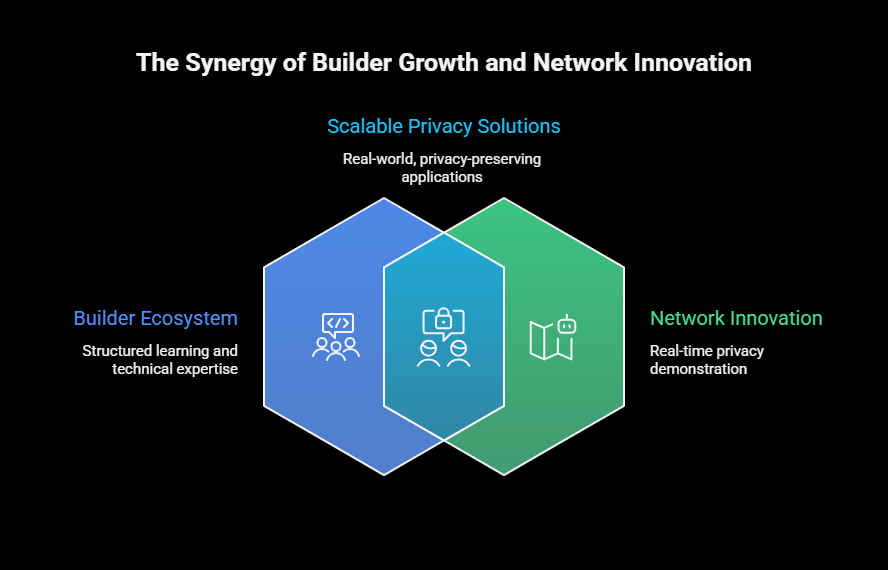
Beyond the token mechanics the developer ecosystem has been quietly building. The Midnight Academy launched as a structured pathway for new builders and the Aliit Fellowship which takes its name from the Mandalorian word for family is the next tier up. The inaugural Aliit cohort includes 17 fellows from 11 countries covering open source maintainers, ZK researchers and educators. Their mandate is specifically technical not just community ambassador work. They are building reference architectures, translating documentation into regional languages and running workshops.
On February 26 the team unveiled something called the Midnight City Simulation which is essentially a live environment populated by autonomous AI agents running real transactions on the network. It was designed to show what rational privacy actually looks like in motion at scale. I thought that was a genuinely creative way to demonstrate the network's privacy model before the mainnet genesis block drops.
There was also an interesting cross chain moment when Hoskinson met with Solana Foundation President Lily Liu and NIGHT tokens were airdropped directly to Solana wallets as part of exploring collaboration between the two ecosystems. Whether that turns into something more concrete is unclear but it signals the team isn't thinking about Midnight as an island.
What I think actually matters here
The thing that distinguishes Midnight from a lot of privacy projects is that it is not trying to hide everything from everyone. The NIGHT token itself is fully public and transparent. The privacy is programmable meaning developers decide what gets shielded and what gets disclosed. That architecture supports selective disclosure which is the feature that makes it useful for regulated industries like finance and healthcare who need to prove compliance without exposing underlying data.
The integration with LayerZero confirmed at Consensus Hong Kong means Midnight DApps will eventually be able to communicate with over 50 other blockchains. That cross chain capability combined with the ZK smart contract infrastructure and the enterprise node partners creates a different kind of pitch than most privacy chains have made before.
I think the next 60 to 90 days matter a lot. The mainnet genesis block is almost here and how smoothly Kukolu transitions into a real developer and user ecosystem will tell us a great deal about whether all the distribution and infrastructure work from the past year actually translates into a network people use. The pieces are in place. Now it's execution time.