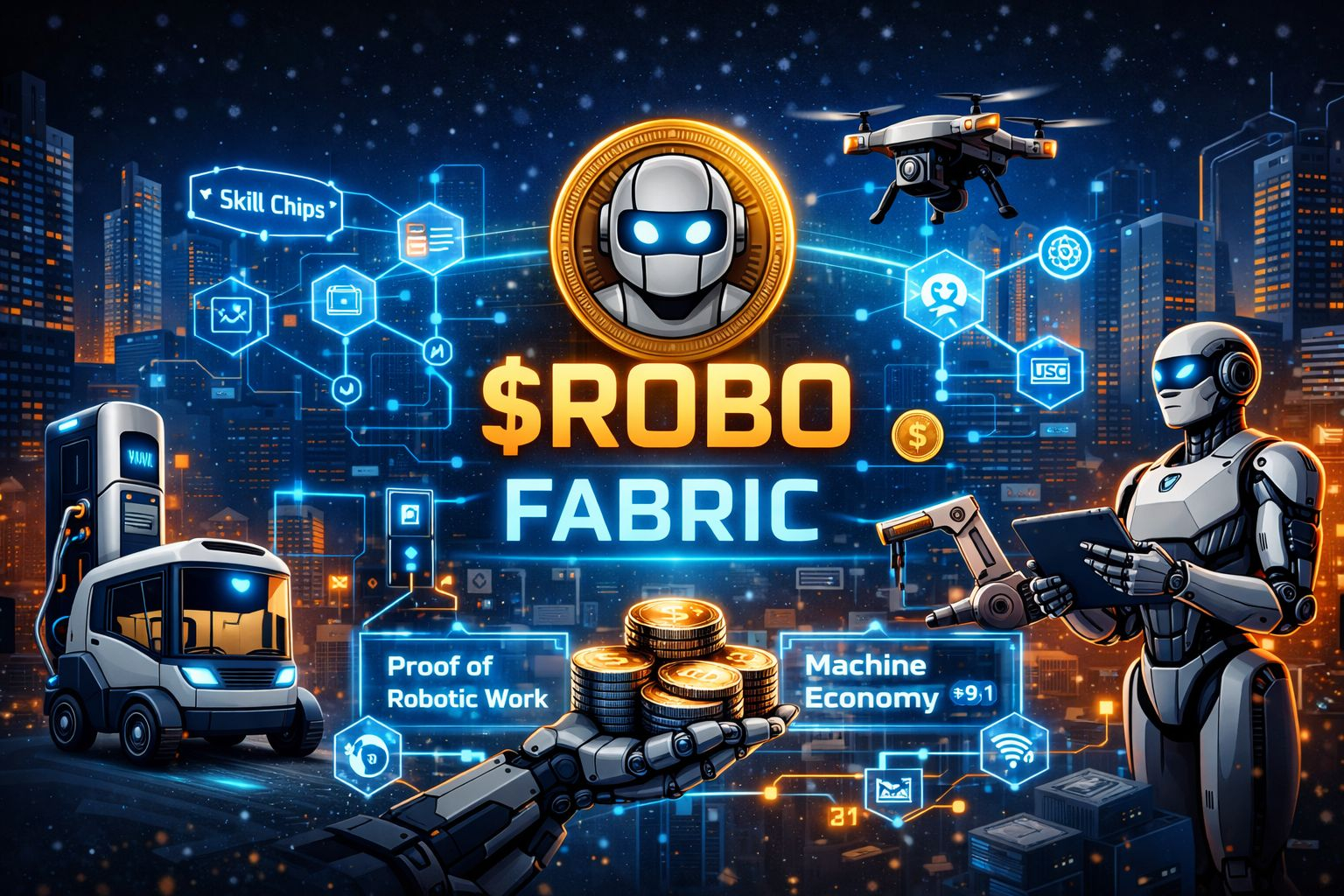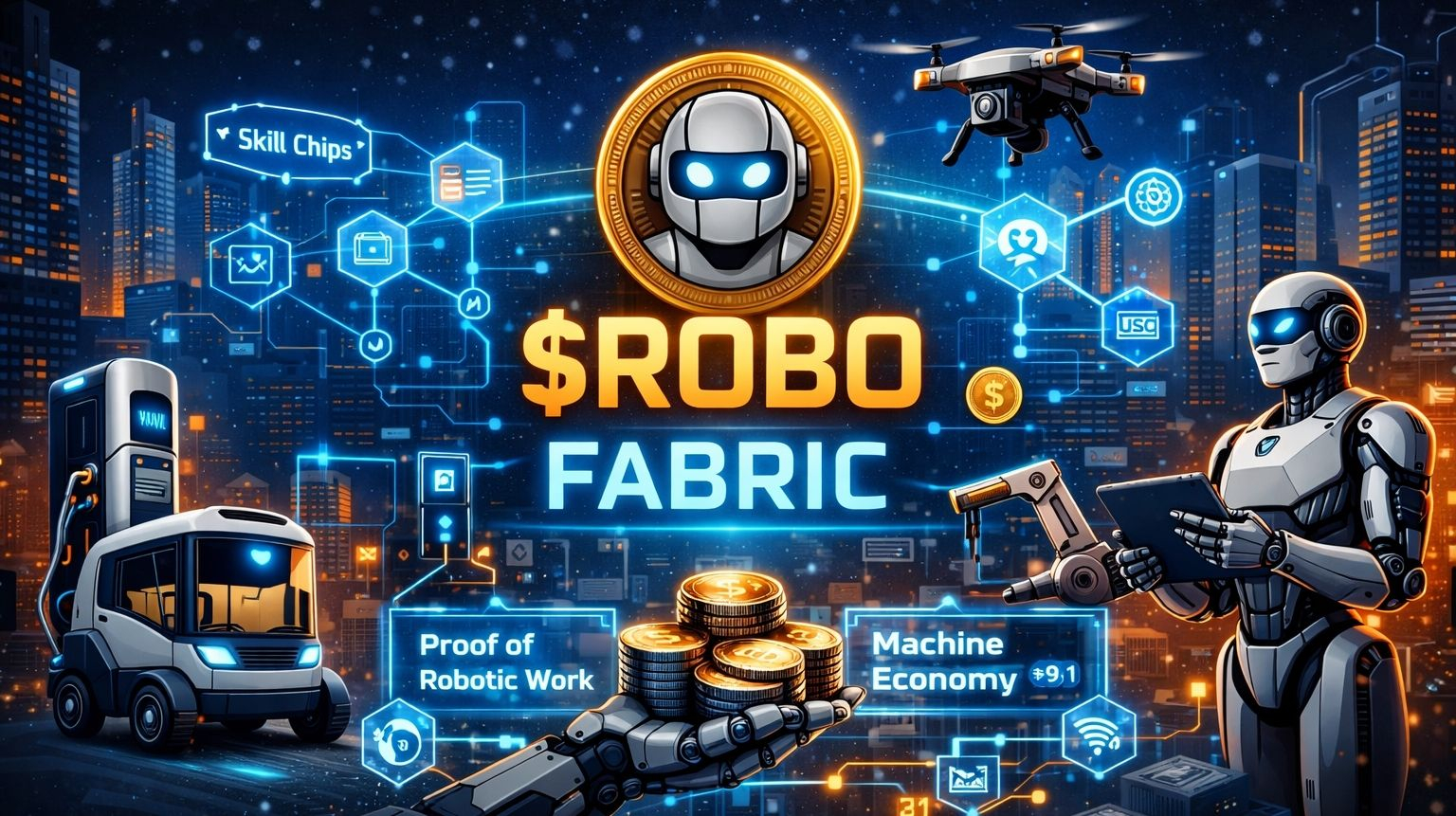
If you think the next big shift in tech is just smarter AI… think again. The real revolution might come from better infrastructure—the plumbing that makes robots not just work, but earn, pay, and interact like humans do.
Enter @Fabric Foundation .
I’ve been watching this project for a while, and honestly, it blew my mind. It’s not just another crypto protocol. It’s robotic infrastructure. The layer nobody notices… until it’s missing.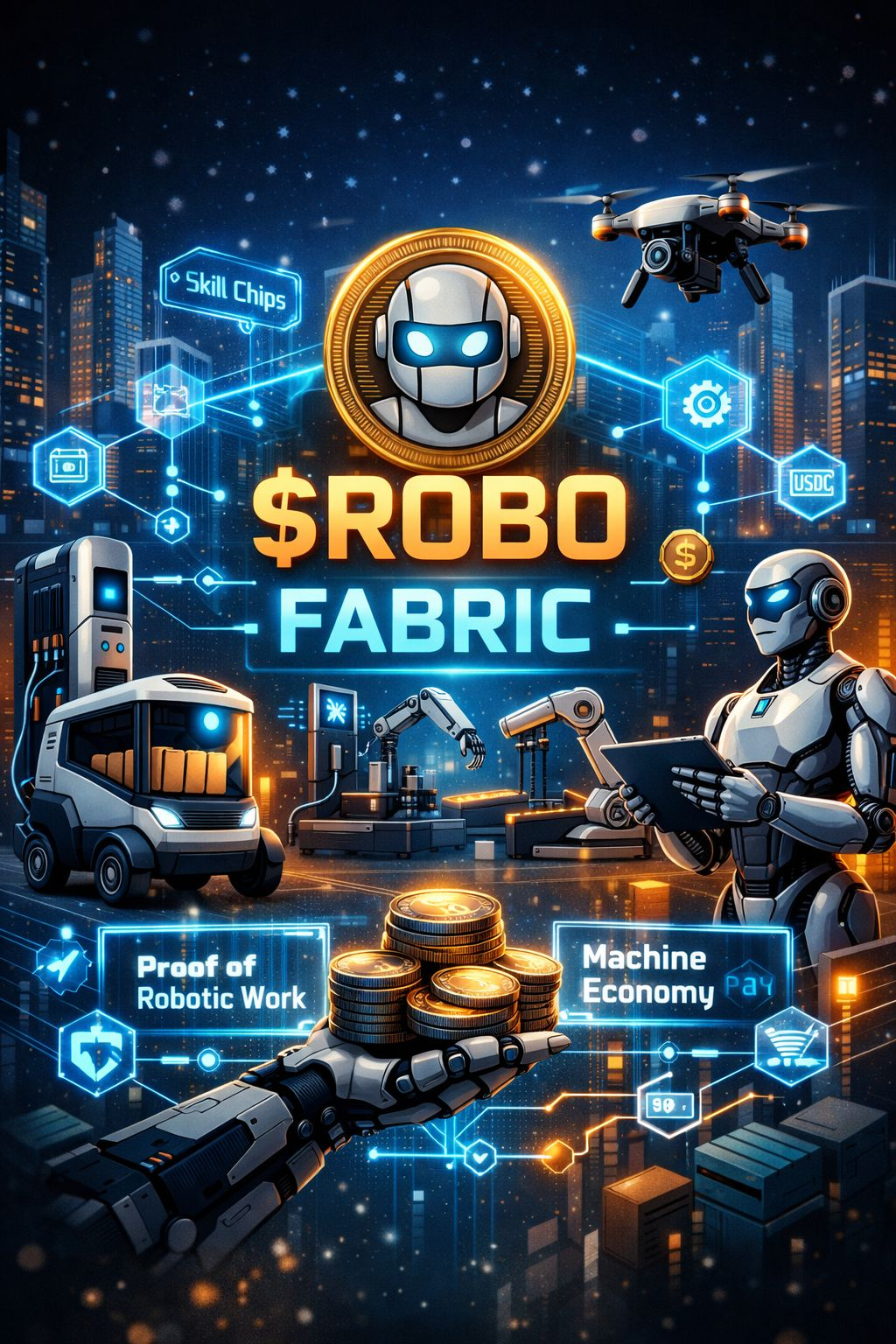
Why Fabric is Different
Imagine a world filled with robots:
Delivery bots dropping your groceries
Security drones patrolling neighborhoods
Factory machines doing precise inspections
Here’s the problem: these robots are all from different companies, speak different “languages,” and have no central boss. How do they trust each other? Who pays them? Who verifies the work?
Fabric solves this.
OM1 is the OS that lets robots understand and interact with the world.
Fabric sits next to OM1, giving each robot an on-chain identity.
Now robots can accept tasks, complete them, and get paid automatically—all without a human in the loop.
ROBO: Real Tokens for Real Work 💰
The token that powers this ecosystem is $ROBO, and it’s not your usual crypto.
Robots earn ROBO only when they complete real-world tasks—mapping rooms, patrolling areas, labeling objects.
Operators stake ROBO as a trust bond. If robots fail, the stake can shrink.
This is called Proof of Robotic Work. Tokens are tied to actual physical productivity, not hype.
Basically, ROBO is the first crypto directly tied to what robots do in the real world.
Skill Chips: Robots That Keep Getting Smarter
Fabric also introduced Skill Chips—tiny software modules that give robots new abilities.
Navigate better
Detect objects
Interact with tools
Developers can share chips across the network. One robot learns a new skill, and suddenly hundreds can benefit. Think of it like an App Store for robots.
Real-World Moves (New Updates!) ⚡
The team isn’t waiting for the future—they’re already testing real-world interactions:
Robots paying for charging stations via USDC, fully autonomously.
Delivery robots completing jobs and earning $ROBO instantly.
Factory robots mapping environments and doing inspections, sending verified data to the blockchain.
Latest Update: Fabric just announced integration with new logistics robots in urban pilot programs, letting machines handle deliveries, energy payments, and maintenance without human oversight. Early feedback shows faster task verification and seamless micro-payments—a huge step toward a full robot economy.
Why You Should Watch $ROBO
It’s real-world utility, not just hype.
Tokens grow in value with robot adoption, not social media buzz.
Developers can contribute skills, expanding the network’s capabilities.
It’s laying the groundwork for a machine-native economy, where robots transact with each other autonomously.
The Catch
Nothing is easy in robotics:
Machines break, environments are unpredictable
Scaling across cities is tough
Regulatory challenges around autonomous payments
Token liquidity might be thin early on
But that’s also why early innovators who understand the space could benefit massively.
Bottom Line
ROBO isn’t just a token. It’s the currency of the future robot economy.
Fabric is building the infrastructure that could make robots independent economic actors, earning, paying, and learning on their own.
If this works at scale, we’re not just talking about smarter AI—we’re talking about a whole new economic layer powered by robots.
The future is here. And it speaks $ROBO .