I remember when privacy tokens started trending again and it felt like an obvious bet. If users care about their data, then private transactions should naturally create demand. At that time, I believed hiding information was enough. But after following a few projects more closely, I noticed something uncomfortable. Activity existed, but it was hard to verify what was actually happening underneath. That made trust weaker, not stronger. Since then, I’ve started focusing less on what a system hides and more on how it proves its behavior.That shift is why Midnight caught my attention. Not because privacy is a new narrative, but because it approaches the problem differently. It raises a more practical question. Can a network keep data private while still giving enough proof for others to trust it? That balance is not easy. Most systems pick one side. Midnight is trying to combine both, which is what makes it worth examining.
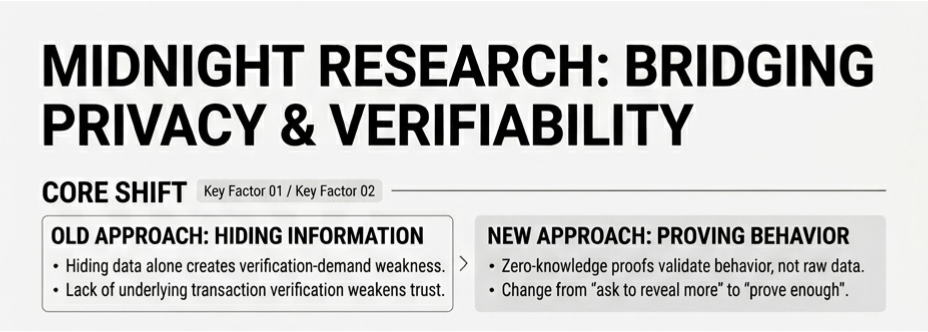
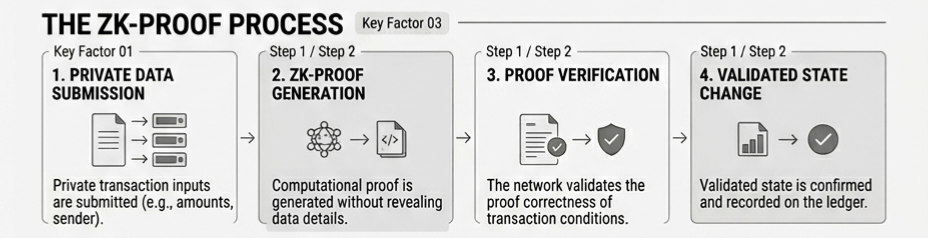
From what I understand, the protocol relies on zero knowledge proofs to validate transactions without exposing raw data. Instead of sharing full information, users prove that certain conditions are met. For example, a transaction can be accepted without revealing balances or identities, while still confirming validity. This changes how trust is created. The system does not ask users to reveal more. It asks them to prove enough. That distinction matters because it allows privacy to exist without breaking verification, which is usually where most designs struggle.What stands out is how this could affect real applications. Private smart contracts, confidential financial activity, and selective data sharing all become possible in a more usable way. However, this only matters if developers actually build around it. Technology alone does not create demand. Usage does.
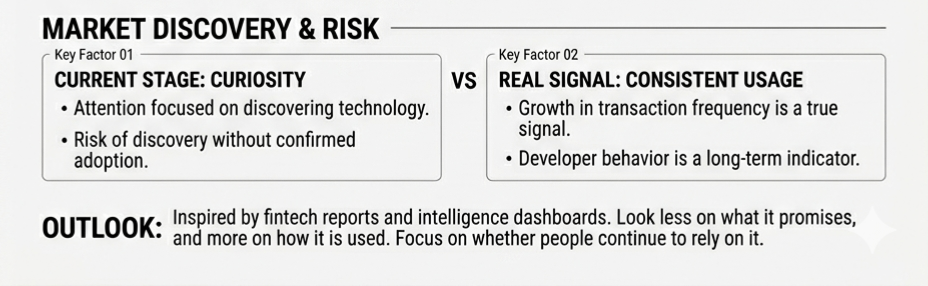
Right now, the market seems to be in an early discovery phase. There is attention, but it feels more like curiosity than confirmed adoption. That is normal for systems that depend heavily on new types of infrastructure. The real signal will come from how often the network is used for actual transactions rather than how often it is discussed.This is where the main risk becomes clear. The challenge is not privacy. It is consistent usage. If applications do not require private computation in a meaningful way, then the network will struggle to maintain activity. And if users do not return regularly, the economic model weakens regardless of how strong the technology looks.
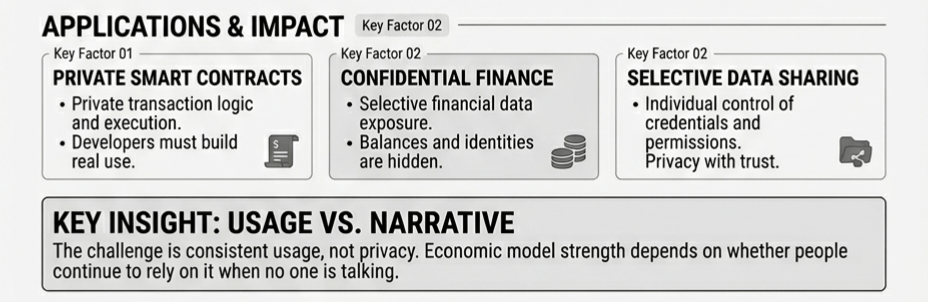
What would change my view is simple. I would look for steady growth in real use cases where privacy is not optional but necessary. I would also watch developer behavior. If builders keep experimenting and shipping new ideas, that usually signals long term potential. On the other hand, if attention stays focused on price while usage remains low, that would suggest the system is still driven by narrative.So if you are watching Midnight, focus less on what it promises and more on how it is used. In markets like this, the difference between a convincing idea and a lasting system usually comes down to one thing. Whether people continue to rely on it when no one is talking about it anymore.