

Alright, here is the thing.
When I first looked at Midnight, I thought “okay… another privacy chain.” You know the type. Hide everything, call it a day, move on.
But that’s not what this is. Not even close.
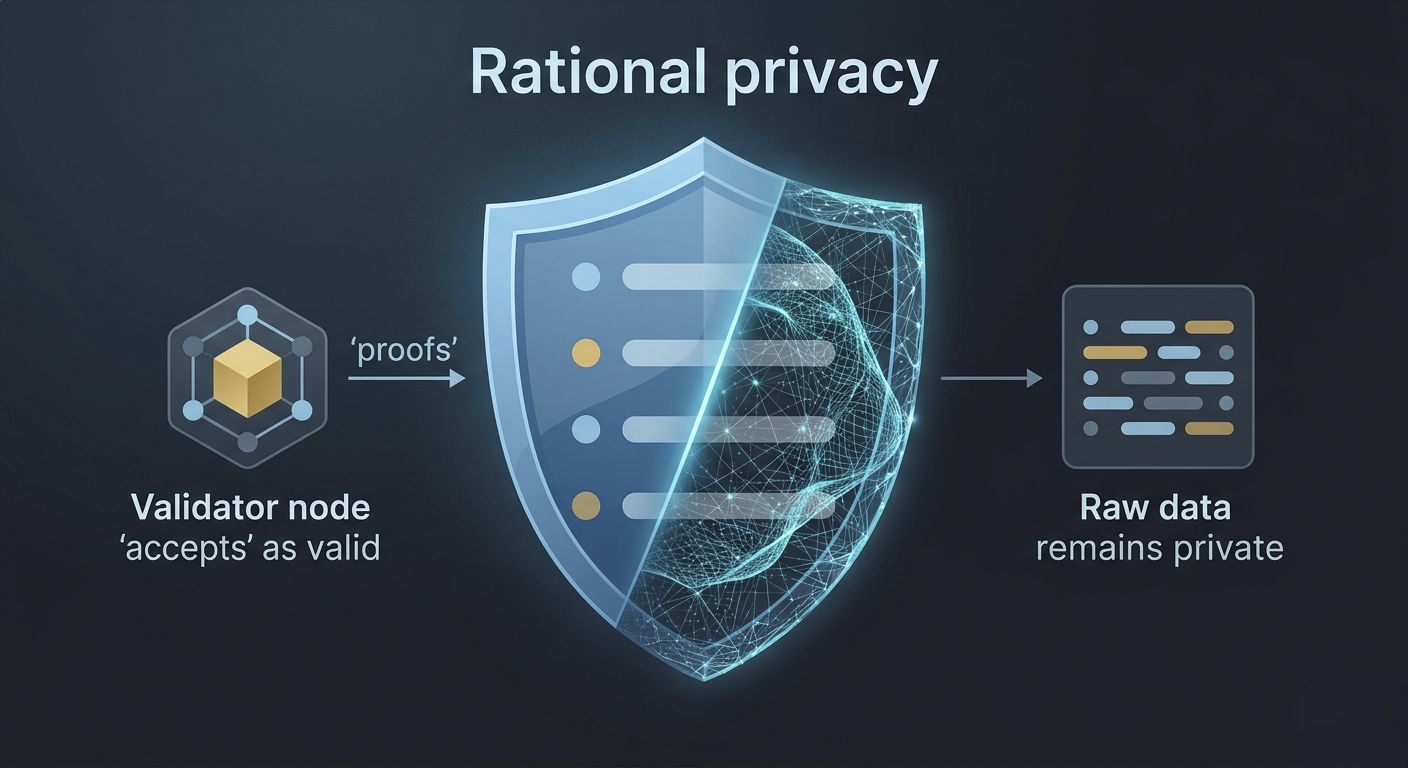
The more I dug in, the more I realized Midnight isn’t trying to hide everything. It’s doing something way more calculated. They call it “rational privacy” which sounds fancy but the idea is actually pretty simple.
You only reveal what you have to. Nothing more.
That’s it.
And honestly? That’s where it gets interesting.
Because let’s be real most privacy coins go all in. Everything’s hidden. Great for anonymity, terrible for real world use. Regulators hate it. Busineses won’t touch it. It’s like trying to operate in complete darkness and hoping nobody asks questions.
Midnight flips that.
You can prove something is valid without showing the actual data behind it. So yeah, you stay private but you’re not invisible in a suspicious way. You’re just… selective.
That balance? People don’t talk about how hard that is to get right.
Now add this layer ..... Midnight isn’t even trying to compete with existing chains.
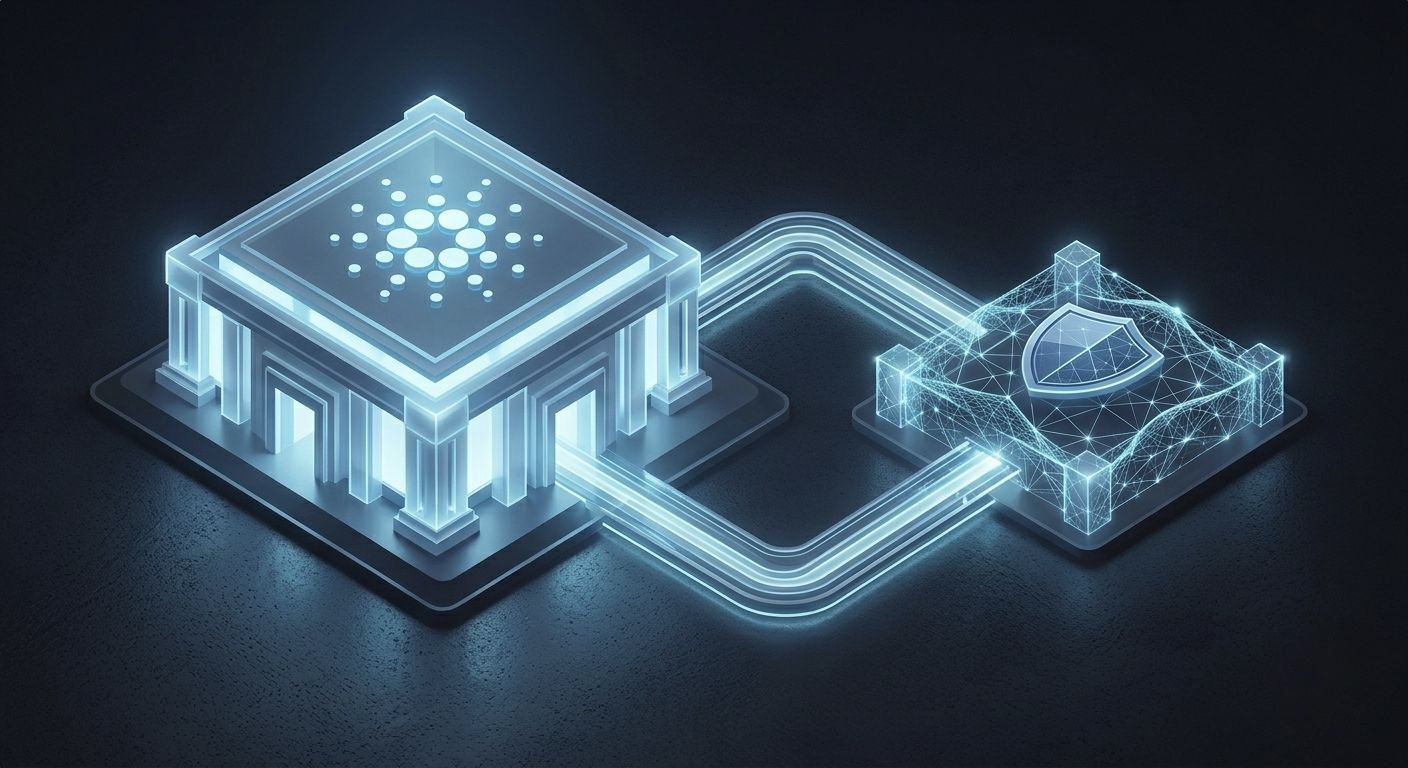
It plugs into Cardano.
Not as a copy. Not as a fork. As a partner chain.
That means it leans on Cardano’s infrastructure, liquidity, and validator network but focuses entirely on privacy applications. It’s like saying, “we’re not rebuilding the city, we’re adding a new district that does one thing really well.”
I like that.
I’ve seen too many projects try to do everything and end up doing nothing properly.
Midnight stays in its lane.
The architecture is where things get a bit nerdy but stick with me, it’s worth it.
They split the system in two.
The public side handles consensus, settlement, governance the usual blockchain stuff. Nothing surprising there.
But the private side? That’s where the actual logic runs. Sensitive data lives there. Computation happens there.
And instead of sending that data to the blockchain, Midnight sends a zero-knowledge proof.
Basically: “Hey, the rules were followed. Trust me. Here’s the math to prove it.”
No raw data. No exposure.
The blockchain doesn’t check your secrets. It checks your honesty.
That’s a big shift.
And then there’s Compact.
I’ll be honest this part caught my attention.
Privacy in crypto is usually painful to build. Cryptography gets messy fast. Most developers avoid it unless they absolutely have to.
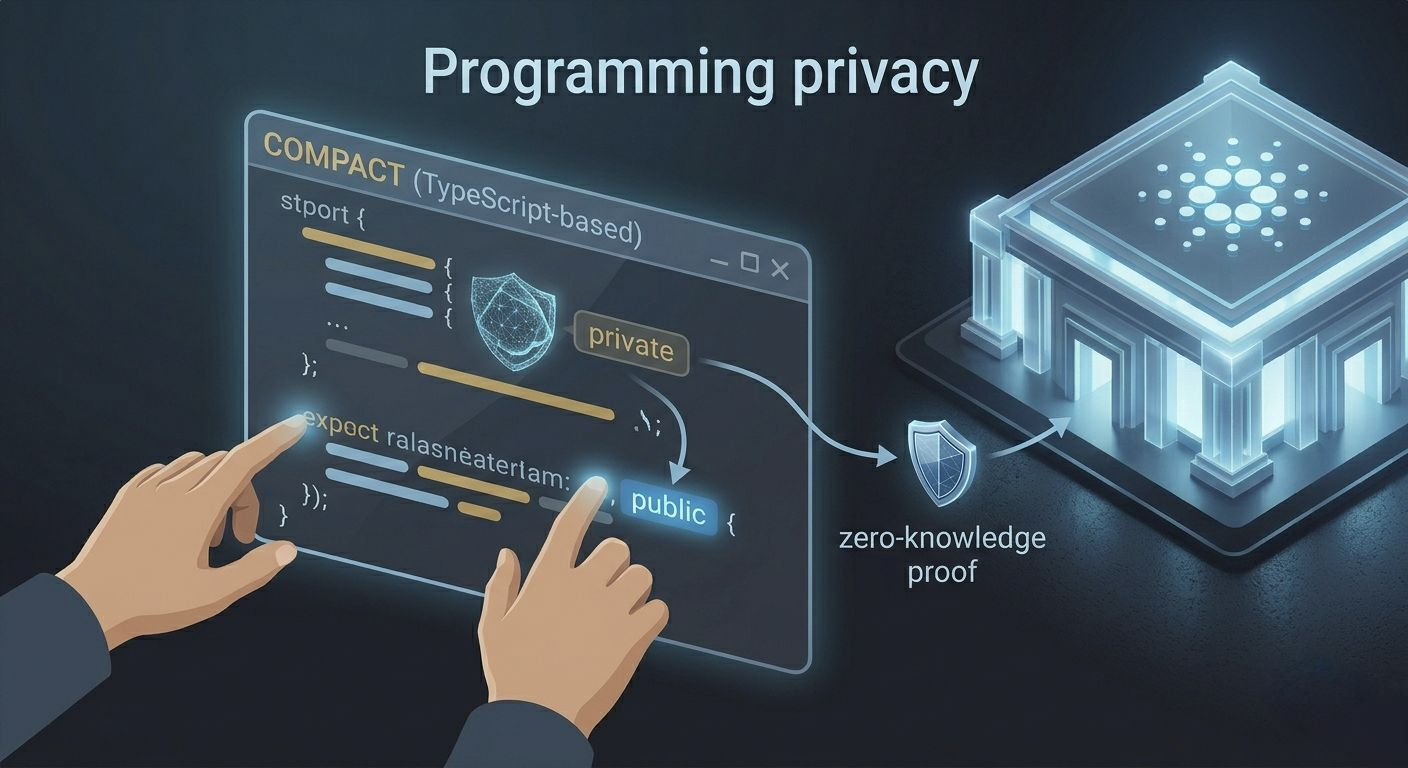
Compact changes that. It’s a TypeScript-based smart contract language where you explicitly define what’s private and what’s public.
So privacy isn’t some add-on feature anymore.
You program it in.
That’s huge.
Because now developers don’t have to fight the system they design with privacy from day one.
Now let’s talk about the part I almost dismissed.
The NIGHT and DUST model.
At first glance? I rolled my eyes.
Another token setup. Another attempt to “fix fees.” We’ve seen this story before.
But then I actually sat with it.
And yeah… I had to rethink things.
Because this isn’t really about fees.
It’s about how networks get funded.
Most blockchains run on the same loop: you do something, you pay. Every click, every action, every contract call it costs you.
Sounds fair… until you try to build something real.
Then it becomes friction. Constant friction.
Users need wallets. They need tokens. They need to understand gas. And if they don’t?
They leave.
I’ve seen it happen way too many times.
Midnight breaks that pattern.
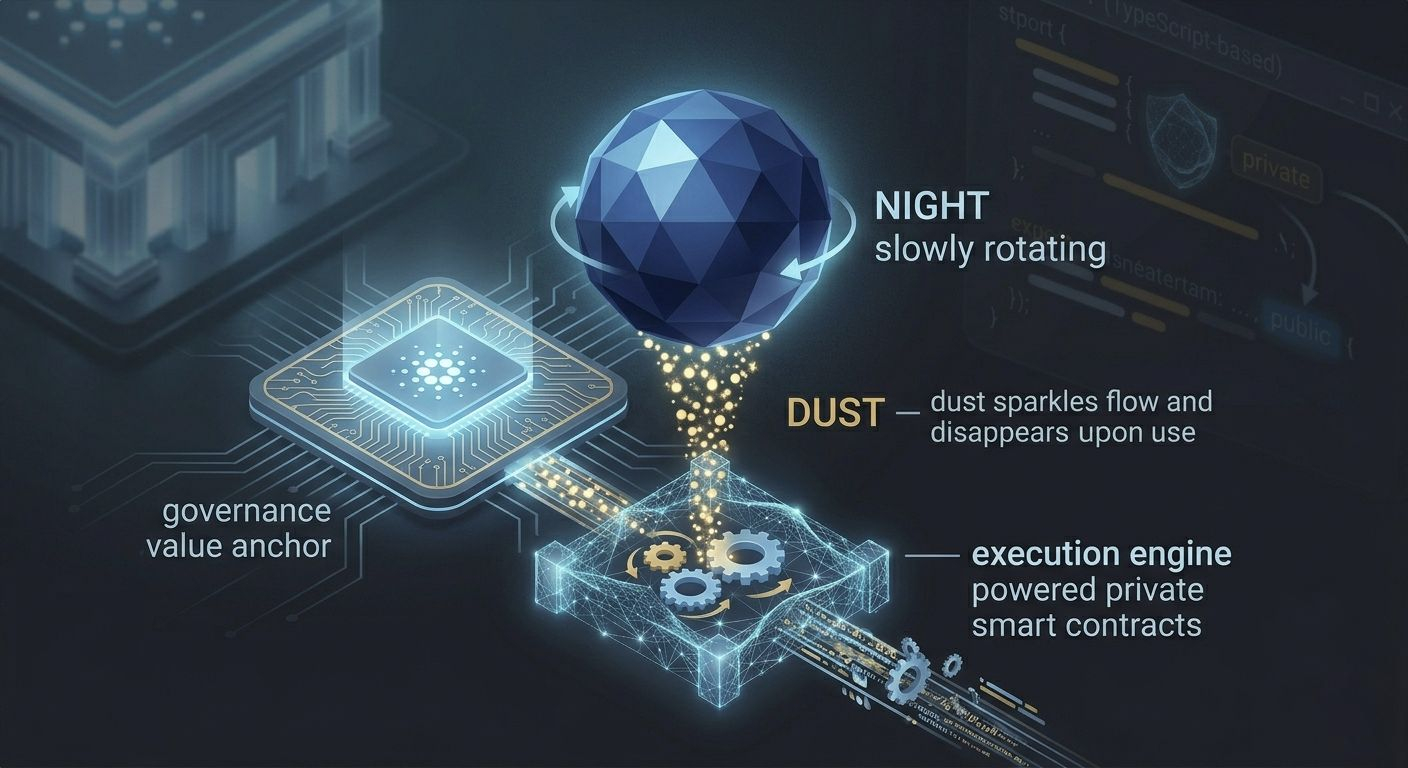
NIGHT is the main token. It secures the network. It handles governance. It holds value.
But DUST? That’s different.
You don’t go out and buy DUST.
It’s generated.
That’s the twist.
When you hold NIGHT, you generate DUST over time like a battery slowly recharging. And you use that DUST to run transactions and computations.
So instead of paying every single time…
You consume a resource that refills.
That changes everything.
Think about it from a developer’s perspective.
You don’t have to force users to deal with tokens just to use your app. You can hold NIGHT yourself, generate DUST in the background, and cover the execution costs.
The user never sees fees.
They just… use the product.
That’s how it should be.
Because right now? Most crypto apps feel like chores. Connect wallet. Approve transaction. Check gas. Retry. Hope it works.
It’s exhausting.
Midnight hides that complexity.
And no it’s not just “better UX.”
It’s deeper than that.
It separates computation from value.
On most chains, those two are glued together. QThe same token handles both. Which means fees swing with market prices.
Token pumps? Fees spike.
Network gets busy? Everything gets expensive.
It’s unpredictable.
Midnight cuts that link.
NIGHT holds value.
DUST runs computation.
And since DUST isn’t tradable, it doesn’t get dragged around by speculation.
That makes costs stable. Predictable.
And honestly, that’s a big deal if you’re building something long-term.
There’s also a regulatory angle here that people aren’t paying enough attention to.
Since DUST isn’t transferable, it’s not a hidden payment layer. You’re not secretly moving money around.
You’re consuming a resource.
That distinction matters.
It keeps financial transparency intact while still protecting data and computation.
Privacy where it makes sense. Visibility where it’s required.
That balance is hard.
Most projects mess it up.
Look, I’m still cautious.
I’ve been around long enough to know that good ideas don’t guarantee adoption.
But this?
This feels different.
Because it actually aligns with how real systems should work.
You don’t charge users every time they blink. You build infrastructure that runs in the background.
Less friction. Less noise.
More… normal.
And when you zoom out, that’s the real shift.
You’re not paying for every interaction anymore.
You’re investing into the system and letting it run on that.
That’s a completely different mindset.
And maybe just maybe that’s what crypto needed all along.
#night @MidnightNetwork $NIGHT
