
Tether has tapped KPMG as the Big Four auditor to examine its USDT stablecoin, the Financial Times reported Thursday, citing people familiar with the matter. The move — first flagged earlier this week when Tether said it had entered a formal engagement with a Big Four firm without naming it — is paired with the hiring of PwC to prepare Tether’s internal systems ahead of the audit, according to the report. CoinDesk has reached out to Tether for comment. Why it matters - USDT is the largest stablecoin by market size, with roughly $185 billion in circulation, and acts as a reserve currency for crypto markets. It is also a major purchaser of U.S. Treasury bills, creating a substantial link between crypto markets and traditional finance. - A full financial-statement audit from a Big Four firm would represent a major step up from the monthly attestations Tether currently publishes via BDO Italia. A full audit entails a detailed review of assets, liabilities, internal controls and reporting systems — far deeper scrutiny than the current reports. What Tether has said - CFO Simon McWilliams previously told CoinDesk that the company was “already operating at Big Four audit standard” and that “the audit will be delivered.” - The audit push coincides with Tether’s plans to expand into the U.S. market and explore a potential fundraising round. The Financial Times has reported investor hesitation around a proposed $15–20 billion raise at a $500 billion valuation, with concerns focused on pricing and regulatory risk. Transparency history and regulatory context - Transparency has been a long-standing issue for Tether. The issuer, founded in 2014, historically resisted broad disclosure. In 2021 CoinDesk filed a FOIL request with the New York Attorney General seeking documents on USDT’s reserve composition; Tether fought release in court and lost twice. Documents obtained after a two-year legal battle in 2023 showed that, as of March 2021, Tether held the bulk of $40.6 billion in reserves at Bahamas-based Deltec Bank and had sizable exposure to commercial paper from Chinese and international banks, including Agricultural Bank of China, Bank of China Hong Kong, and ICBC. - The timing of the audit push aligns with evolving U.S. regulation for stablecoins. The GENIUS Act, signed into law last July, created the first federal framework for stablecoins in the U.S., and Tether has already issued a compliant dollar-pegged token, USAT. Bottom line If confirmed, onboarding KPMG for a full audit and bringing PwC in to ready systems would be the most concrete steps yet toward sustained, Big Four-level financial scrutiny of the world’s largest stablecoin issuer — a potentially significant development for crypto markets, investors and regulators alike. Read more AI-generated news on: undefined/news

Άρθρο
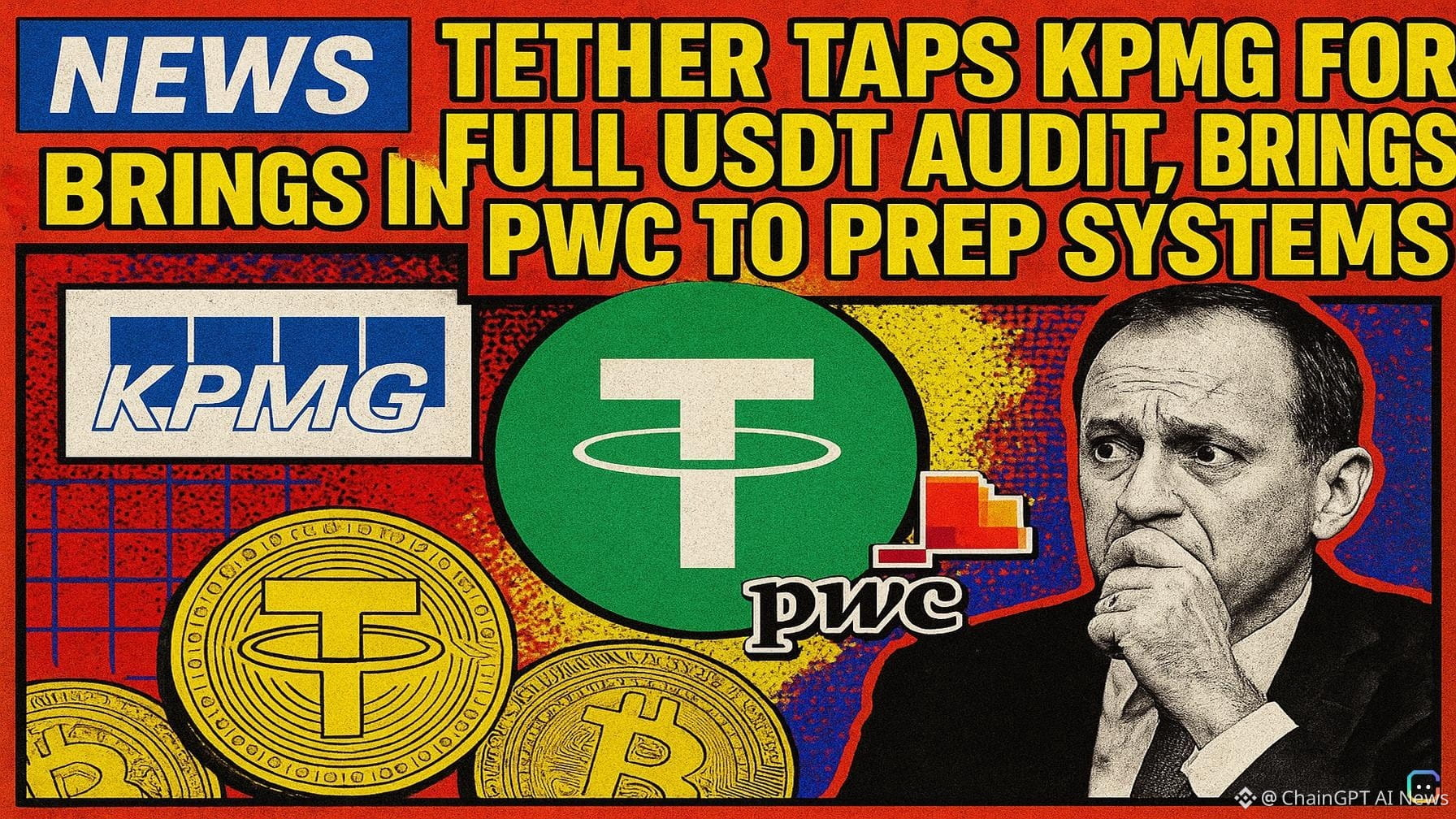
Tether Taps KPMG for Full USDT Audit, Brings in PwC to Prep Systems
Αποποίηση ευθυνών: Περιλαμβάνει γνώμες τρίτων. Δεν είναι οικονομική συμβουλή. Ενδέχεται να περιλαμβάνει χορηγούμενο περιεχόμενο. Δείτε τους Όρους και προϋποθέσεις.