
Airdrops are not disappearing, but the way value is distributed in Web3 is undergoing a fundamental shift. In the early stages of the ecosystem, most projects relied on a simple assumption: one wallet represents one user. That model worked when participation was limited and capital flows were relatively small. However, as the market expanded, this assumption began to break down. Today, a single individual can control dozens, hundreds, or even thousands of wallets, making it increasingly difficult to distinguish genuine users from coordinated farming activity.

The consequences are clear. Rewards are often distributed inefficiently, real contributors see their share diluted, and projects end up incentivizing behavior that adds little long-term value. What was once an effective growth strategy has gradually turned into a structural weakness. The key question is no longer how much to distribute, but who should actually receive those rewards.
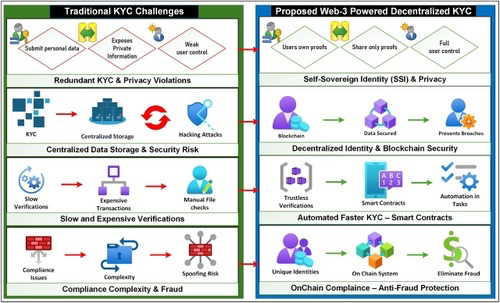
SIGN approaches this problem by focusing on two foundational layers: verifiable on-chain identity and proof of contribution. Rather than introducing another short-term narrative, it attempts to address a core limitation that has existed since the beginning of Web3.
On-chain identity redefines what a wallet represents. Instead of treating each address as an independent entity, SIGN enables the creation of a verifiable digital profile built on data such as historical activity, credentials, and reputation. In this framework, a newly created wallet carries minimal significance unless it is backed by a credible history. This allows systems to differentiate between real participants and automated behavior, while also providing a more accurate understanding of user quality over time. The focus shifts from isolated actions to persistent identity, from short-term interaction to long-term presence.
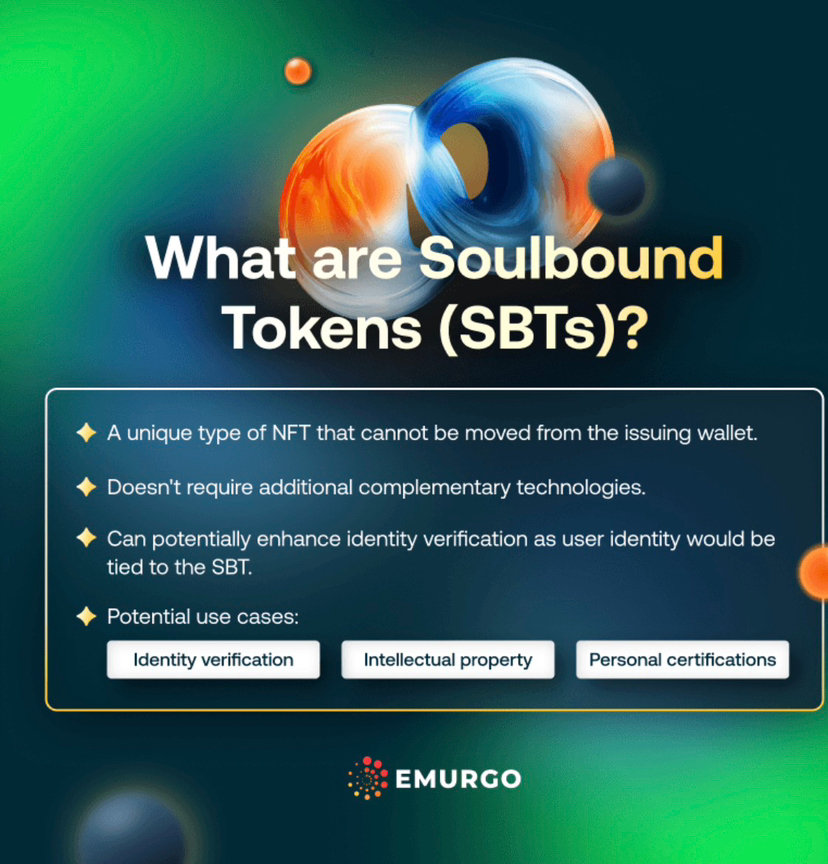
At the same time, proof of contribution introduces a more meaningful way to measure value. Traditional metrics such as transaction count or trading volume are easy to manipulate and often fail to capture real engagement. SIGN instead emphasizes verifiable contributions, where actions like providing liquidity, participating in product testing, or supporting community growth can be recorded on-chain and validated. This creates a framework where incentives are aligned with actual impact rather than superficial activity.
This shift from activity-based rewards to value-based distribution has significant implications. If implemented effectively, it could reduce sybil attacks, improve the efficiency of incentive programs, and restore a level of fairness that has been gradually eroded. Projects would gain better tools to identify and reward meaningful participants, while users would be encouraged to focus on genuine contribution rather than optimization strategies.
However, the success of this model depends heavily on adoption. An identity and contribution layer only becomes powerful when it is widely integrated across multiple ecosystems and recognized as a standard. Without sufficient usage and data, even the most well-designed system risks remaining theoretical. The challenge is not just technological execution, but convincing both projects and users to embrace a different way of interacting with Web3.
Ultimately, SIGN represents an attempt to fill one of the last missing layers in the current landscape. Web3 has built strong financial infrastructure and achieved significant growth, but it still lacks a reliable way to evaluate who is participating and how they contribute. The question is not whether this approach is logical, but whether the market is ready to move beyond pure anonymity toward a system where identity and contribution define value.