

The XRP Ledger (XRPL) closed the first quarter of 2026 with a record number of total addresses, reaching 8,189,798 as of April 2, up from 7,921,350 at the start of the year, according to CryptoQuant data. That represents a 3.39% increase in net addresses over three months, according to on-chain analytics from CryptoQuant, marking a new all-time high for the network.
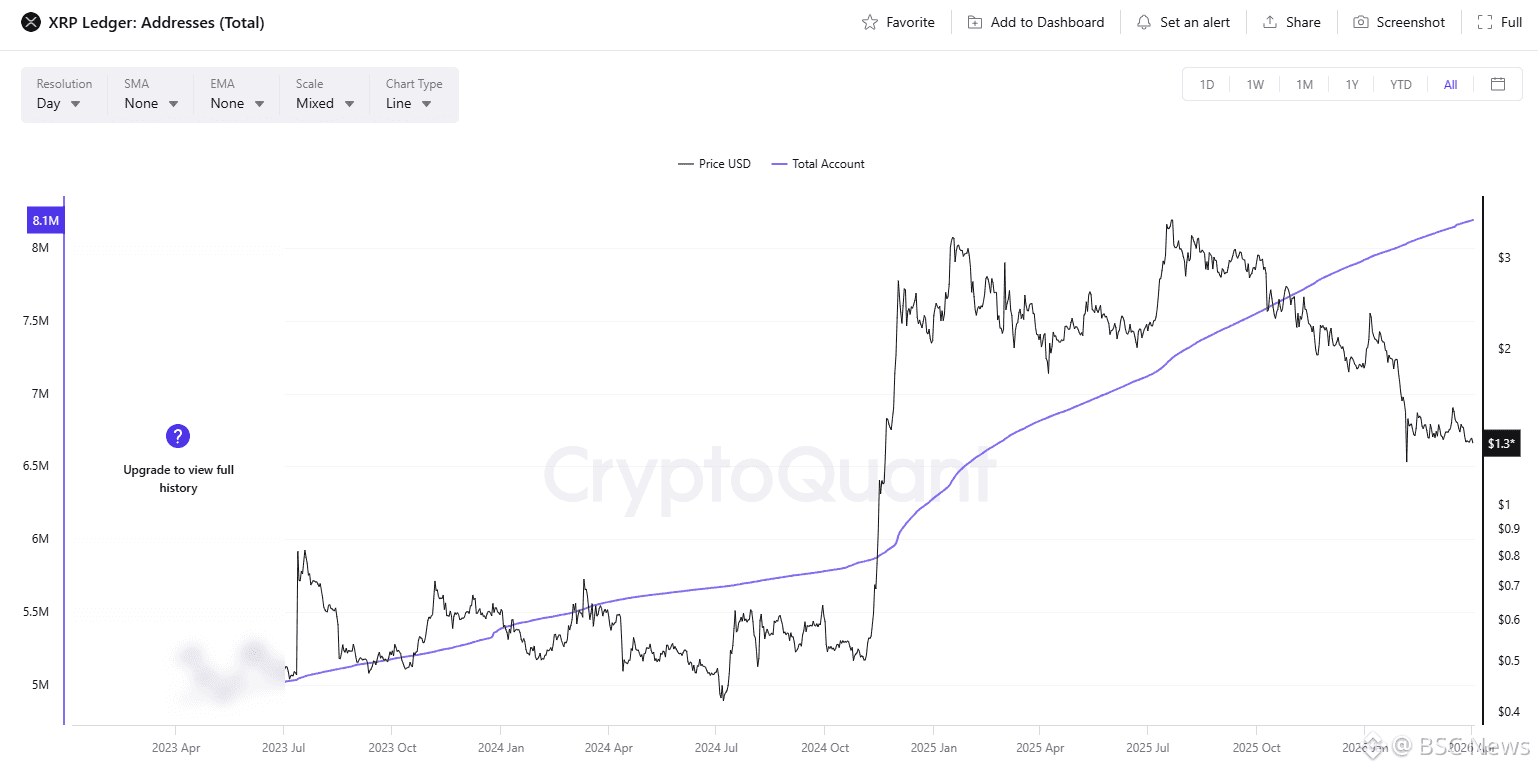 Image: CryptoQuant
What Is Driving XRPL Address Growth in 2026?
The growth in total addresses has been linear throughout Q1, but the drivers behind it point to specific activity on the ledger rather than a single event.
Two factors stand out:
Rising adoption of the XRPL's built-in decentralized exchange (DEX), reflected in an increase in OfferCreate transactions
Growth in Automated Market Maker (AMM) pools, which expanded from approximately 24,462 on January 1, 2026, to roughly 27,985 by early April, according to XRPSCAN
An AMM pool is a smart contract that holds two assets and allows users to trade between them without a traditional order book. The increase in pool count on the XRPL suggests more liquidity is being deployed directly on-chain, which tends to attract new participants.
Cross-border payments have also continued to be a major use case. More than 53% of XRPL transactions involve payments, with Ripple USD (RLUSD), Ripple's dollar-pegged stablecoin, accounting for a significant share of that volume.
Are New Addresses Actually Being Used?
Total address count and active user count tell different stories on the XRPL right now.
While total addresses climbed steadily through Q1, active users stayed within a range of approximately 130,000 to 165,000 for most of the quarter, based on XRPSCAN data. That gap suggests a portion of new accounts are being registered without immediately engaging in trading or payment activity. This is not unusual for blockchain networks during periods of broader market interest. Users often create wallets ahead of anticipated activity, particularly around regulatory developments or new product integrations.
What the Active Address Range Tells Us
A stable active address range alongside rising total addresses can indicate two things: the network is onboarding new participants at a measured pace, and existing users are maintaining consistent engagement levels. It does not point to a sharp spike in speculative trading, which tends to produce more volatile active address counts.
Ripple's Escrow Activity in April 2026
Alongside the address data, Ripple Labs completed its monthly escrow release and re-lock cycle on April 2, 2026. The company received 1 billion XRP from its escrow account and returned 700 million tokens to the system in two tranches: 500 million and 200 million, both on April 1. That left approximately $945 million worth of XRP temporarily inaccessible.
🔒 500,000,000 #XRP (675,337,377 USD) locked in escrow at #Ripple pic.twitter.com/5YNl6Gukqi
— MarketSleek (@Market_Sleek) April 2, 2026
The remaining 300 million XRP entered circulation, adding roughly $384 million in supply at April 2 prices. At the time of reporting, XRPSCAN data showed the escrow balance at around 33.344 billion XRP, with net circulating supply at approximately 66.626 billion.
Ripple released 900 million XRP in total during Q1 2026, and a similar pace is possible in Q2 based on that pattern.
Is Missouri Considering XRP as a State Treasury Asset?
Missouri's House Bill 2020 (HB 2020) proposes creating a state-managed Cryptocurrency Strategic Reserve Fund and names XRP as one of the eligible assets. The bill passed out of committee with a "do pass" recommendation and now heads to the full Missouri House for debate and a vote.
If passed, the bill would authorize the state treasurer to hold XRP alongside Bitcoin, Ether, Solana, and USDC as part of an official Digital Asset Reserve Fund. Arizona is advancing a similar bill, which points to a broader pattern among U.S. states looking to formalize crypto exposure at the treasury level.
Why State-Level Crypto Reserves Matter for XRP
For XRP to be named in state reserve legislation puts it in a different category from most digital assets. It signals a level of regulatory comfort that institutional buyers and policymakers tend to monitor closely. Neither Missouri's nor Arizona's bill has become law yet, but the committee progress in Missouri gives HB 2020 real legislative momentum.
Conclusion
The XRP Ledger ended Q1 2026 with more total addresses than at any point in its history, driven by measurable growth in DEX activity, AMM pool expansion, and continued cross-border payment volume. The gap between total addresses and active users is worth watching, but it is not unusual for a network adding accounts ahead of anticipated regulatory and institutional developments.
The ledger's technical setup, fast settlement, low fees, and energy-efficient consensus, remains consistent with the payment and custody use cases Ripple is actively building around. Missouri's HB 2020, the iPayOut integration, and Ripple's steady escrow management are concrete data points, not projections. Whether Q2 continues the Q1 trajectory will depend on how those legislative and commercial developments actually land.
Resources
CryptoQuant portal: XRP Ledger: Addresses (Total)
XRPScan portal: Data about XRP Ledger
Missouri’s House Bill 2020